The Great Northwest
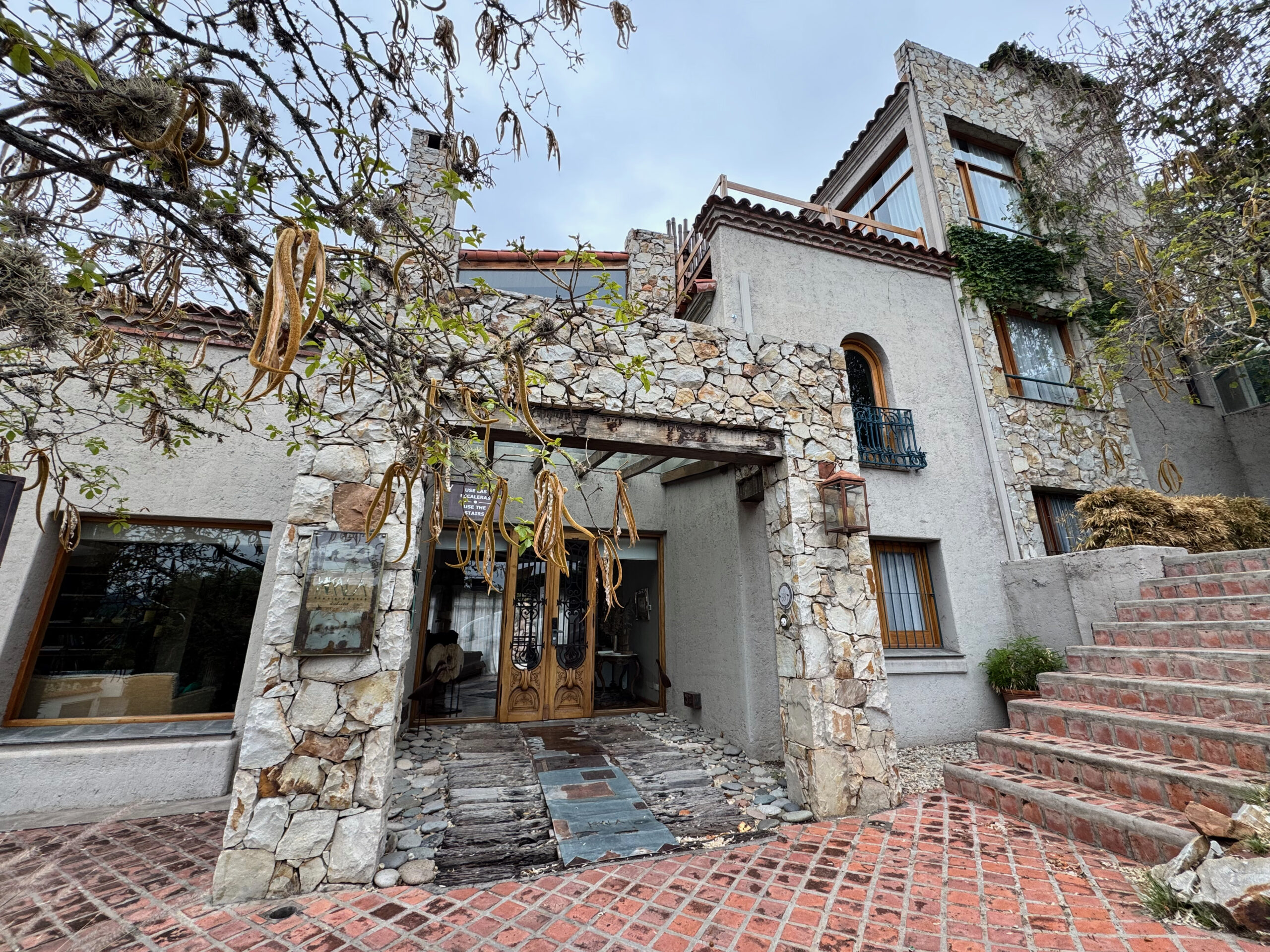
An early departure from El Calafate, too early to enjoy a relaxed breakfast at the Posado. The flight was on schedule, but once again we were seated on the “wrong” side of the plane without a view of the Andes, dashing our hopes to see the most iconic mountain in Argentina, Fitzroy. We had a stopover in Cordoba for several hours. Joe was feeling exhausted and not hungry the entire day. Even when we arrived in Salta late in the afternoon he had zero interest in seeing the city as planned by Federico, our guide for the next four days. We were dropped off at the Hotel Kkala and Joe went to bed immediately. I spent the evening in the lovely living room of this boutique lodging, snacking on a few items offered in the mini bar. Tomorrow would be another early morning so breakfast was delivered to our room that night.
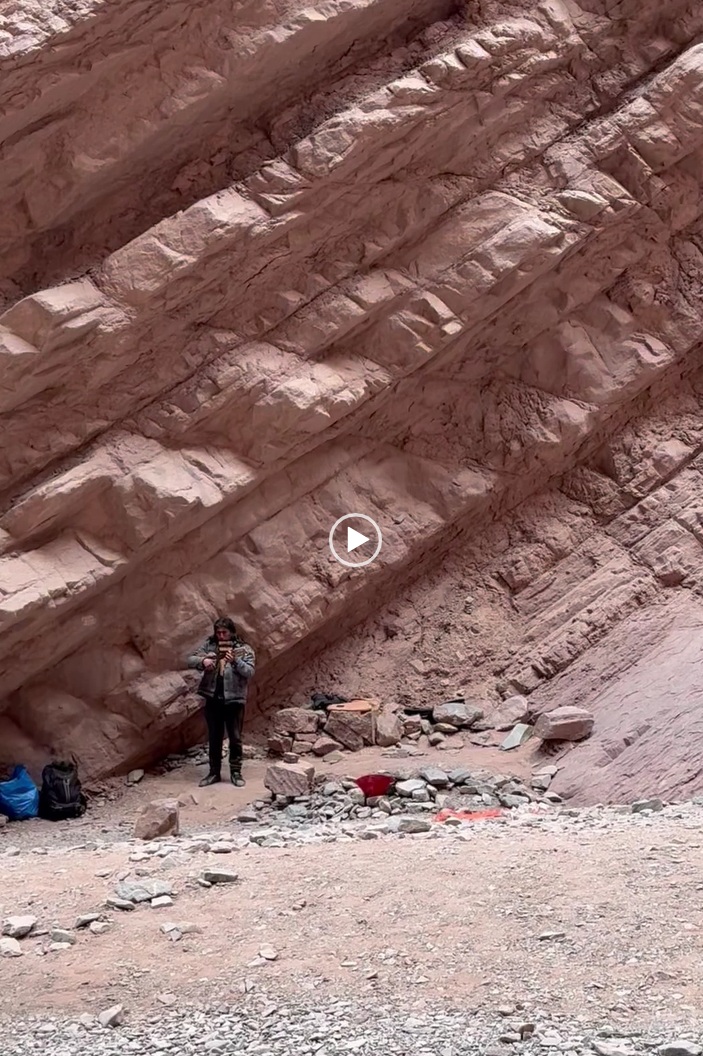
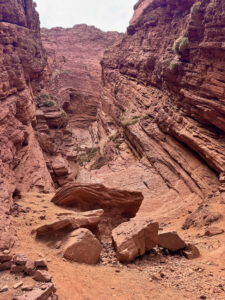
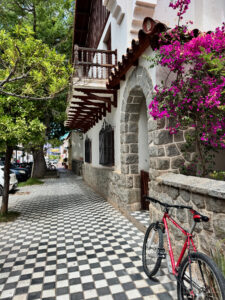
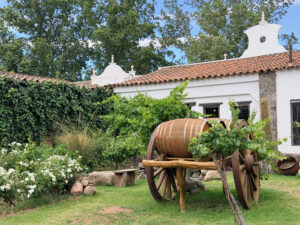
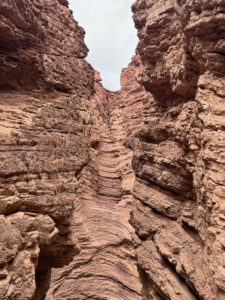
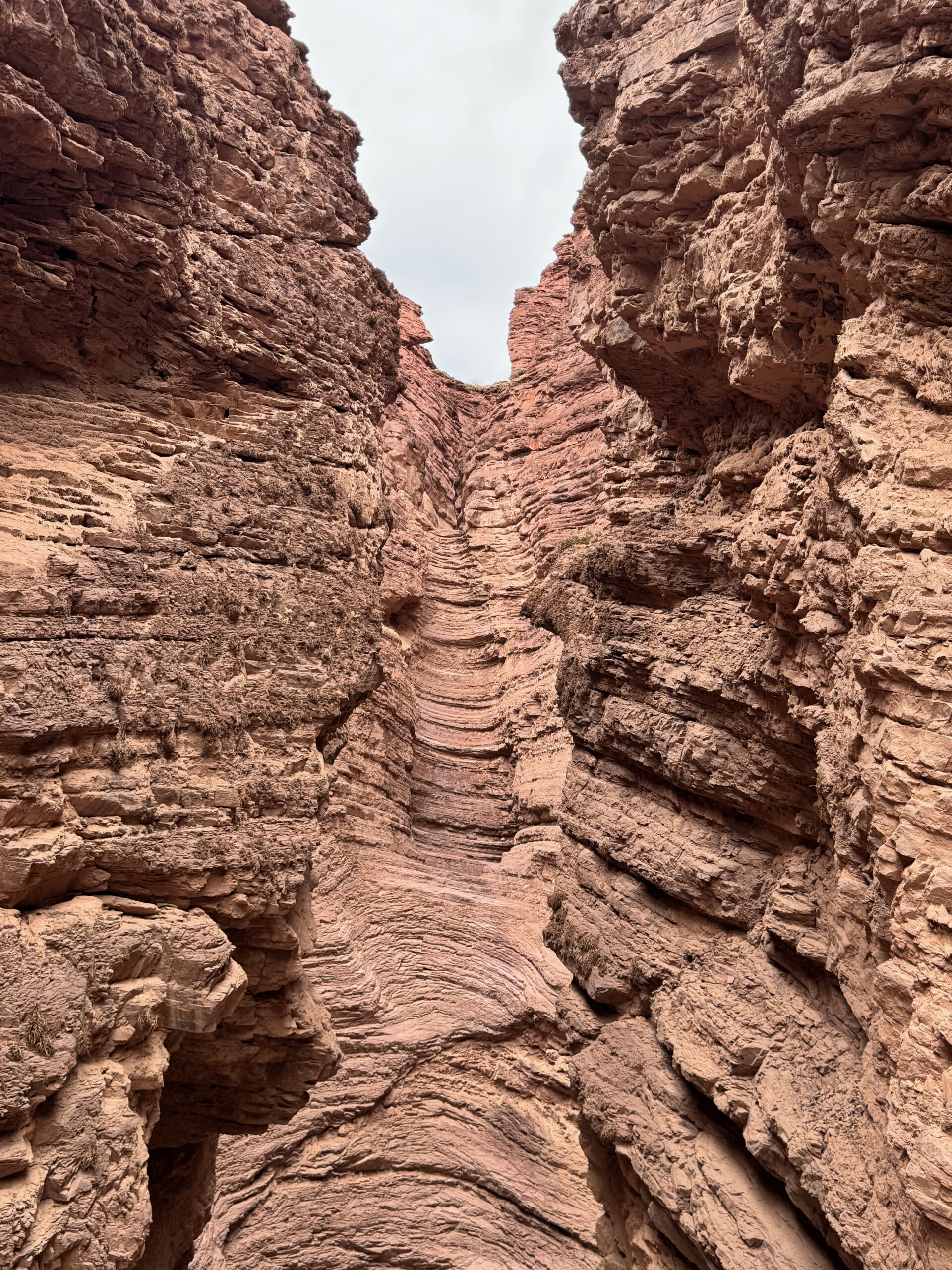
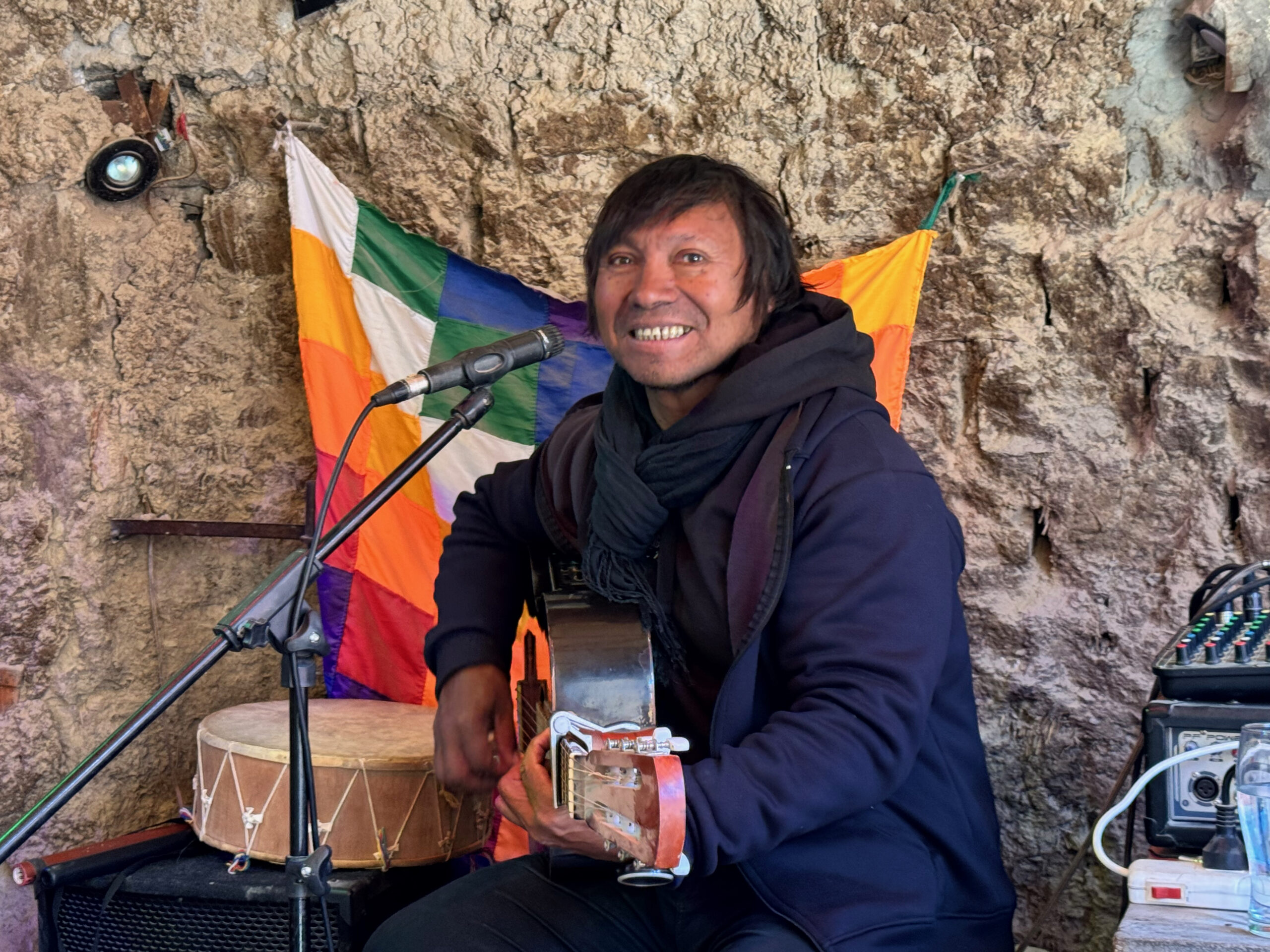
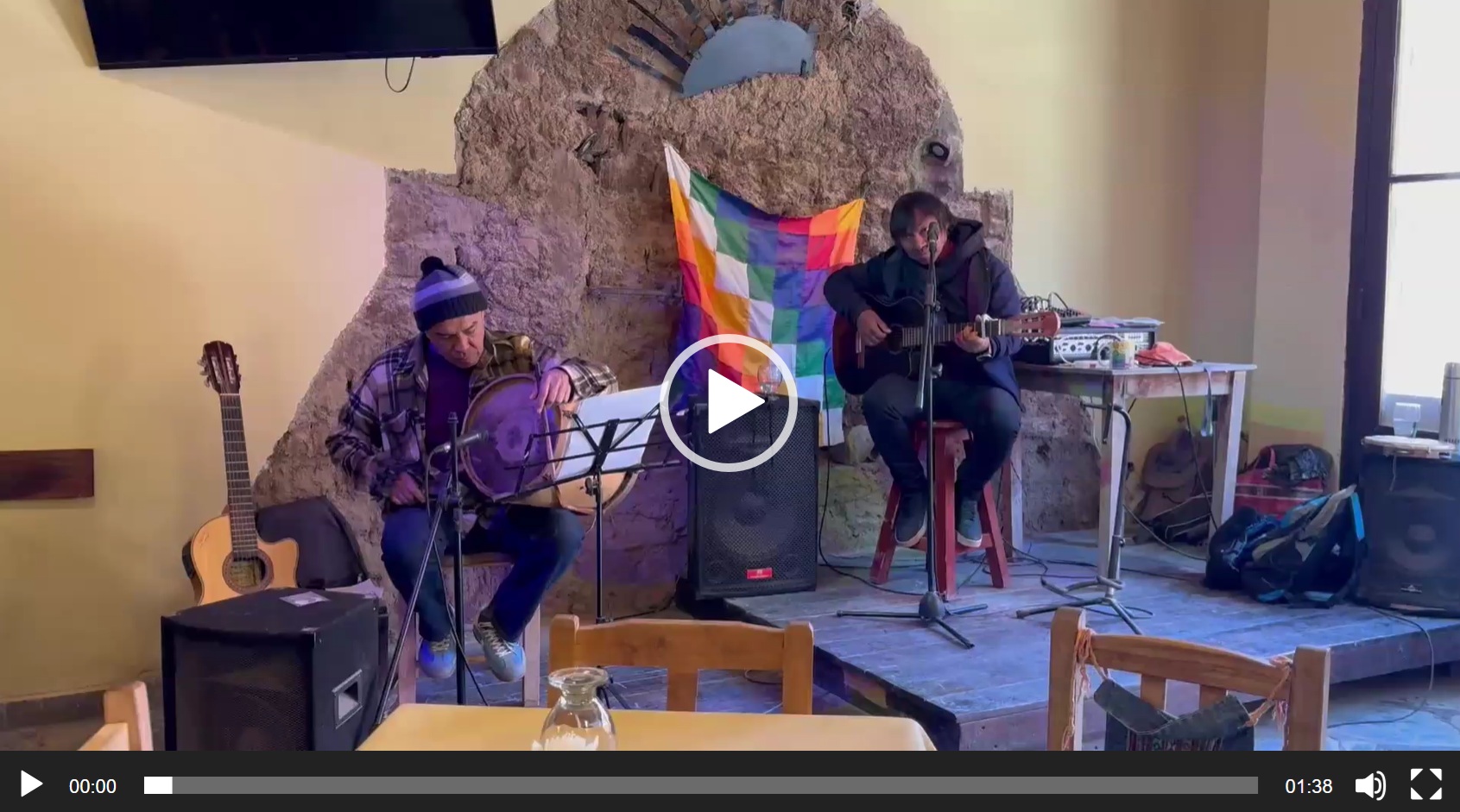
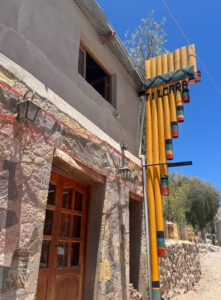
By the time we were awakened, Joe still had no interest in food, but made an effort to enjoy the three hour drive to Cafayete. The scenery was amazing as we wended our way through the Gorge de Conchas. At our destination, Fede left us to explore the charming colonial town. The central plaza is reminiscent of Sonoma Plaza. We wandered the streets that encircled it and bought Joe a Panama hat we had eyed at Llao Llao. We stopped for lunch at a parilla and ordered empanadas and a tamale. Joe tried to eat one but only had a few bites. We stopped at the Nanni Winery, where the winemaking equipment was on display. On the return trip we heard the lyrical sounds produced by an indigenous man playing in a Cathedral Canyon. It was an ethereal moment.
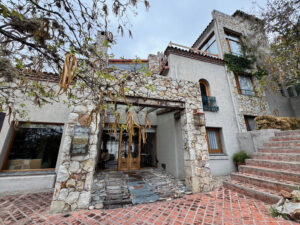
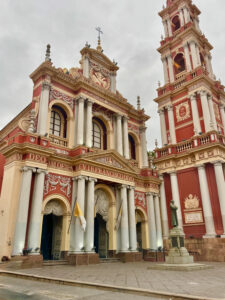
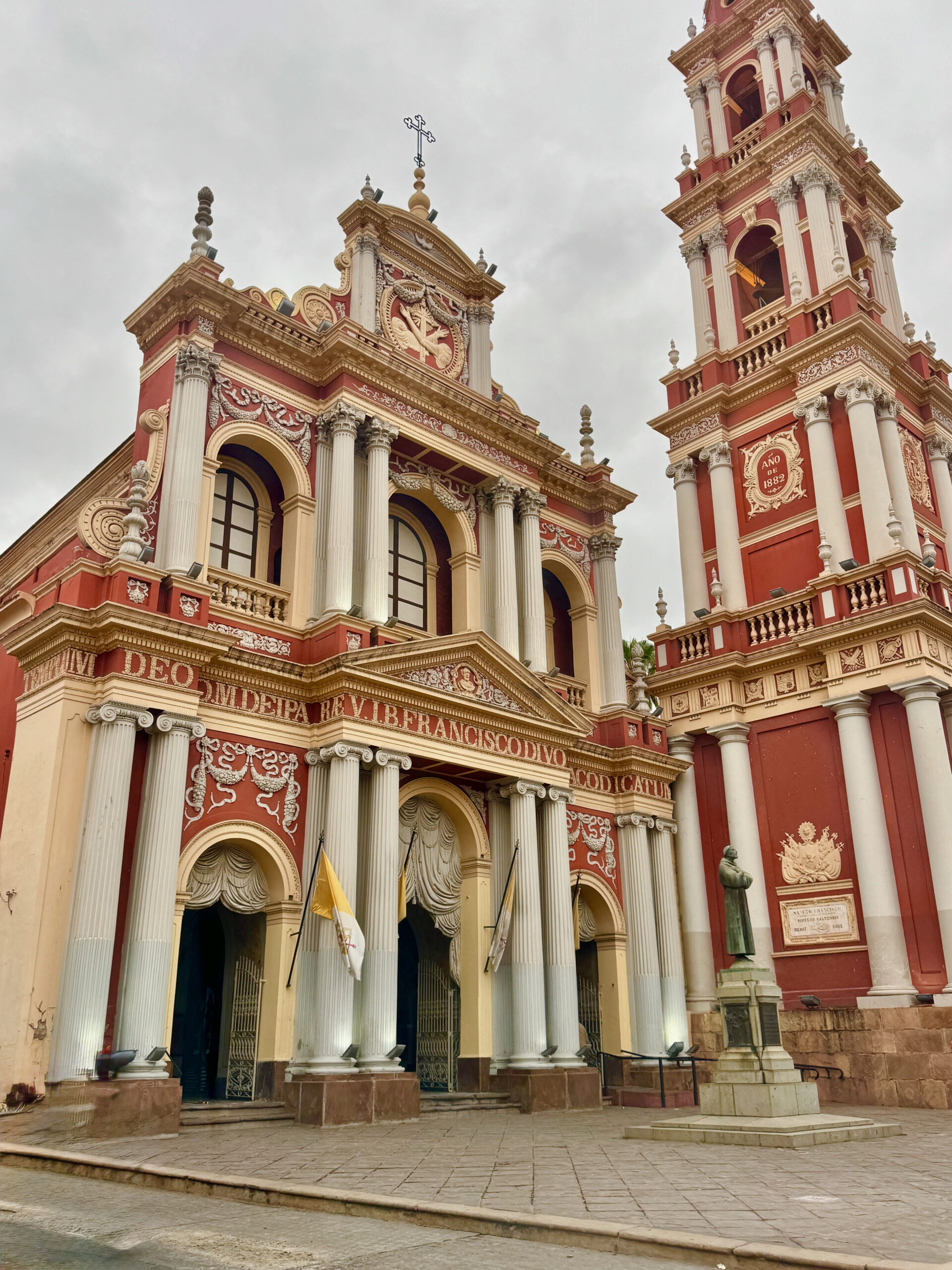
Back in Salta, we got the driving tour that we missed yesterday. It’s a city of about 600,000 which was unexpectedly large. We weren’t especially impressed, but it had a spectacular Catholic cathedral in the middle of town. Joe agreed to a walk into town that evening for dinner, but he was still not interested in eating.
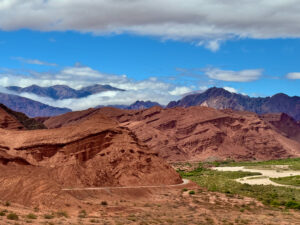
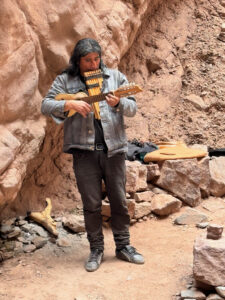
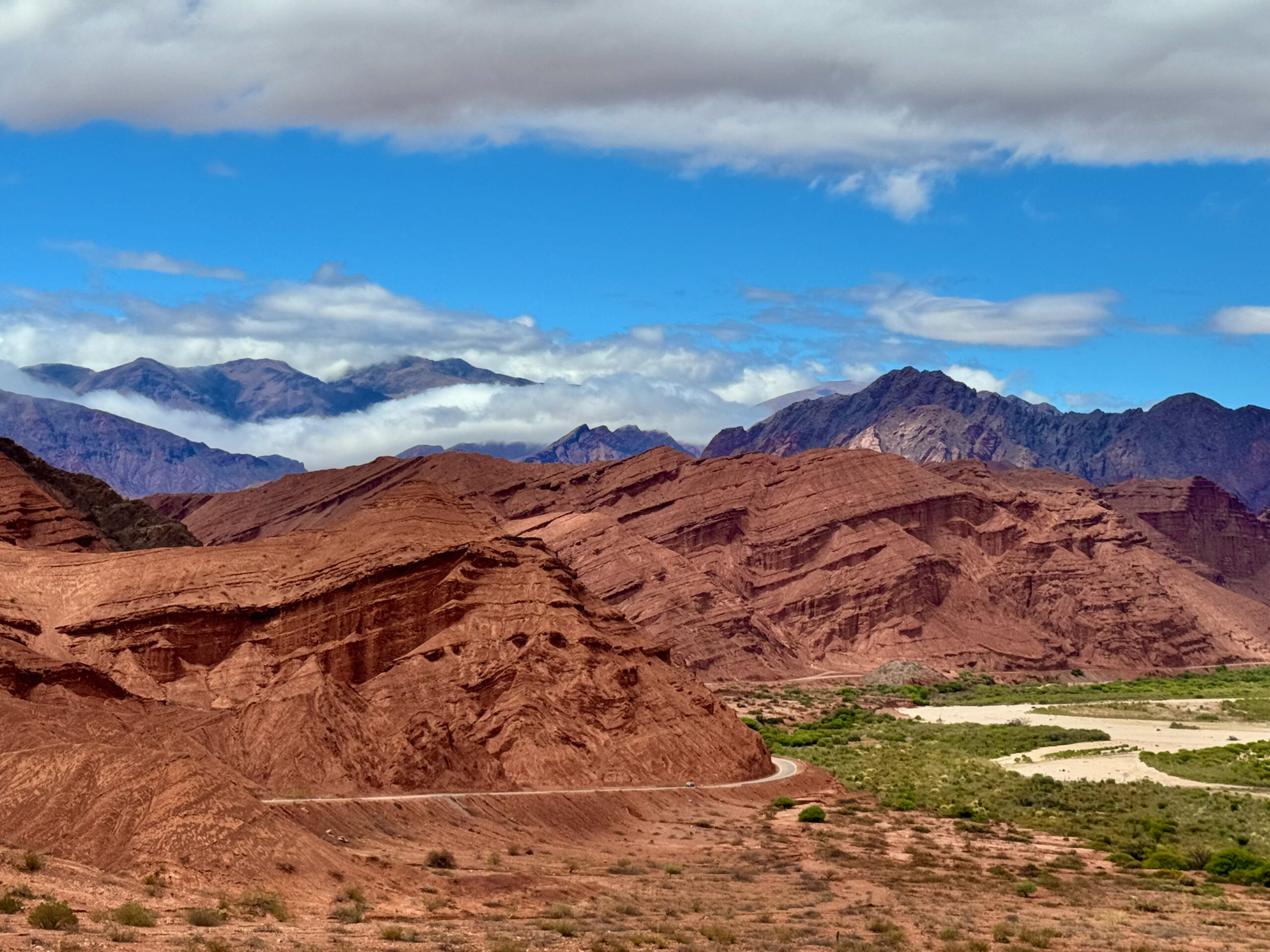
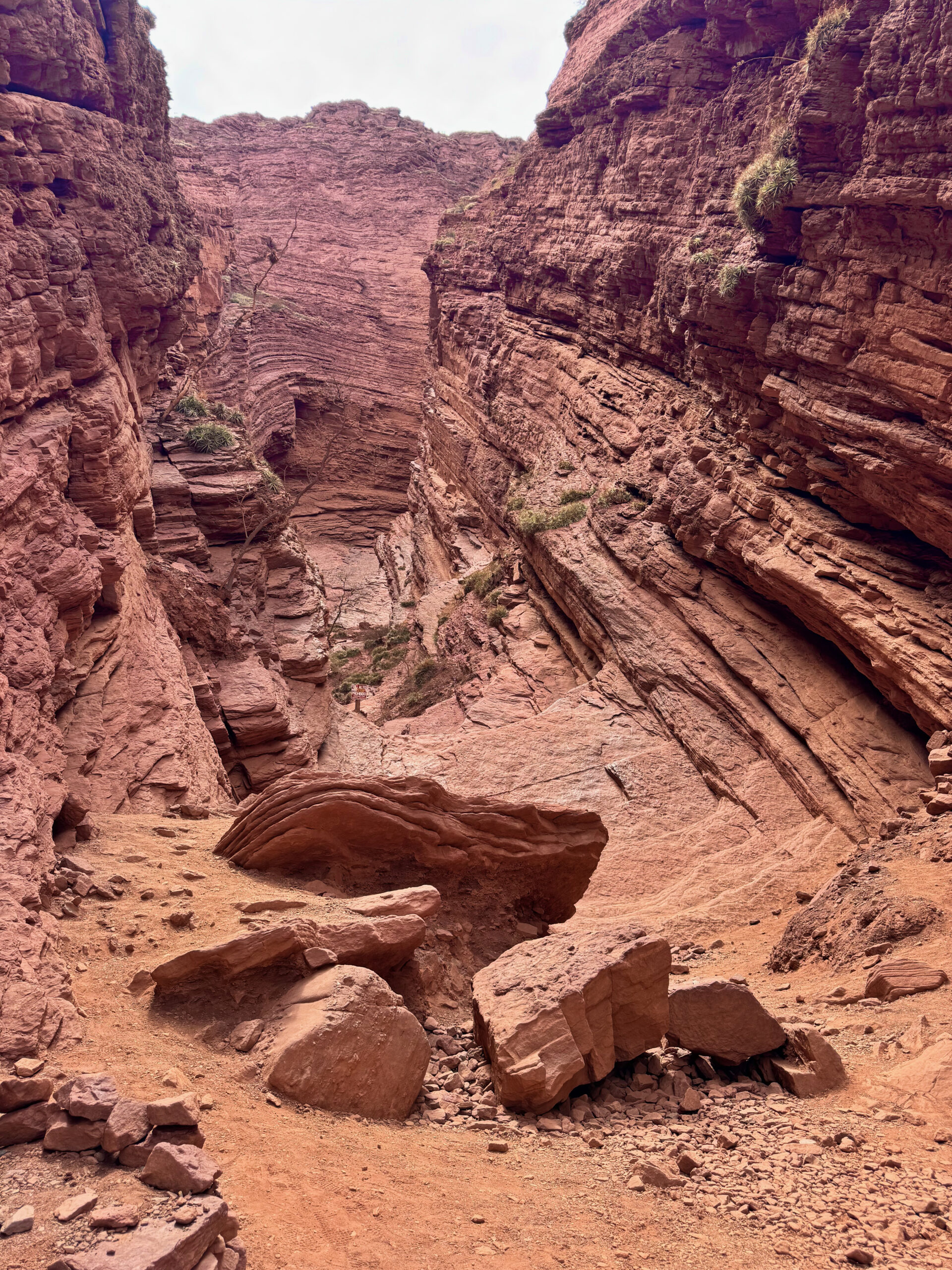
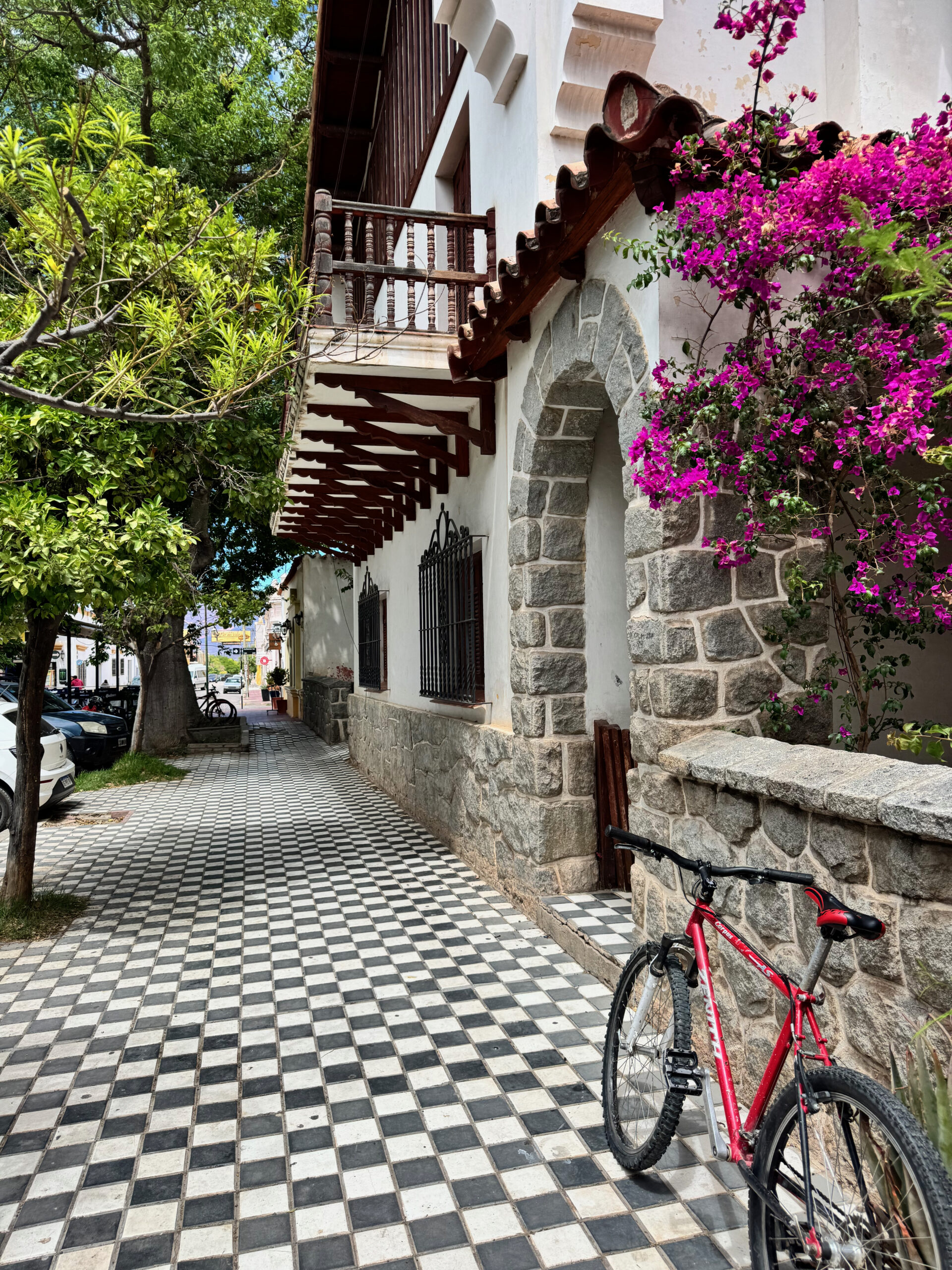
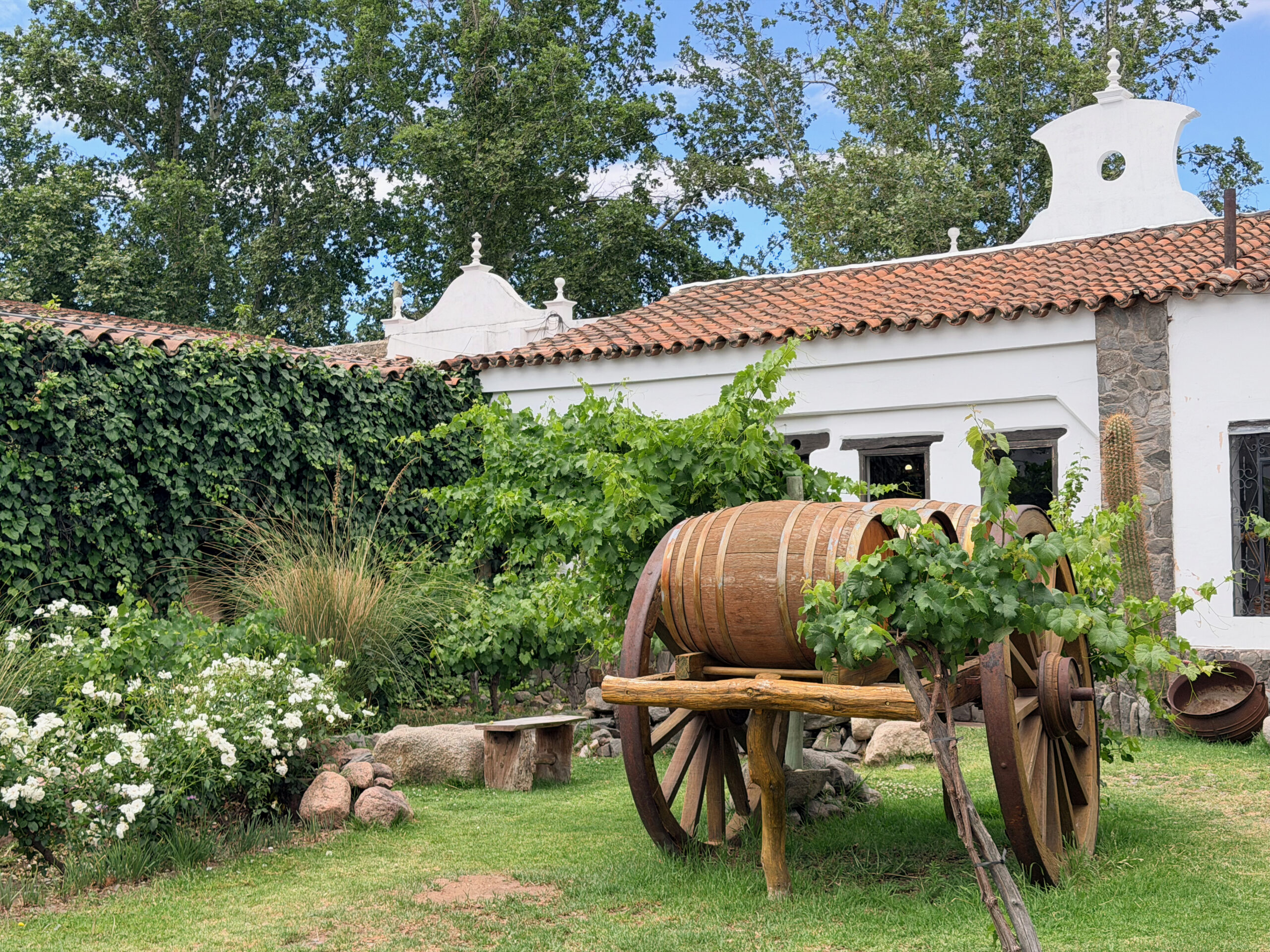
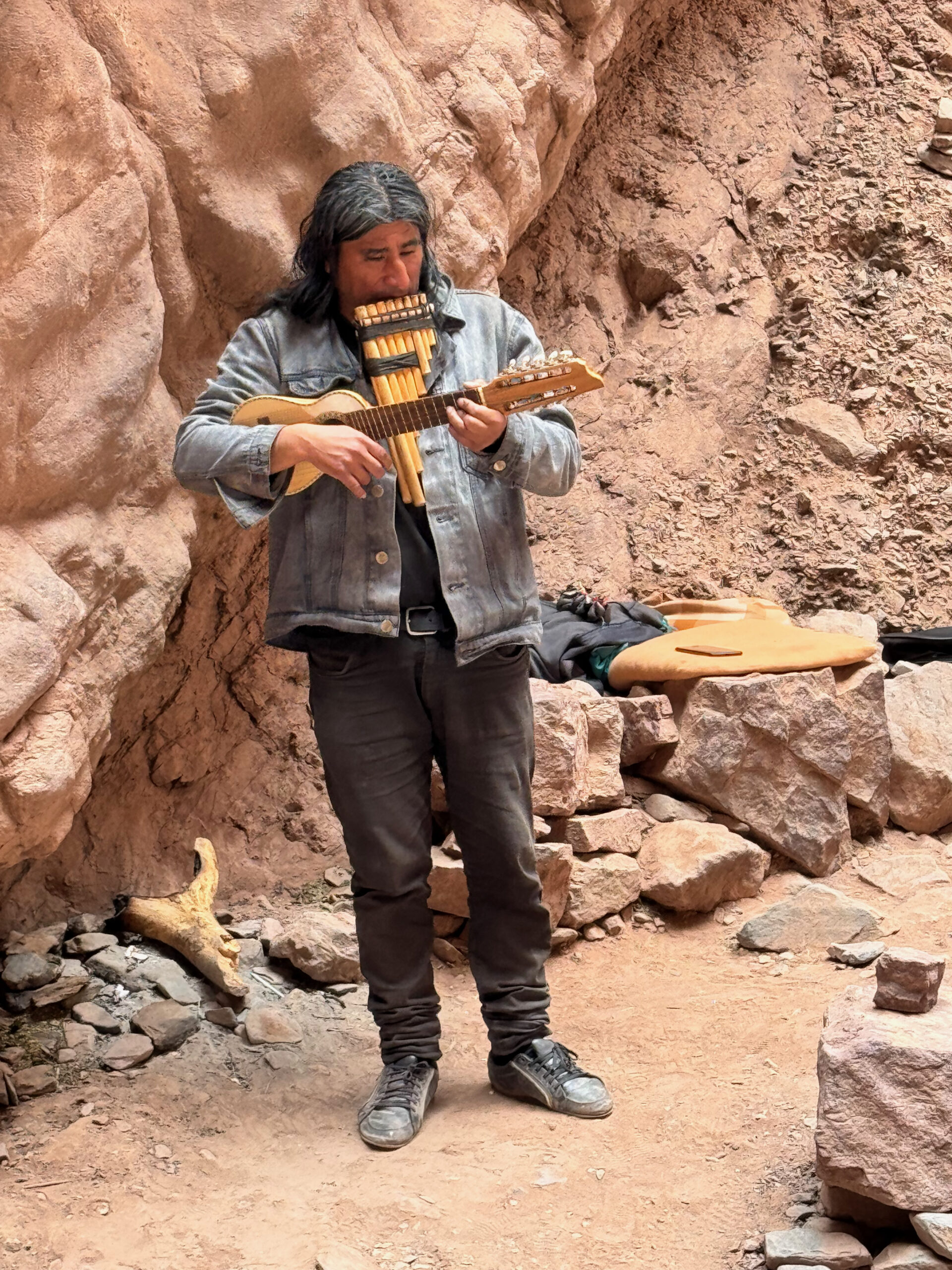
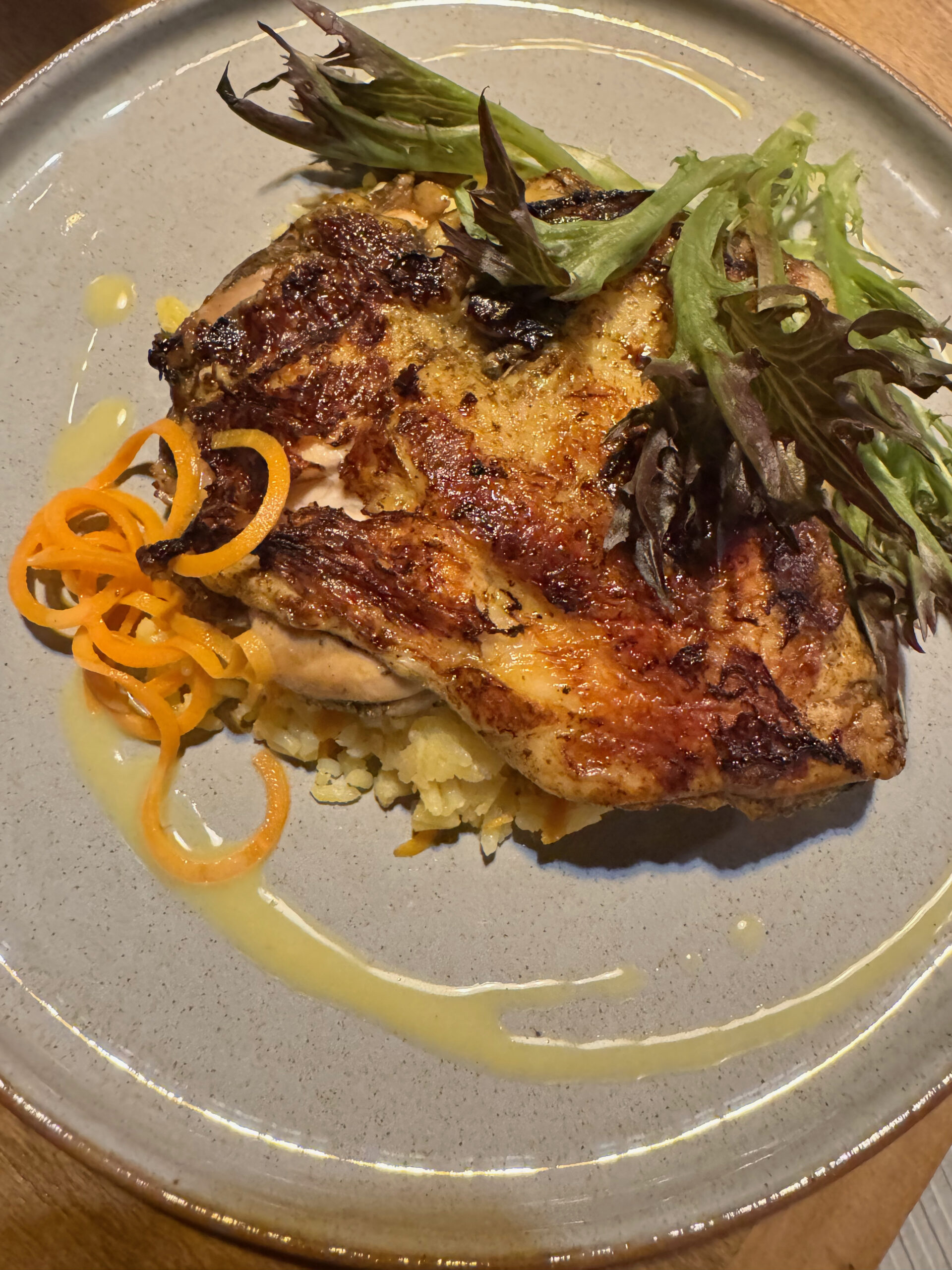
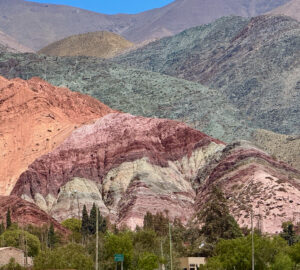
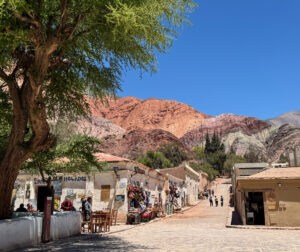
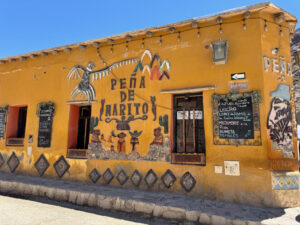
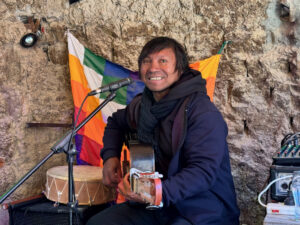
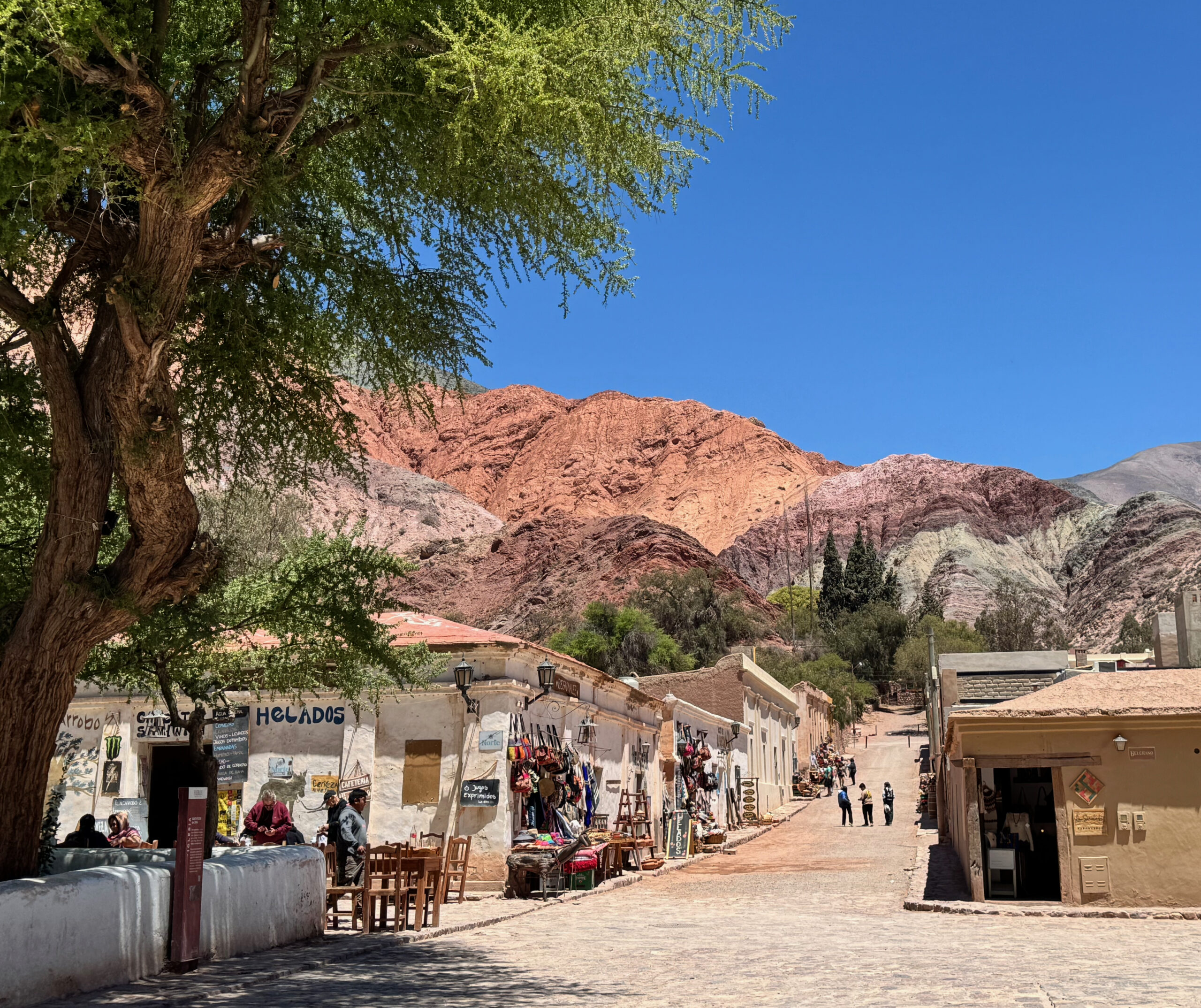
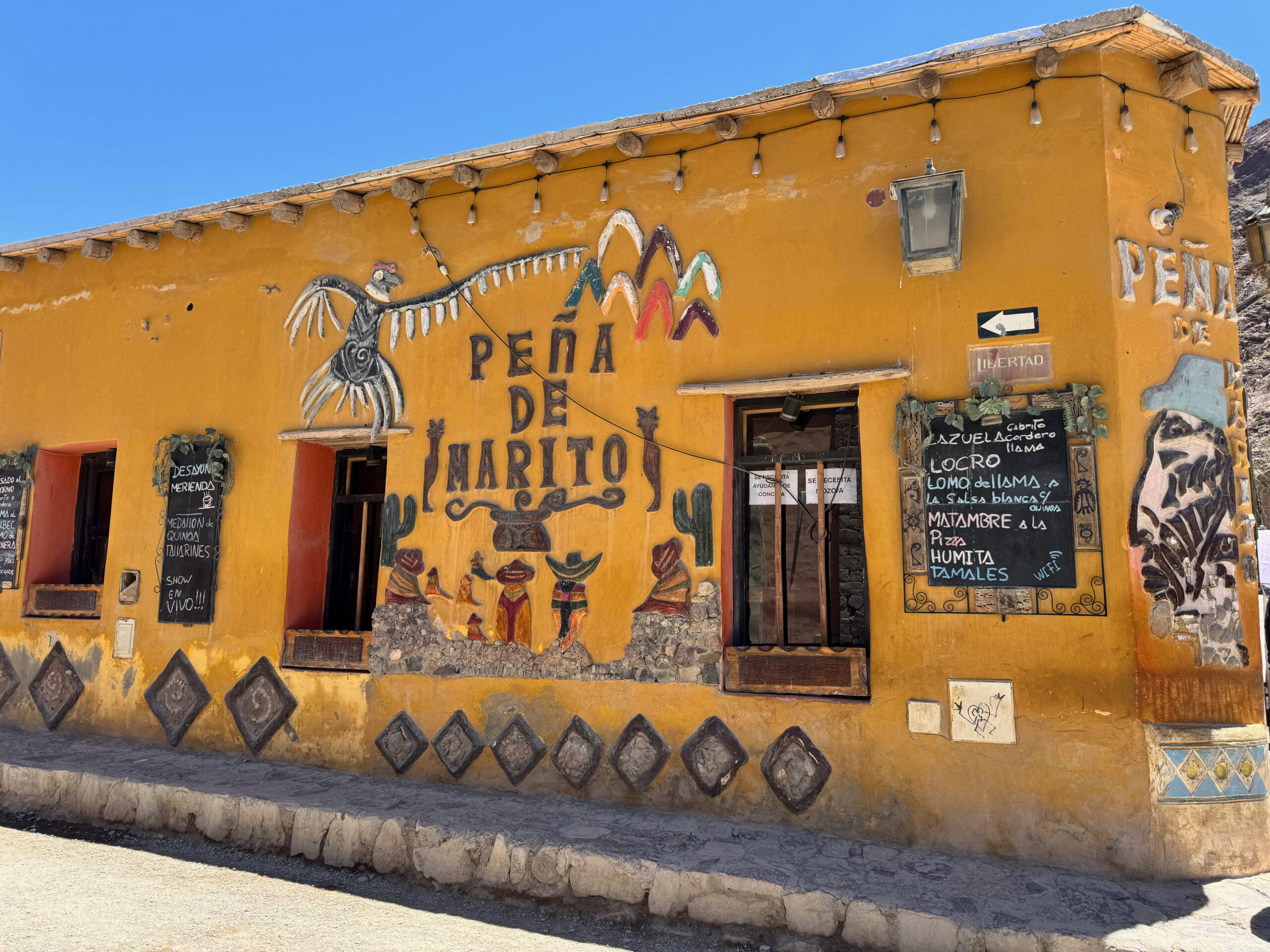
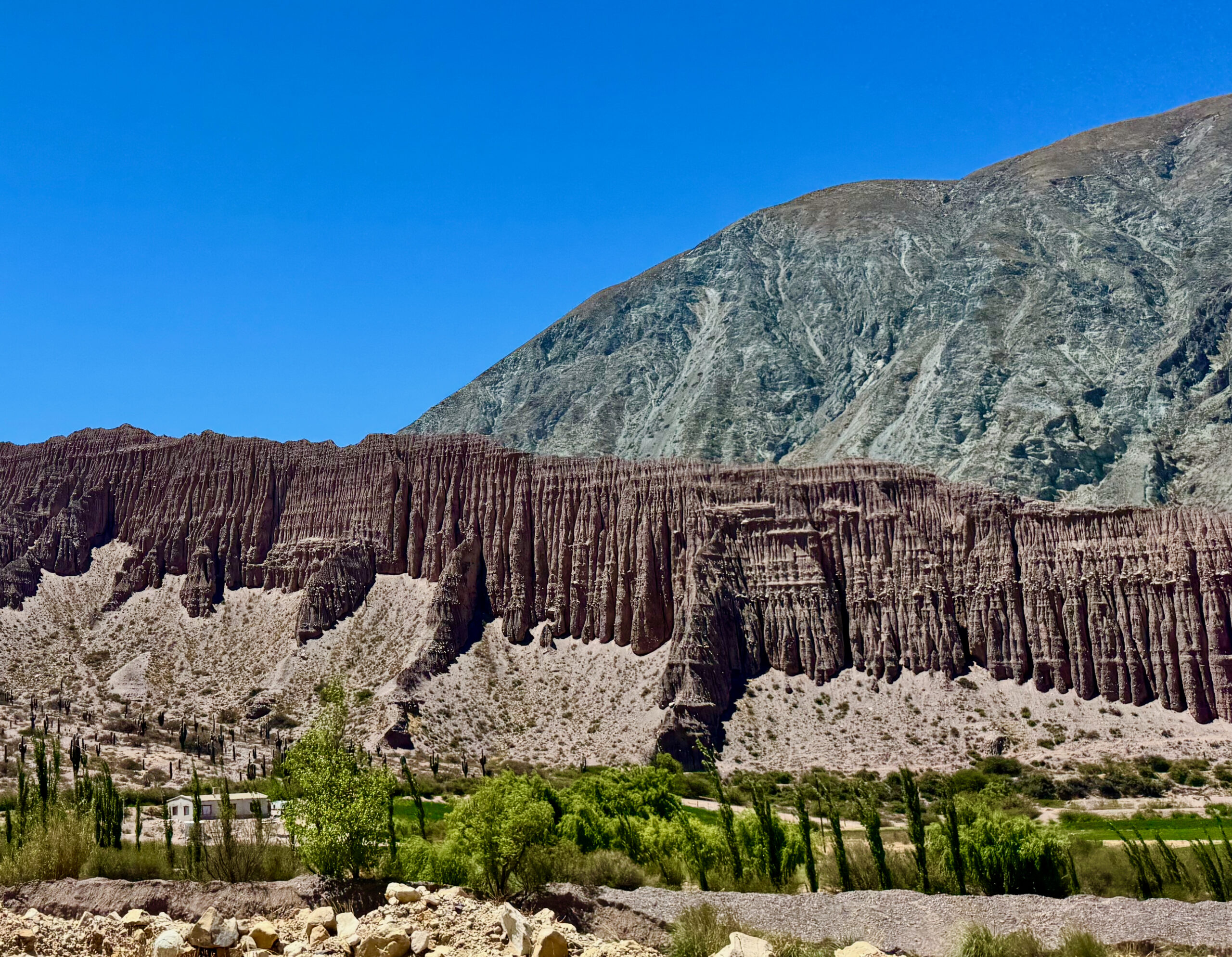
We were leaving Salta the next day for points north in Jujuy Province. We had another 3-hour drive to Purmamarca, a small, picturesque village set in the Andes at the base of the Hill of Seven Colors, a dramatic rainbow-striped mountain. A traditional artisan market, set around the main plaza, sells Andean textiles and crafts. We had lunch at a simple cafe but the food was mediocre, at best. Joe did manage a partial bowl of soup. A modest pena ensued during our lunch, with Fede attempting to liven up the “gathering centered on folk music, dance and food” but given we were the only patrons present it wasn’t quite the experience we anticipated. However, the musical entertainment was authentic indigenous and enjoyable.
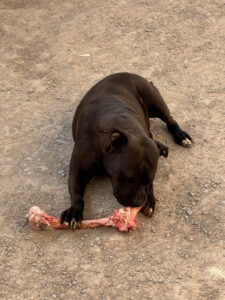
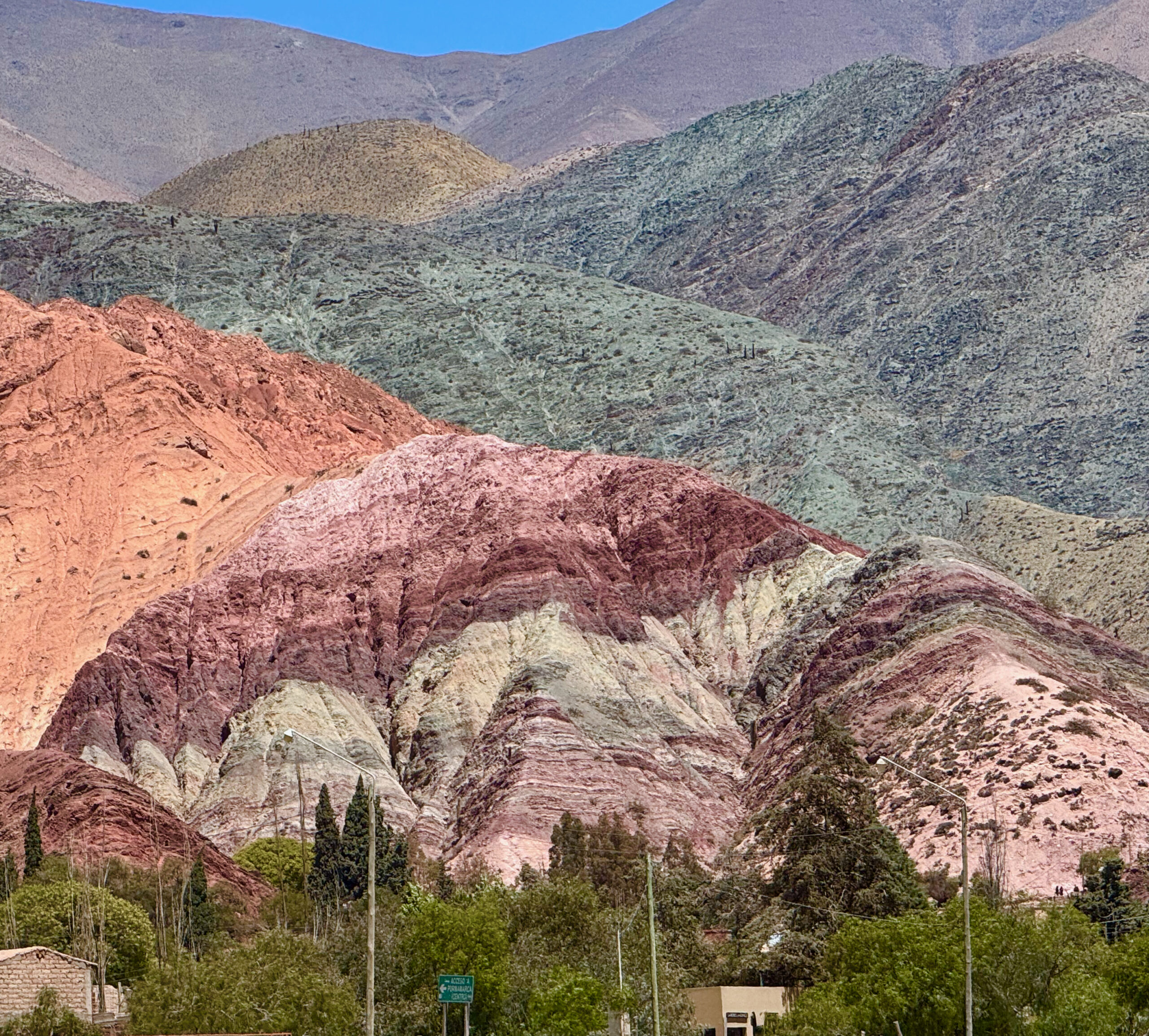
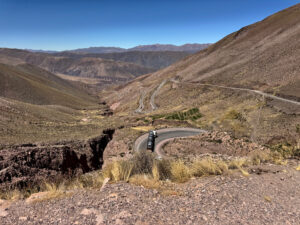
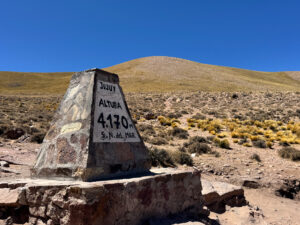
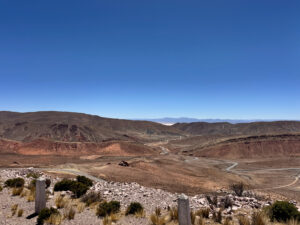
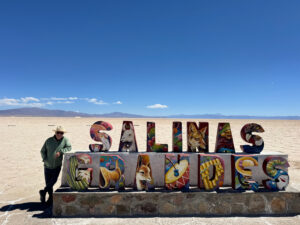
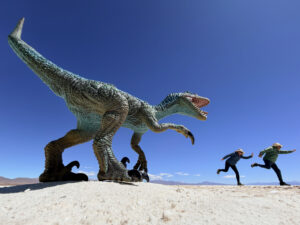
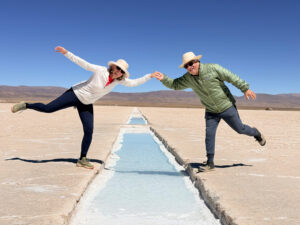
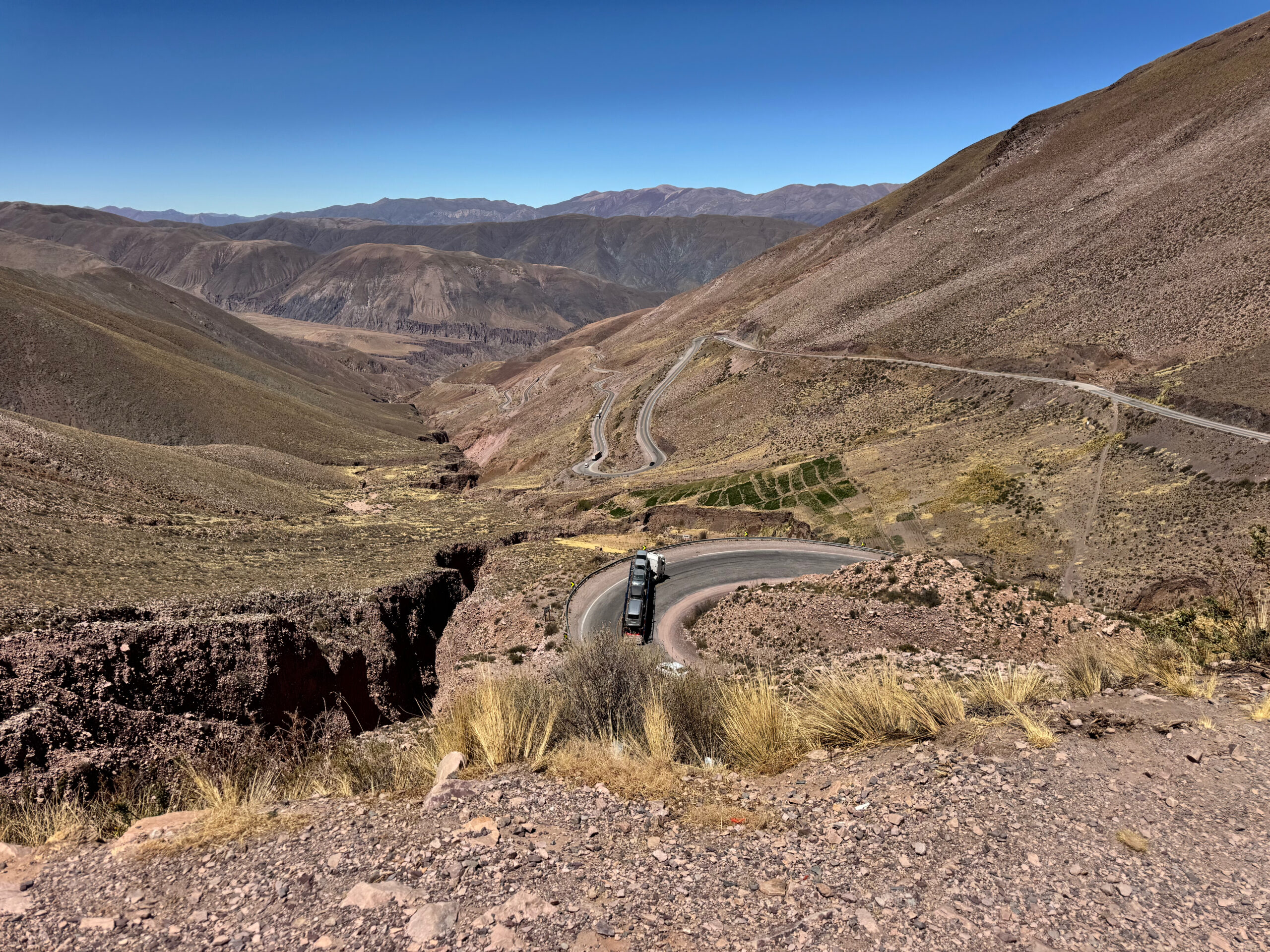
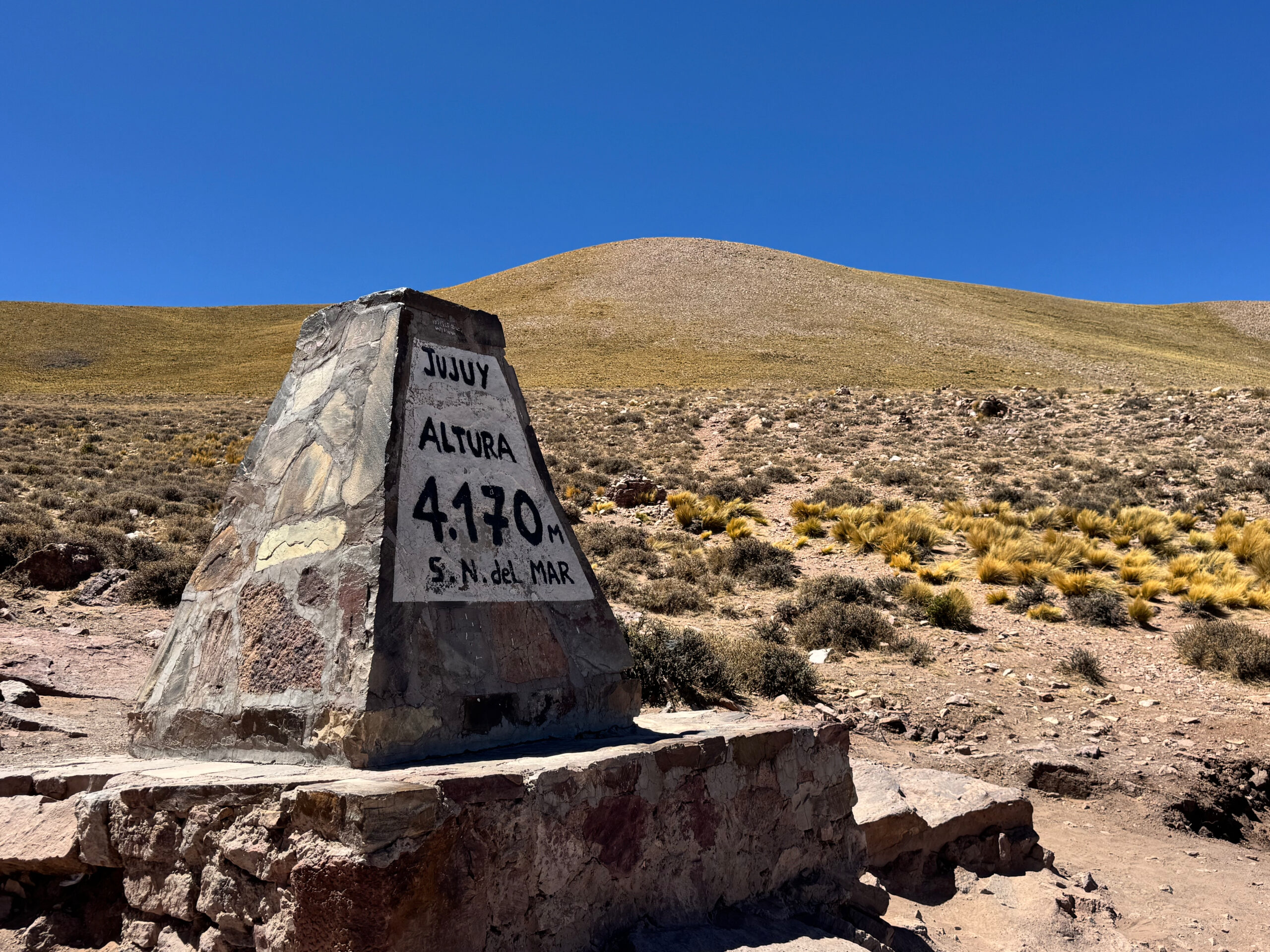
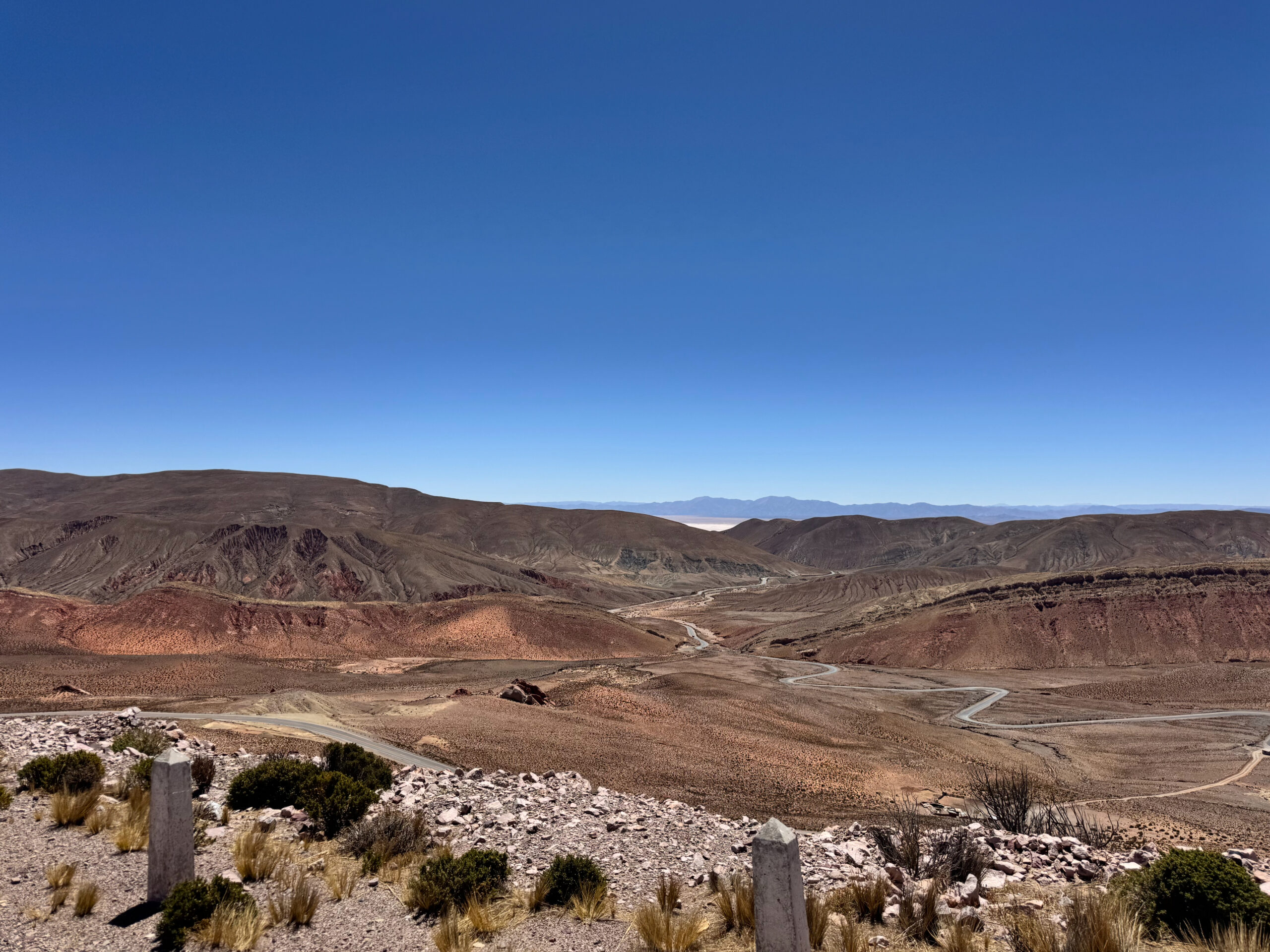
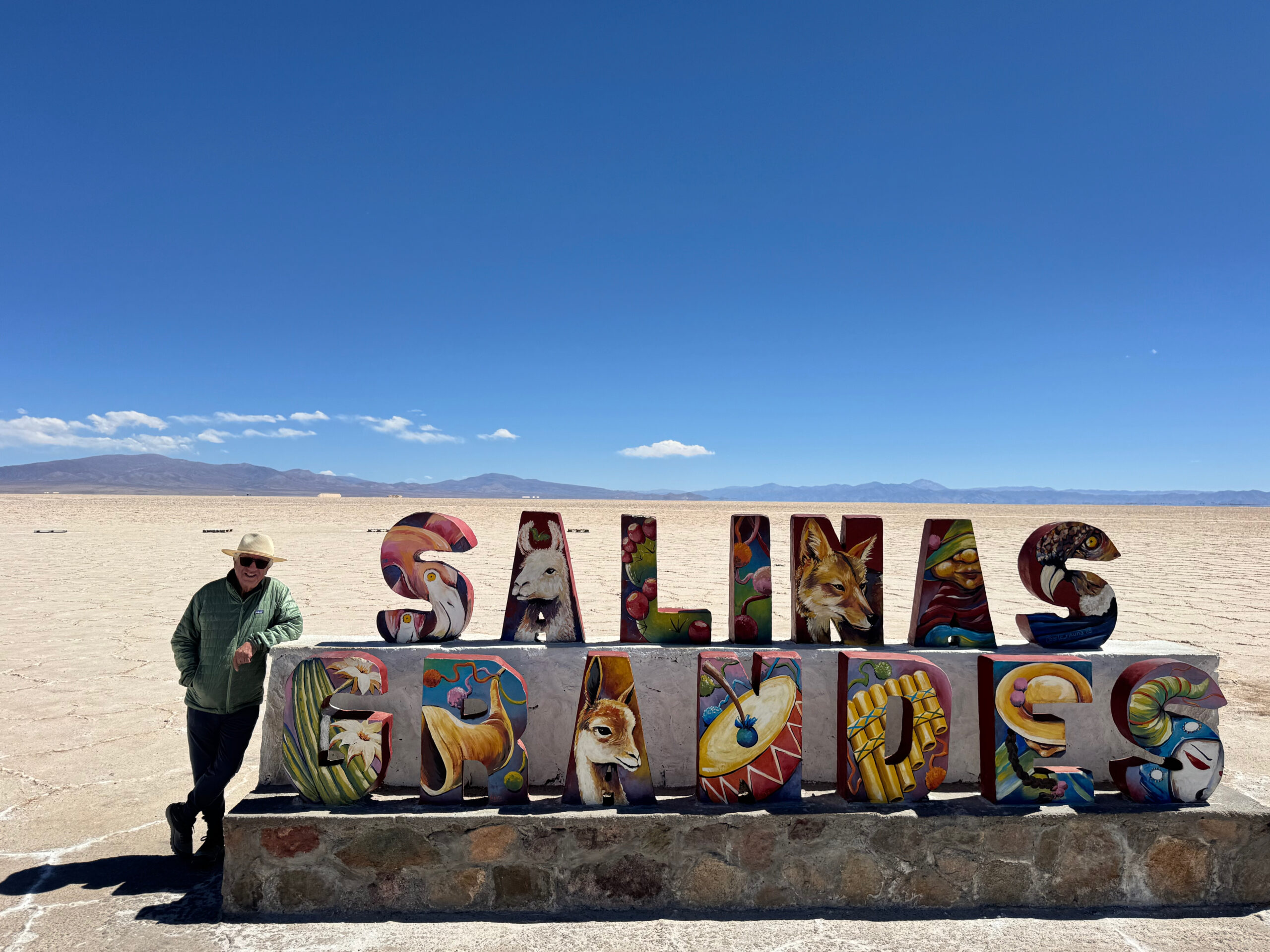
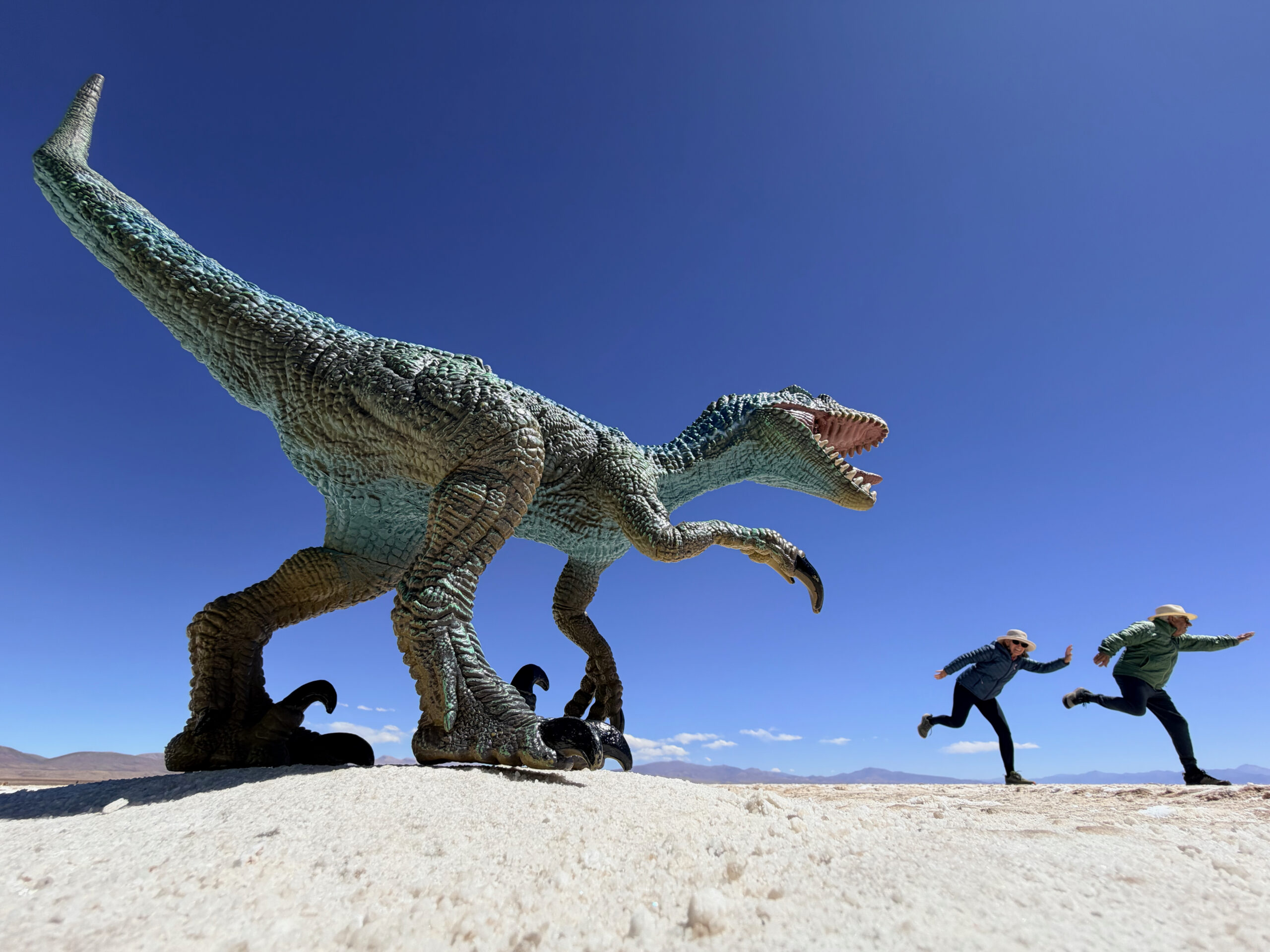
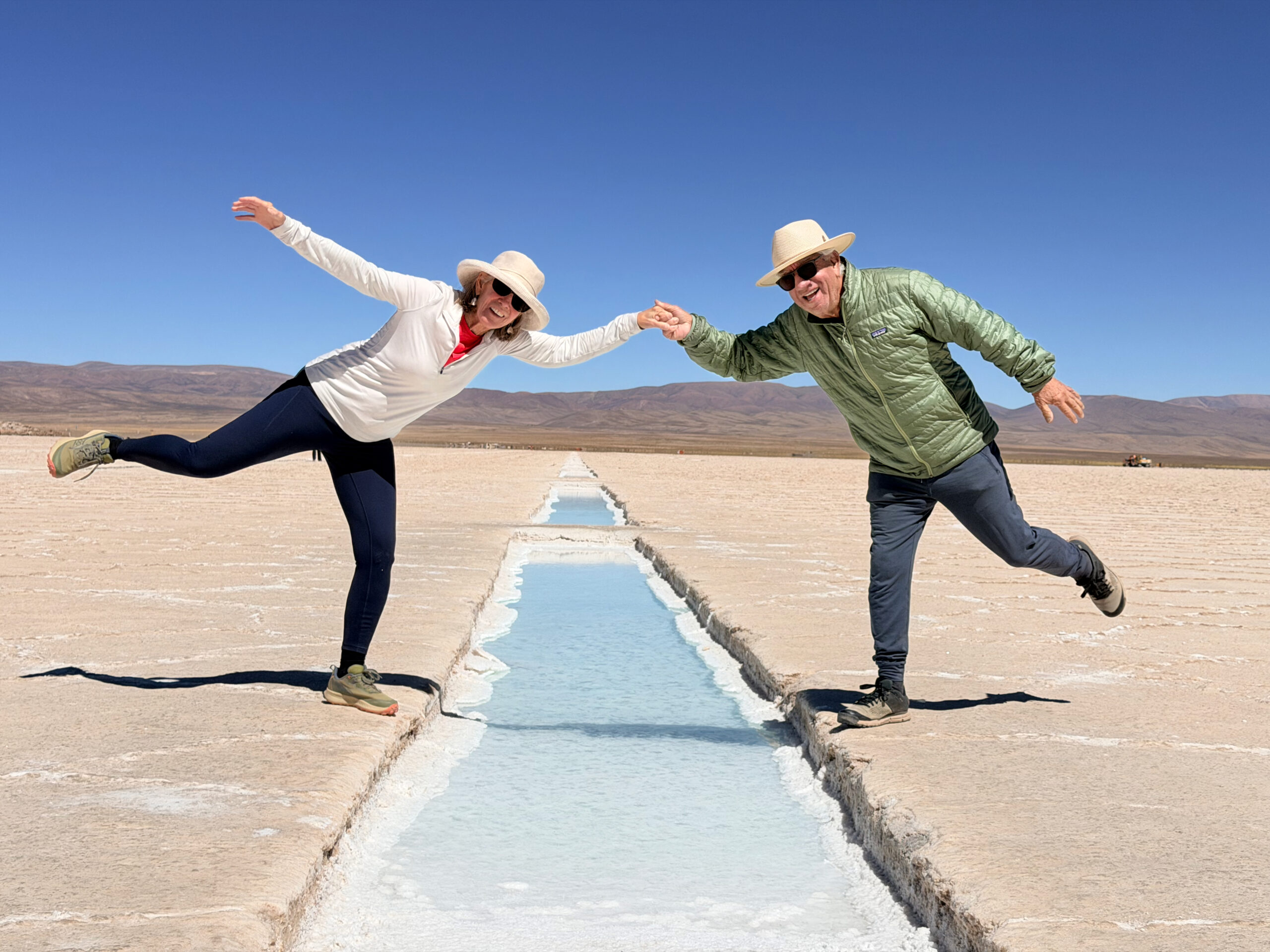
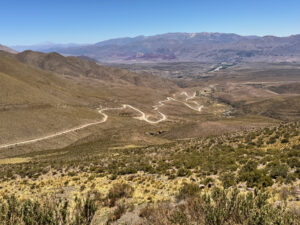
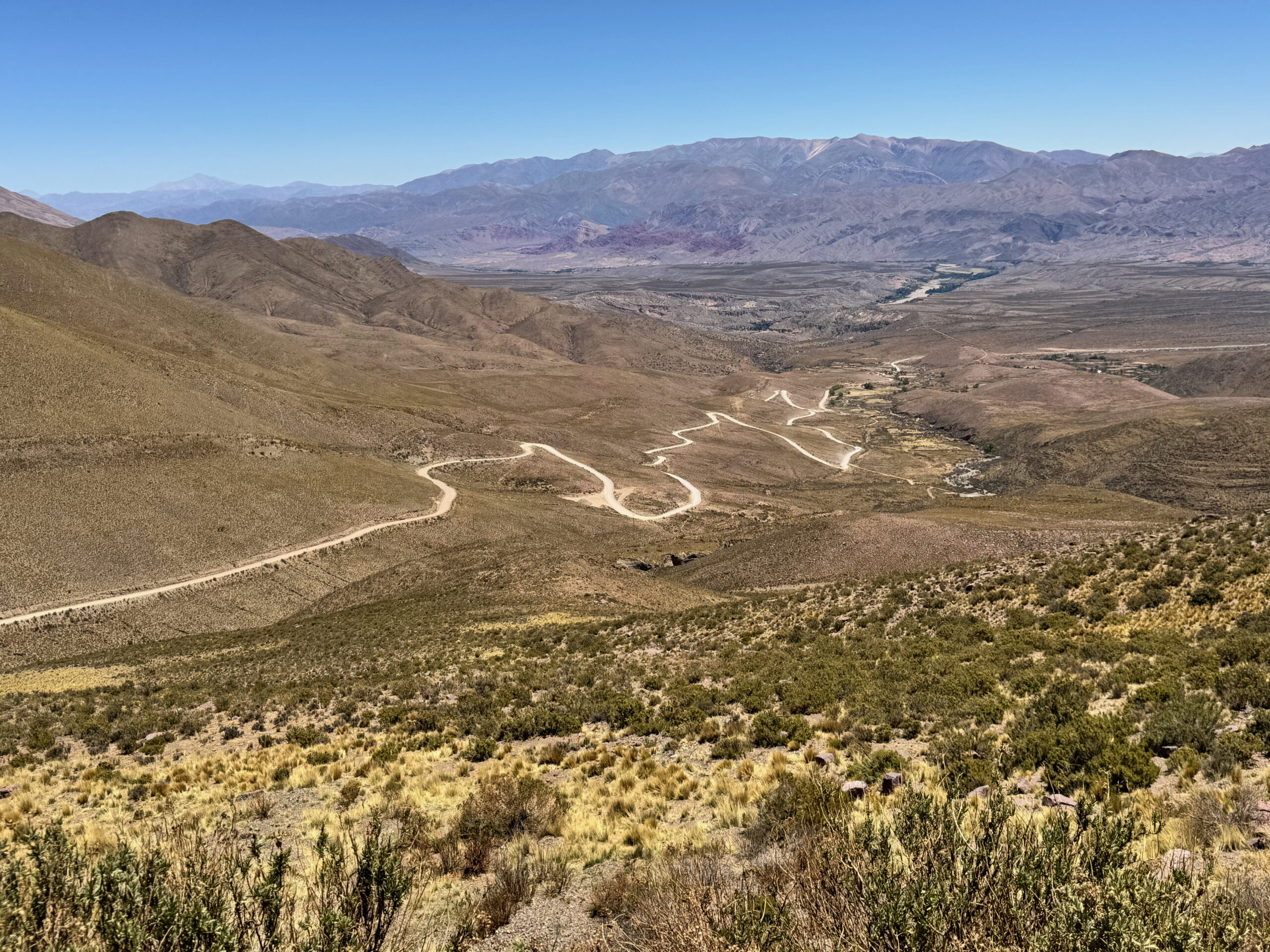
Jujuy and Salta Provinces are considered to have among the most striking landscapes in Argentina. And Salinas Grandes, a vast salt flat at an elevation of 11,300 feet above sea level, is distinctly different from the spectacular geologic formations surrounding it. From Purmamarca we drove through the Quebrada de Humahuaca, a narrow valley of scattered adobe villages and colorful hills. It was over an hour along a steep winding road, zigzagging above tree line, to cross a 4,170 ft mountain pass before descending into the valley of blinding white salt stretching to the horizon. When we finally arrived, it seemed a bit goofy to have pictures taken with tiny jurassic creatures, but the photographer staged the scene making us look proportionally smaller. The fact that there were no other tourists nearby made the experience of being a bit more believable and, of course, our visit supports the local community.
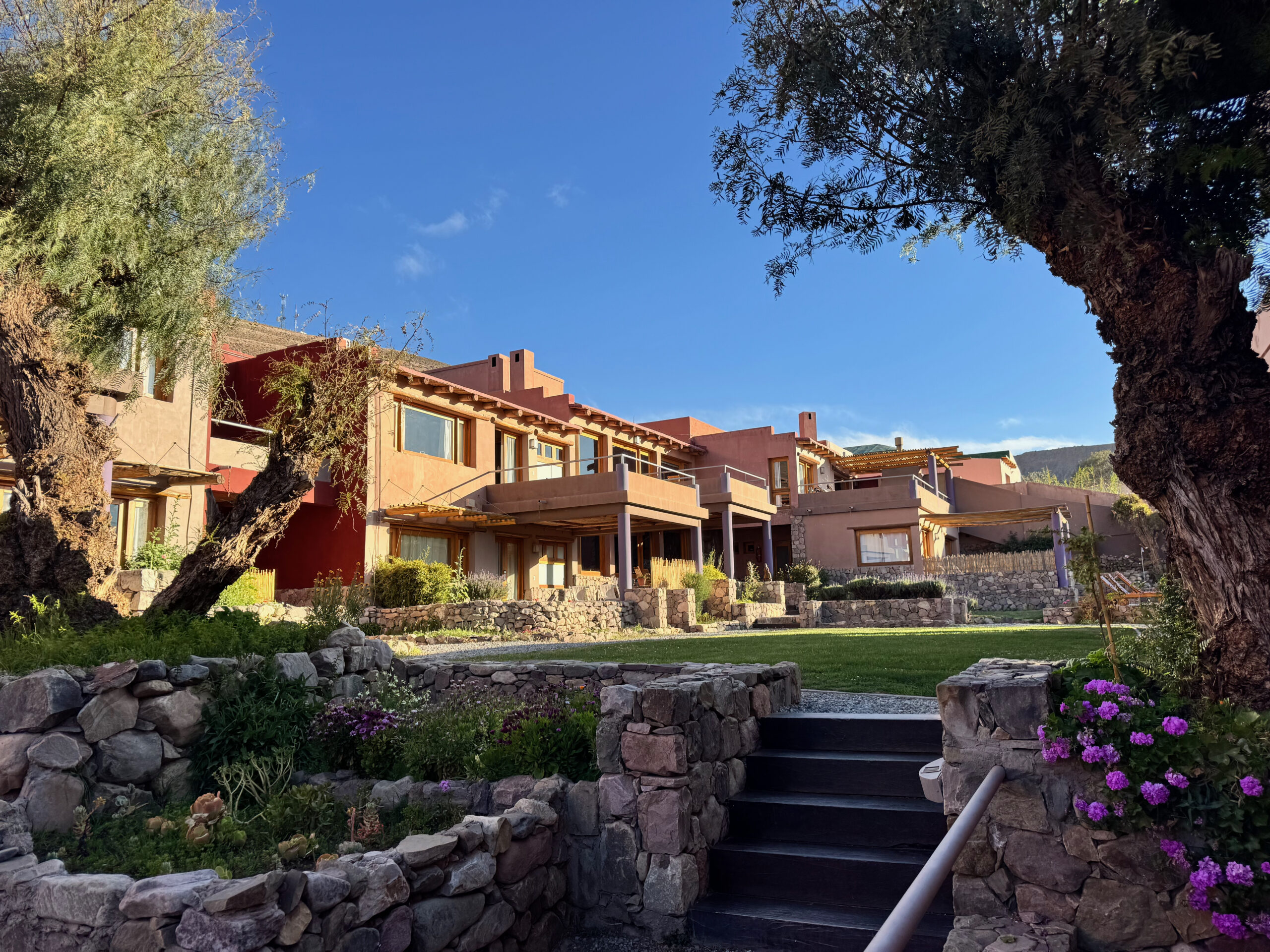
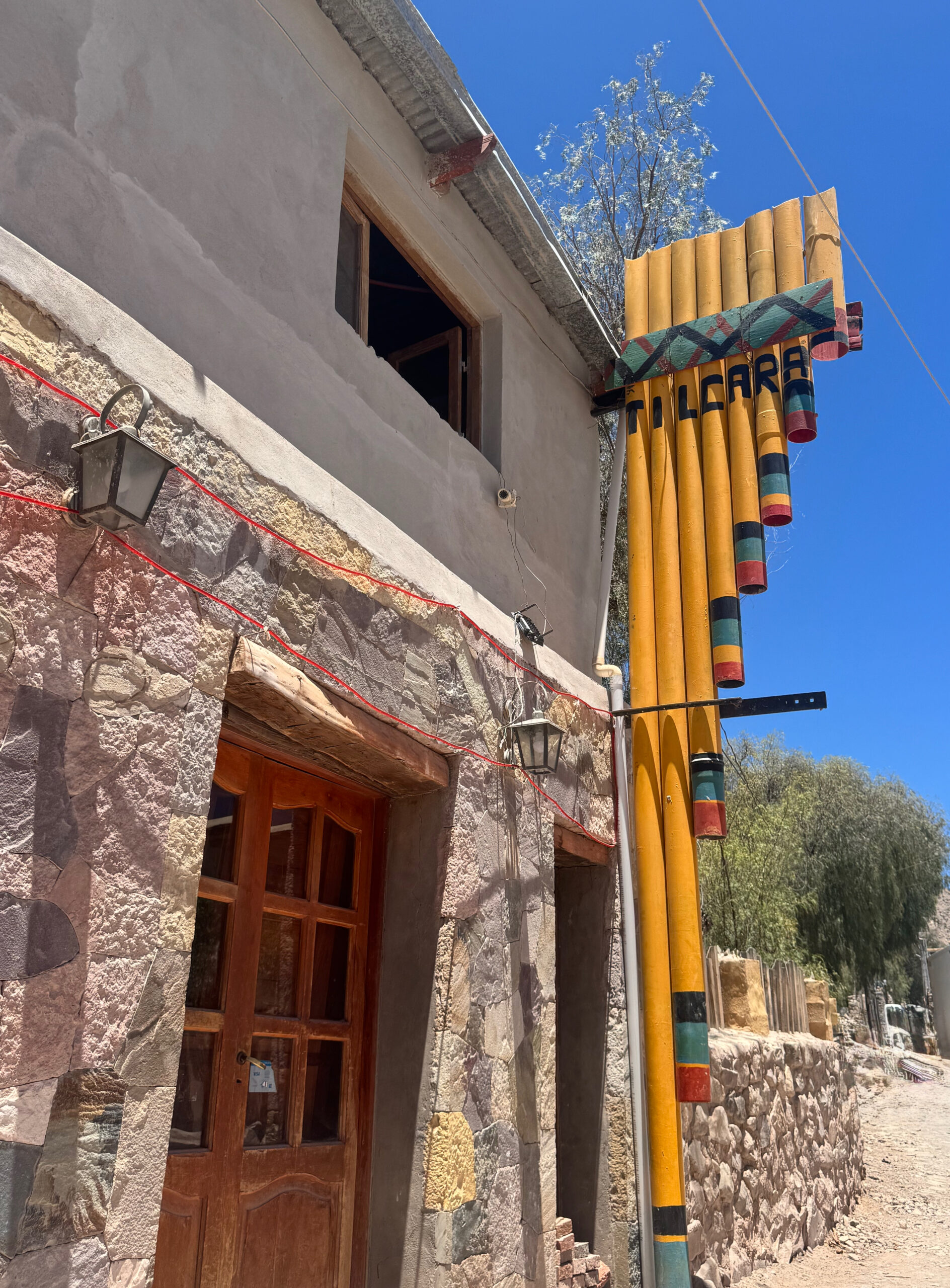
After nearly 6 hours of car time today we were pretty eager to get out and walk when we reached Tilcara and Las Marias Hotel, where we spent 3 nights. This was the 3rd evening that Joe had no appetite. The small hotel had a nice dining room, so after a soak in the spa I enjoyed dinner on my own and he again went comatose. The next morning he was actually hungry but took it easy with a couple eggs and toast. This was the turning point to his recovery from, what? We never identified the rhyme or reason for his malaise.
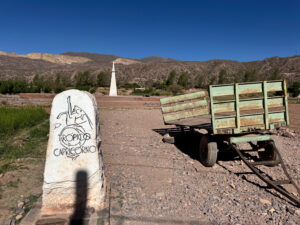
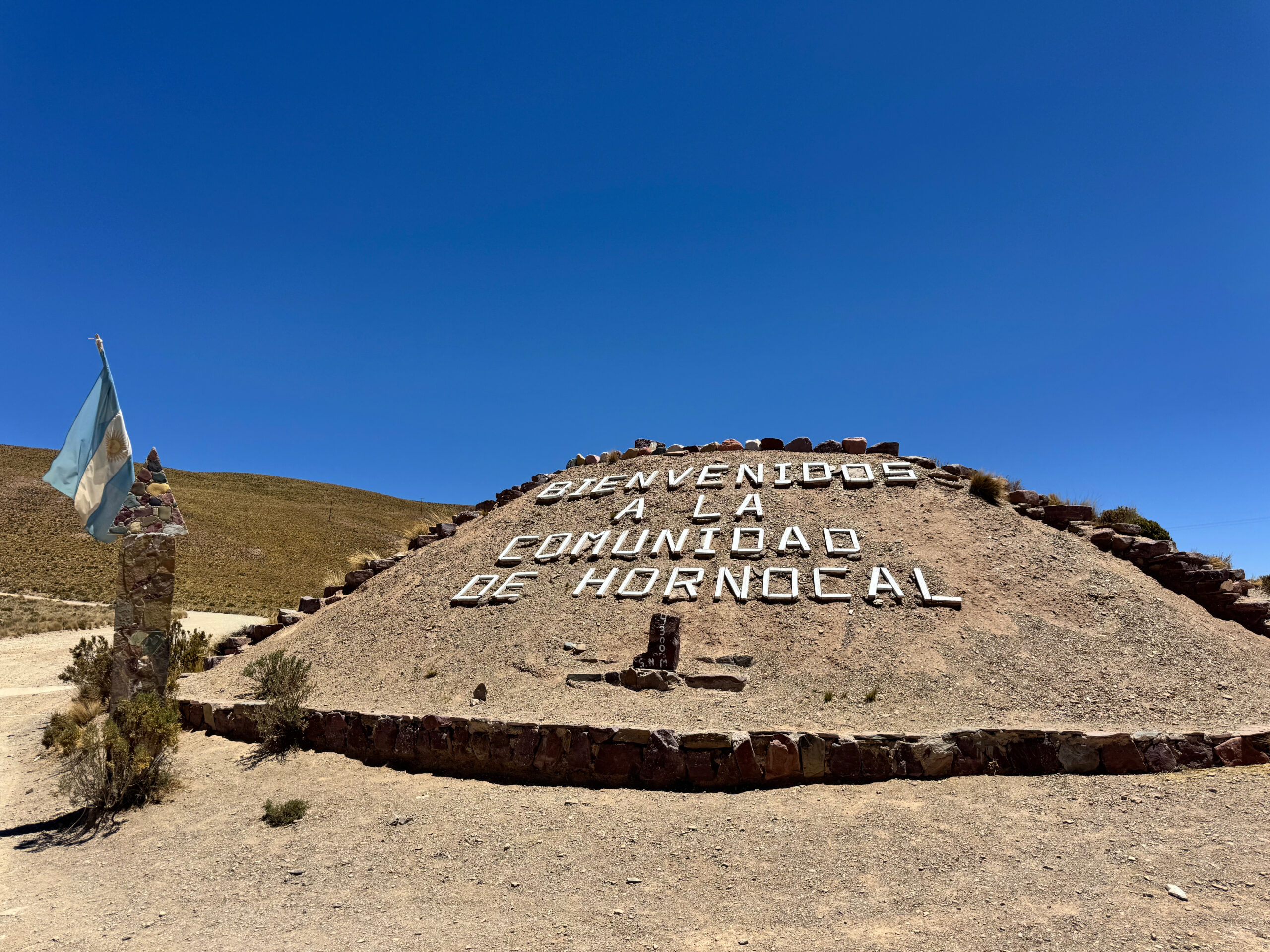
Today, we were off to Humahuaca and the Sierras del Hornocal, another outstanding drive with one stunning landscape after another. We were delighted to realize we were crossing the Tropic of Capricorn again. We have crossed this invisible line in the southern hemisphere in Namibia and in three states in Australia: Queensland, Northern Territories and Western Australia.
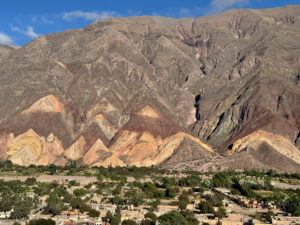
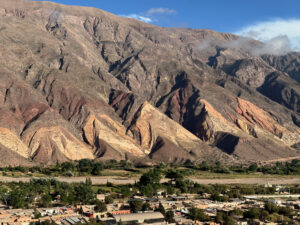
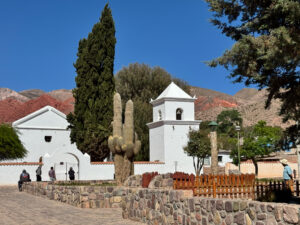
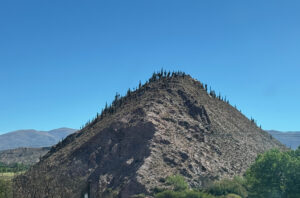
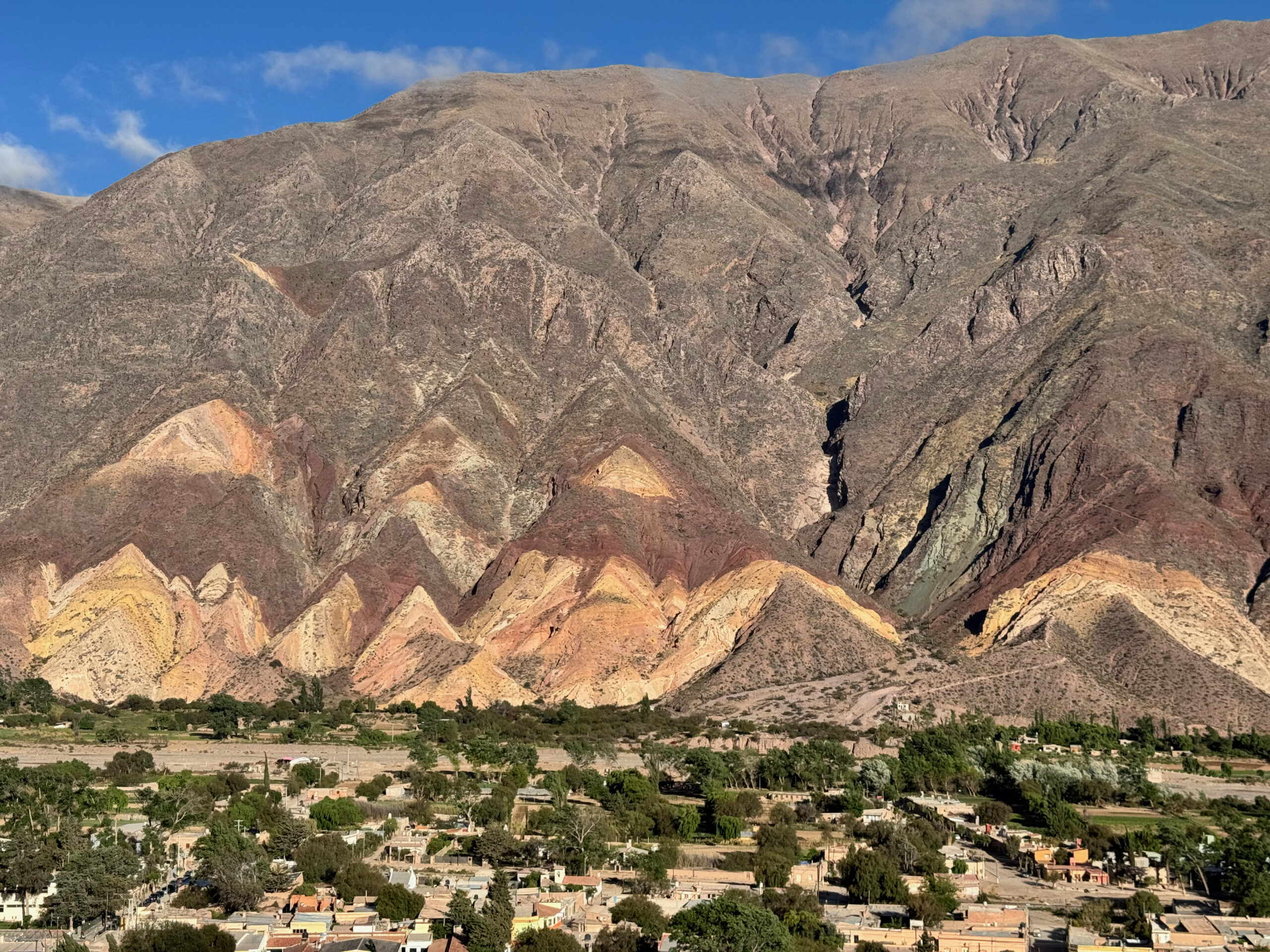
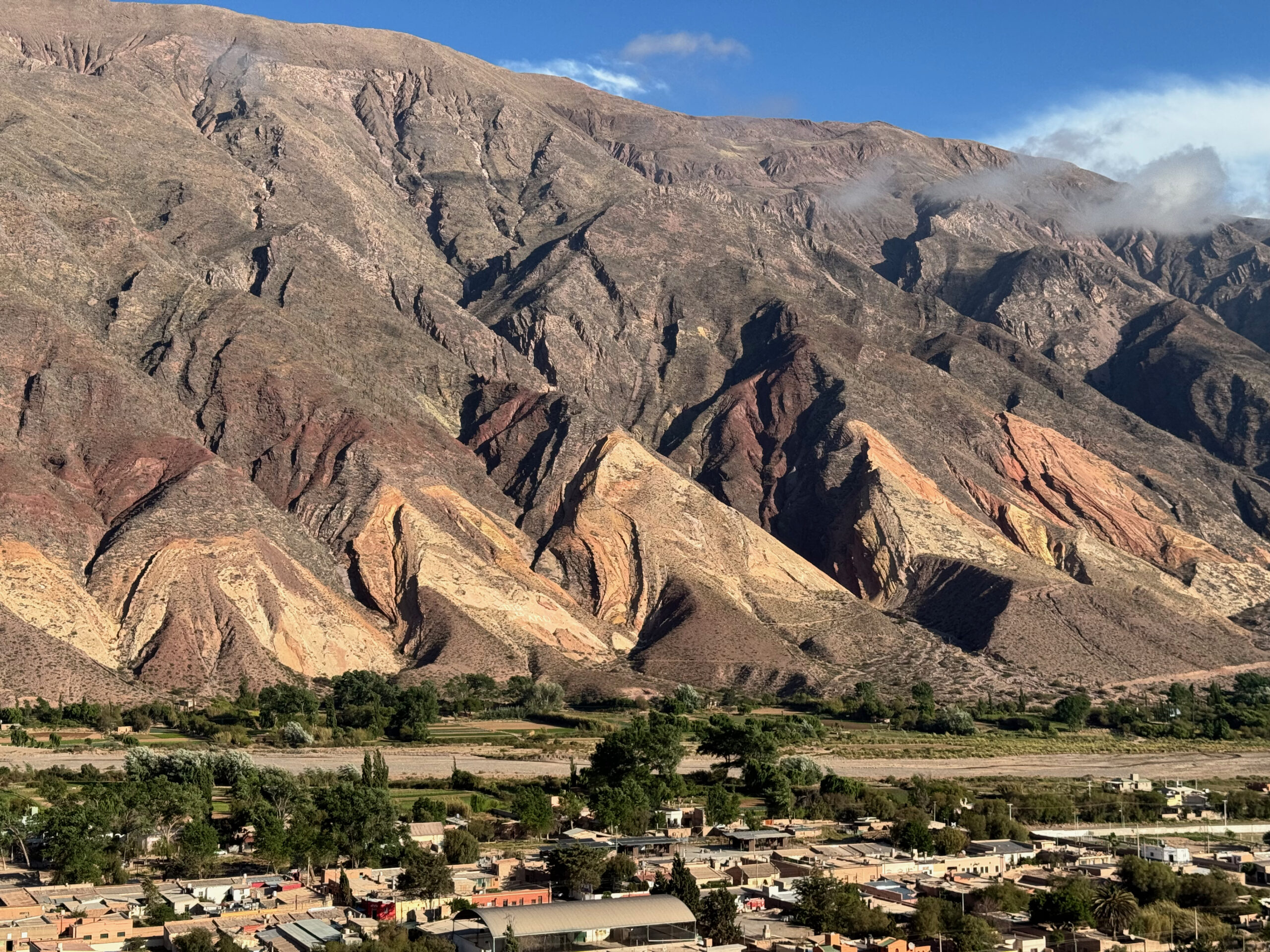
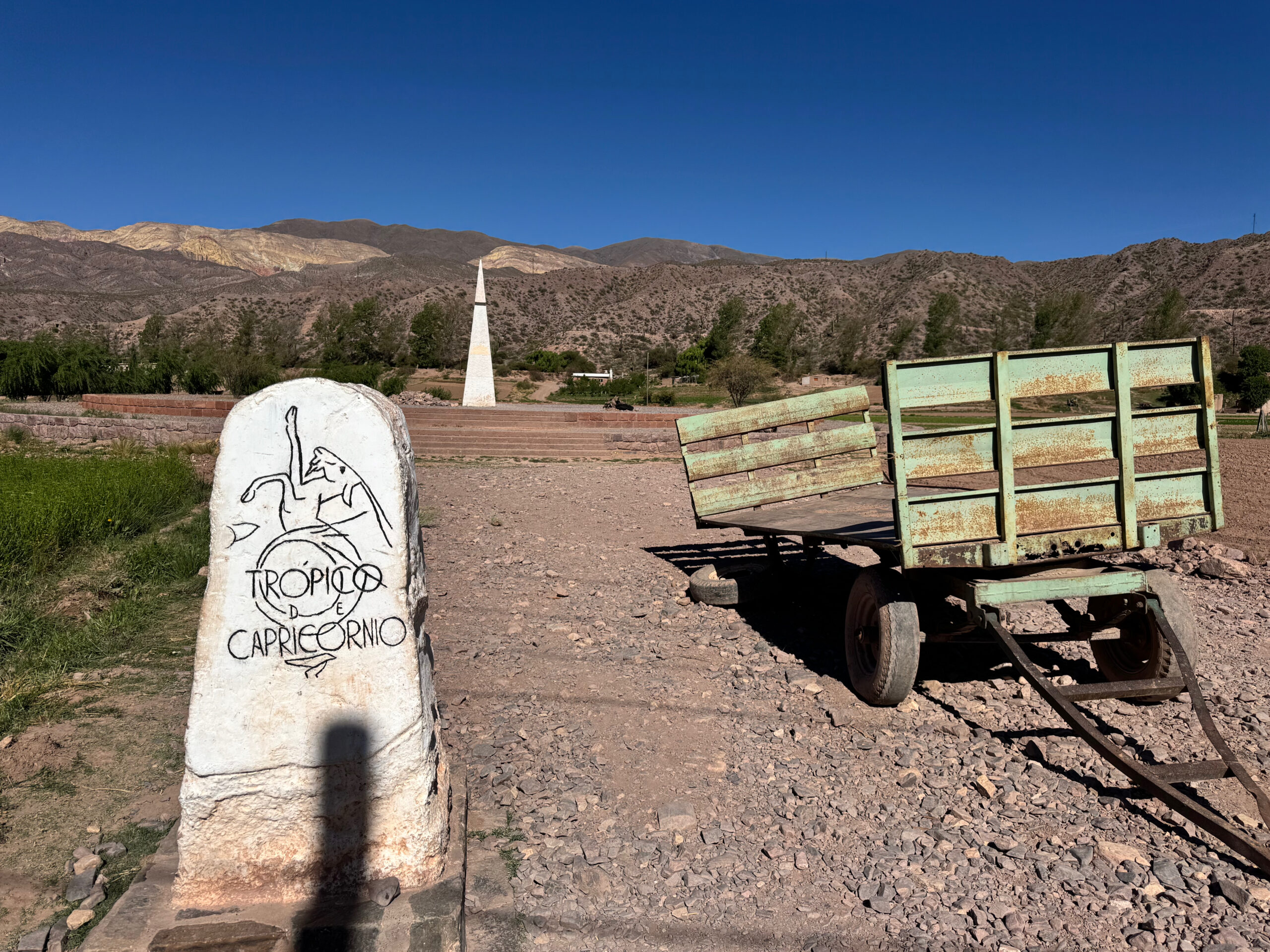
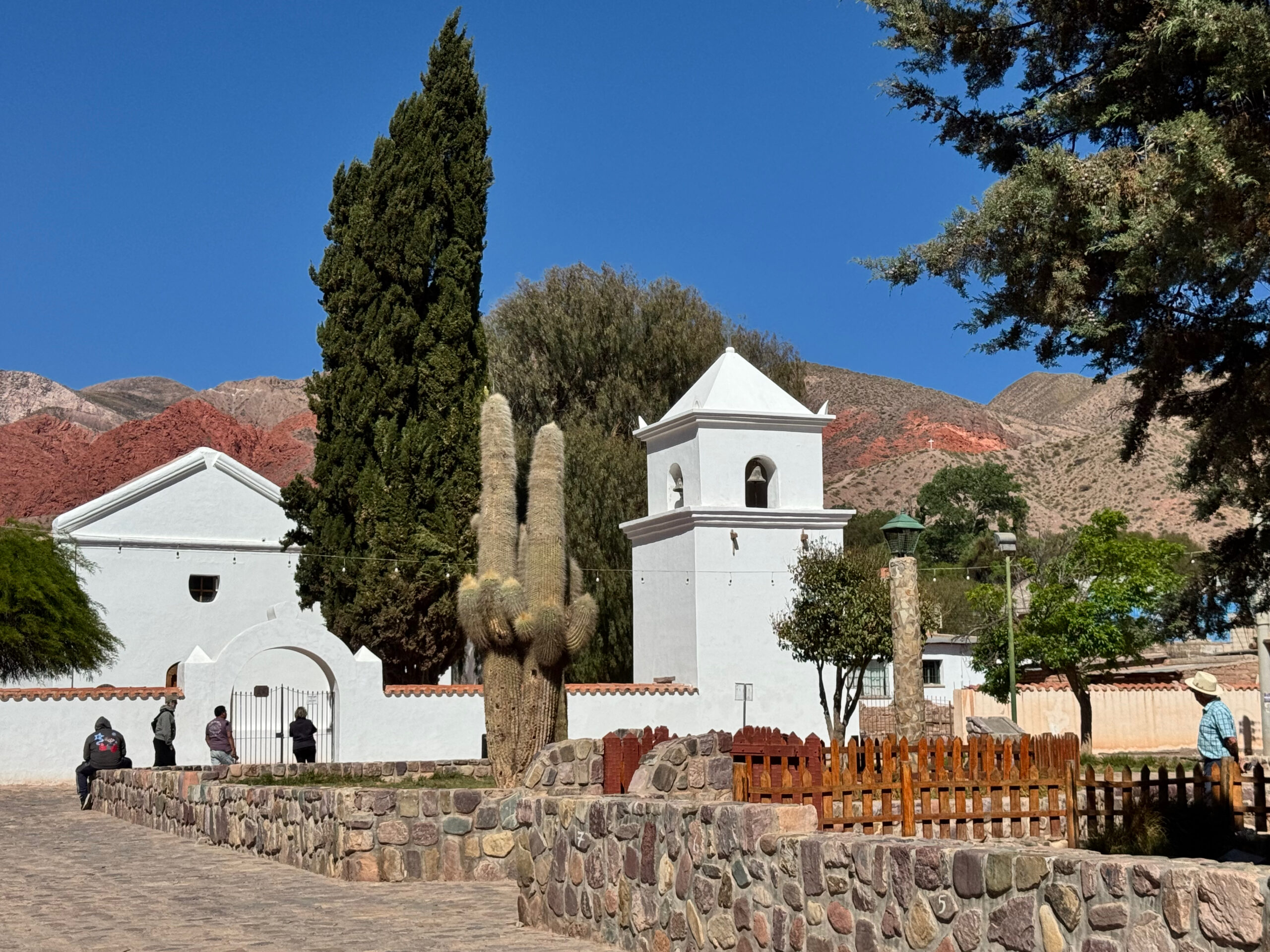
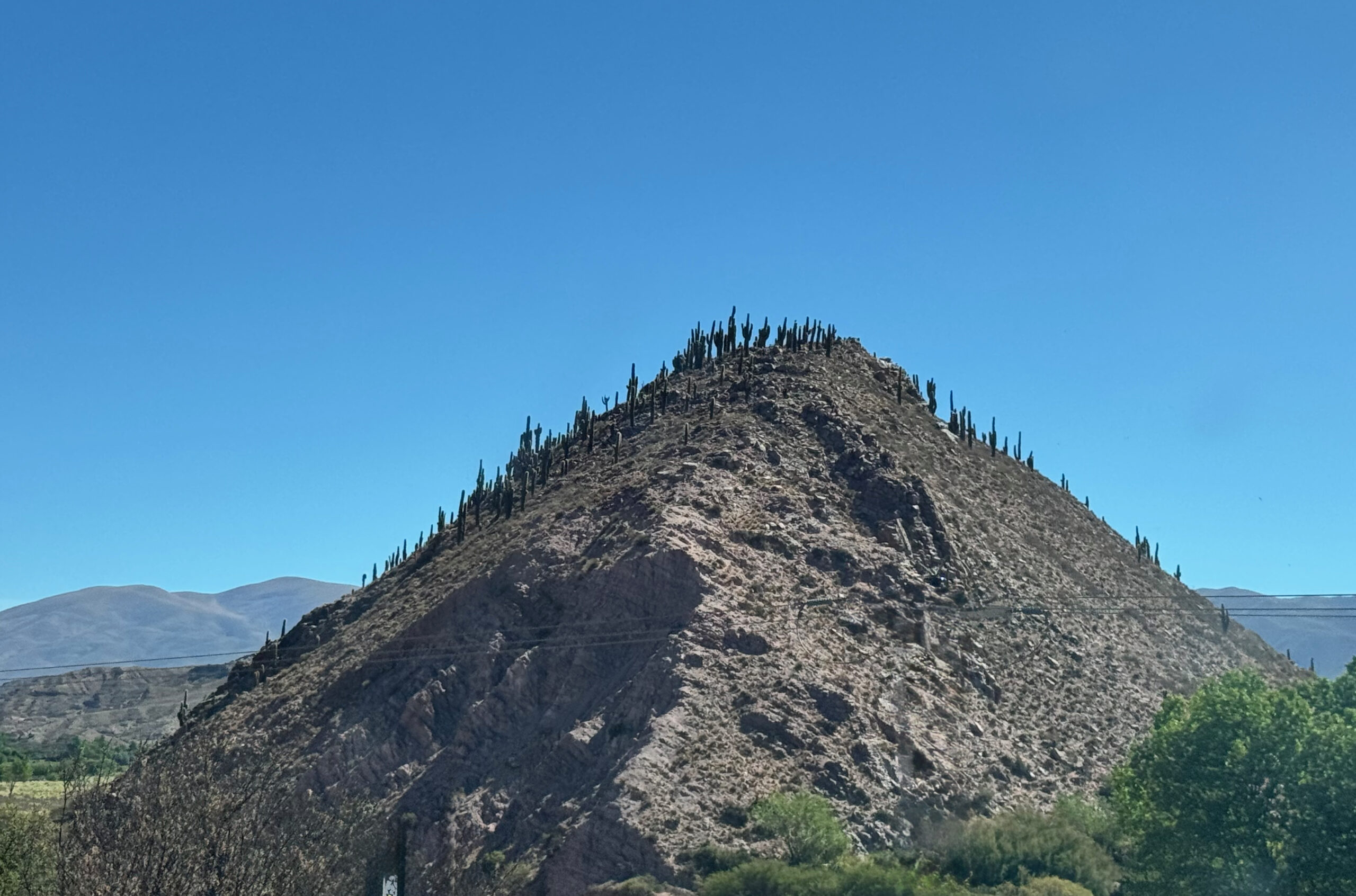
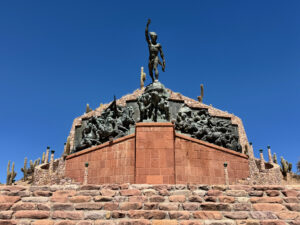
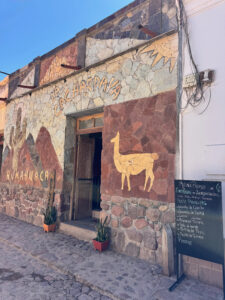
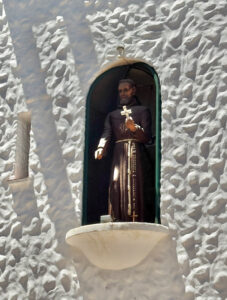
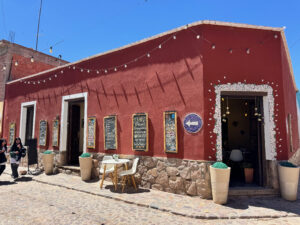
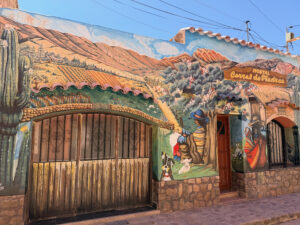
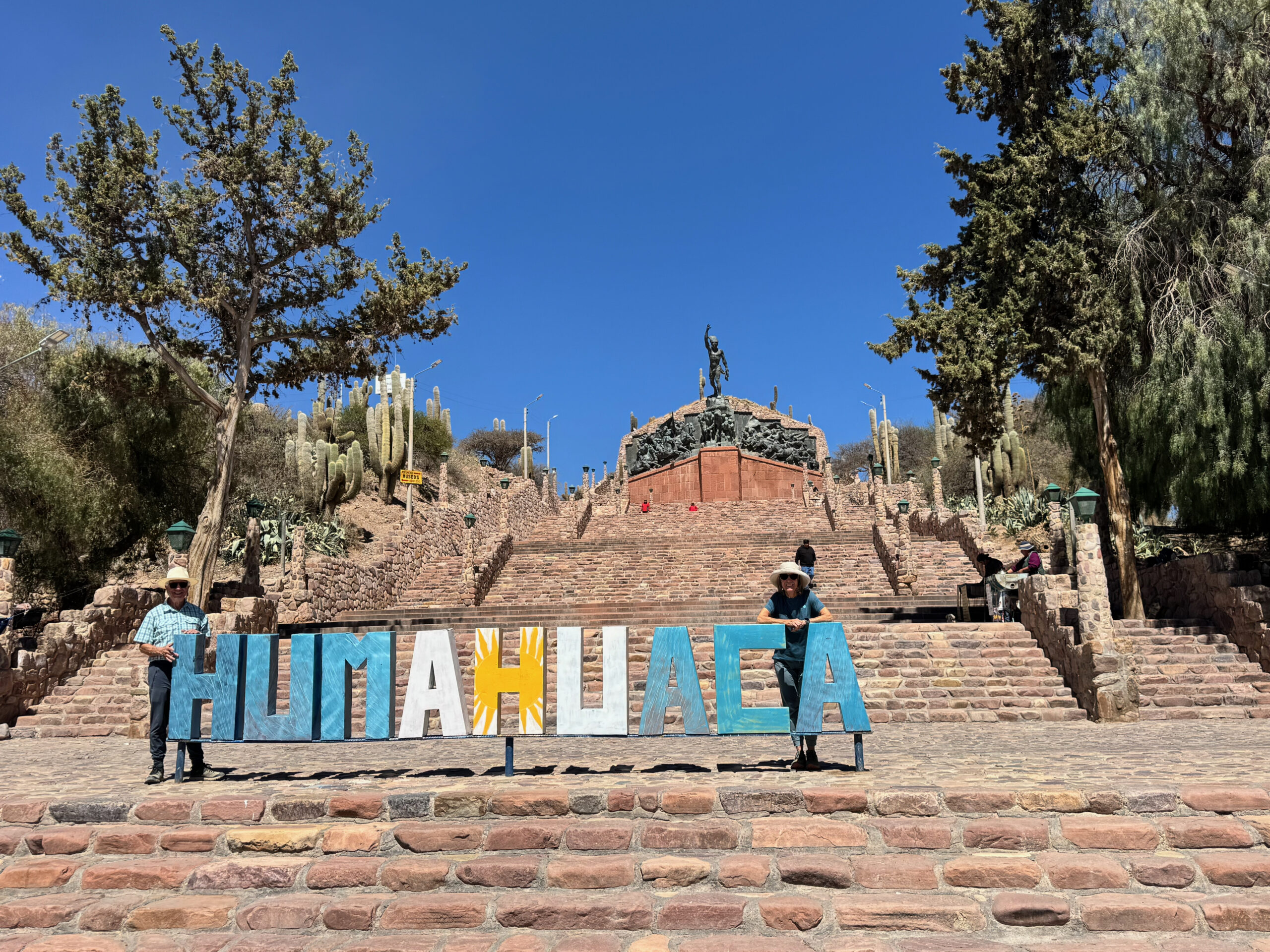
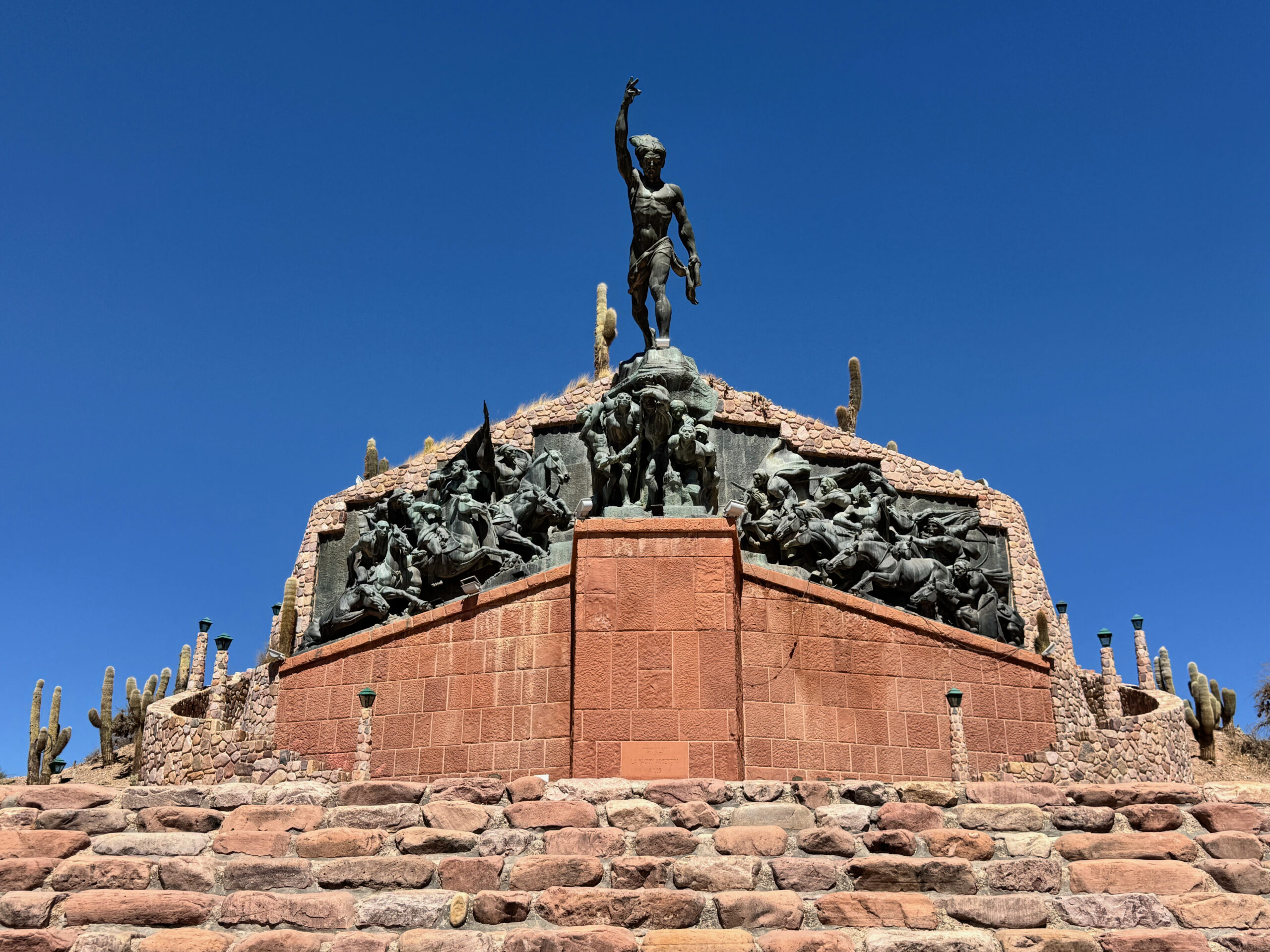
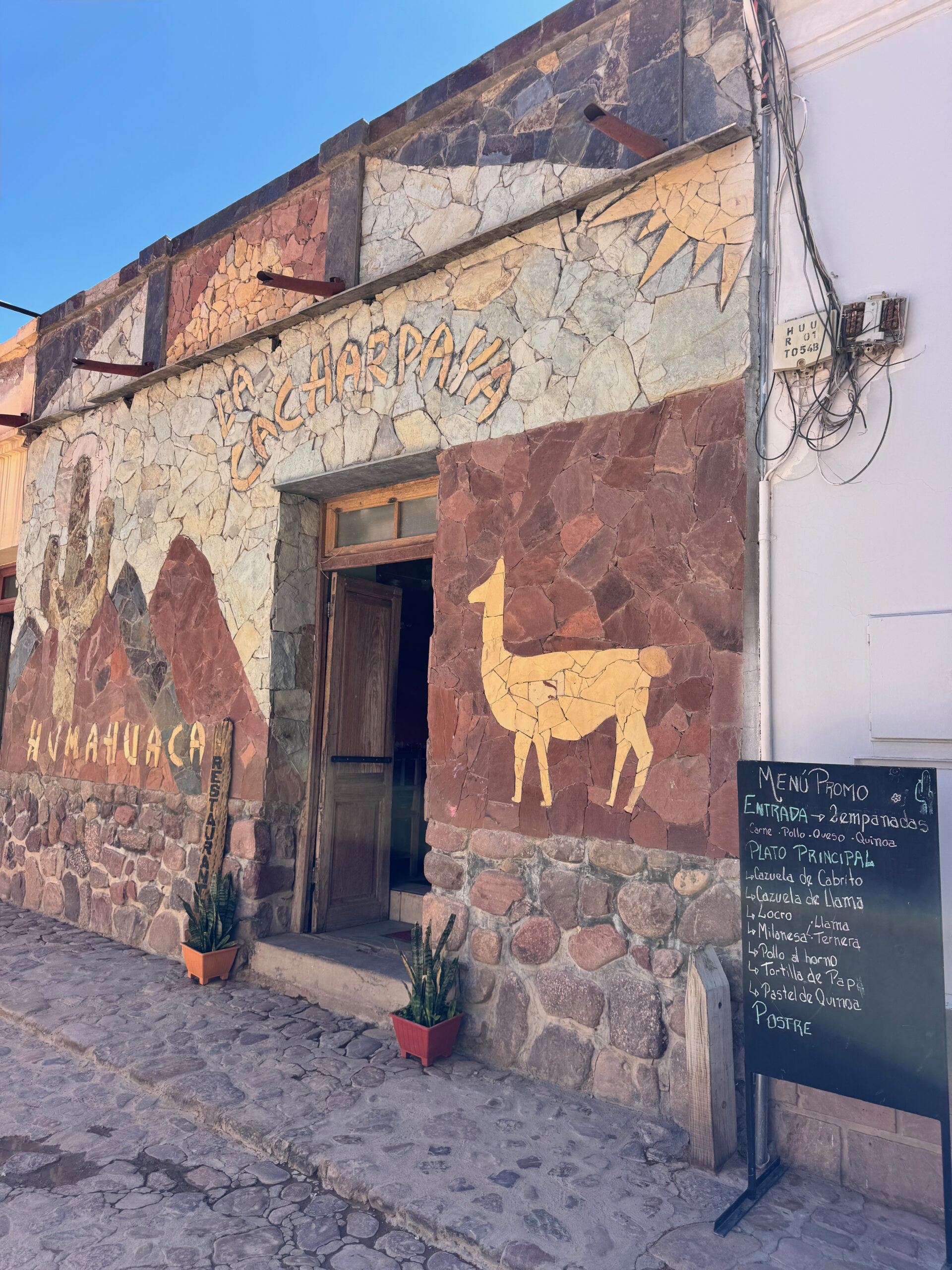
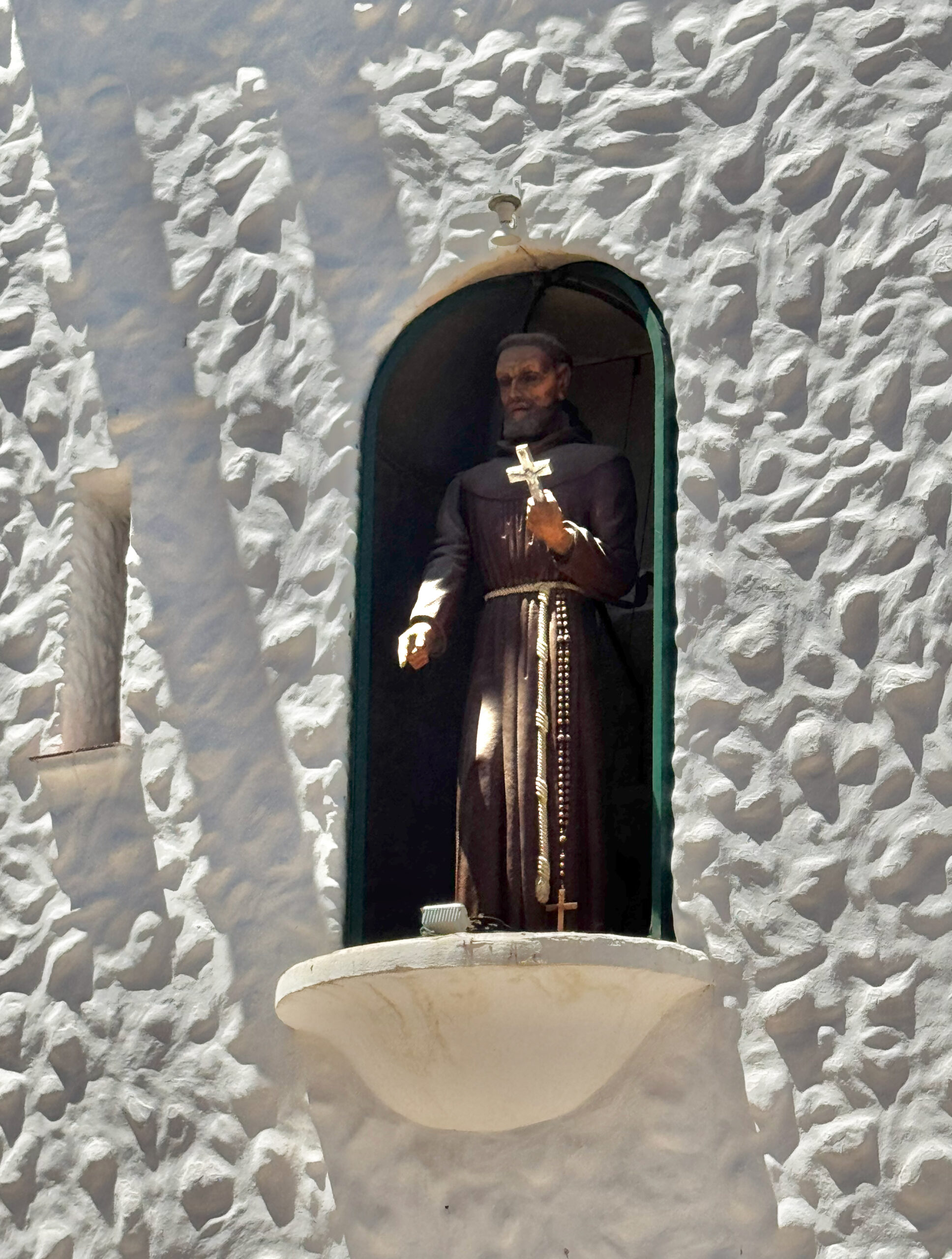
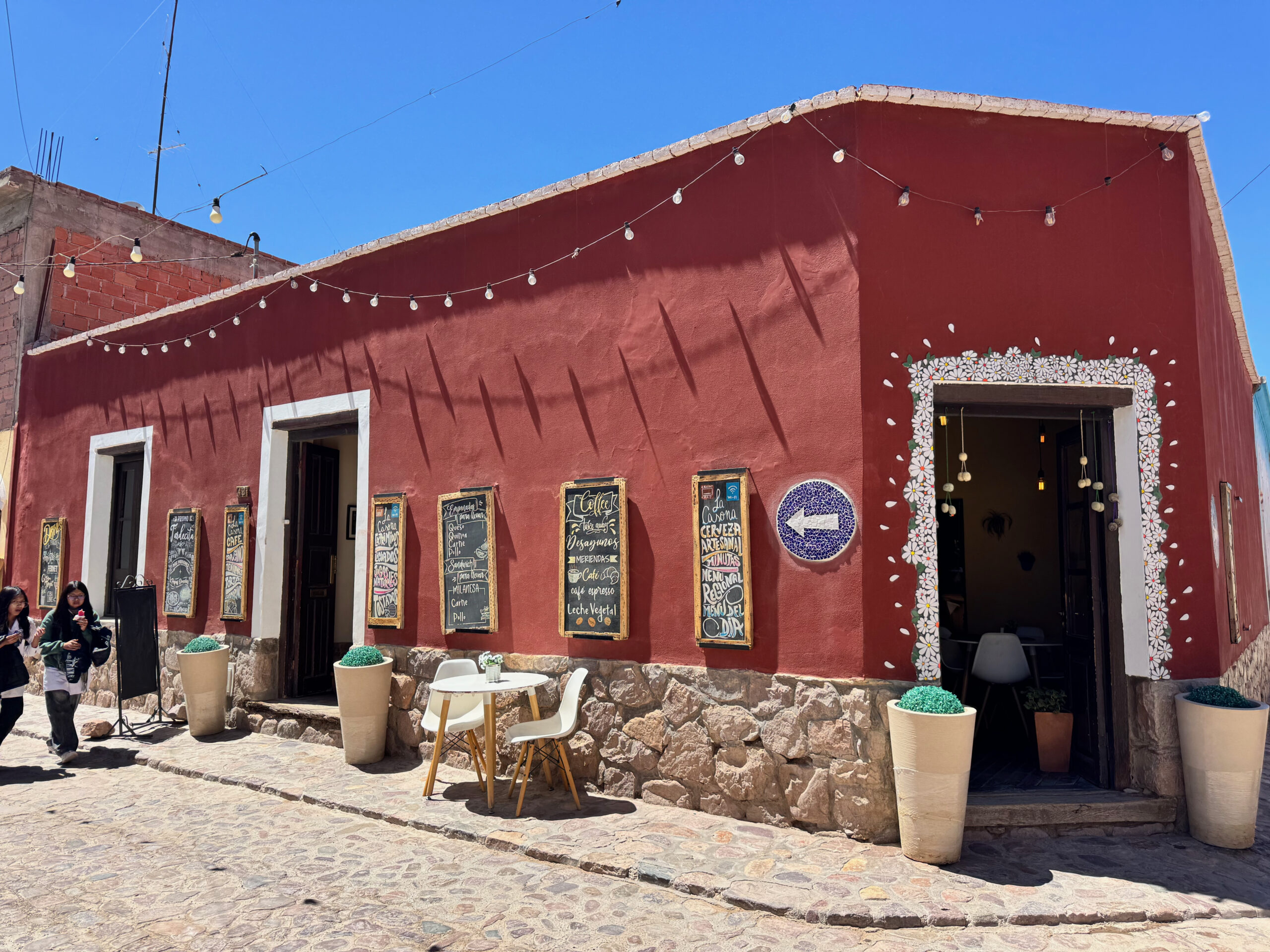
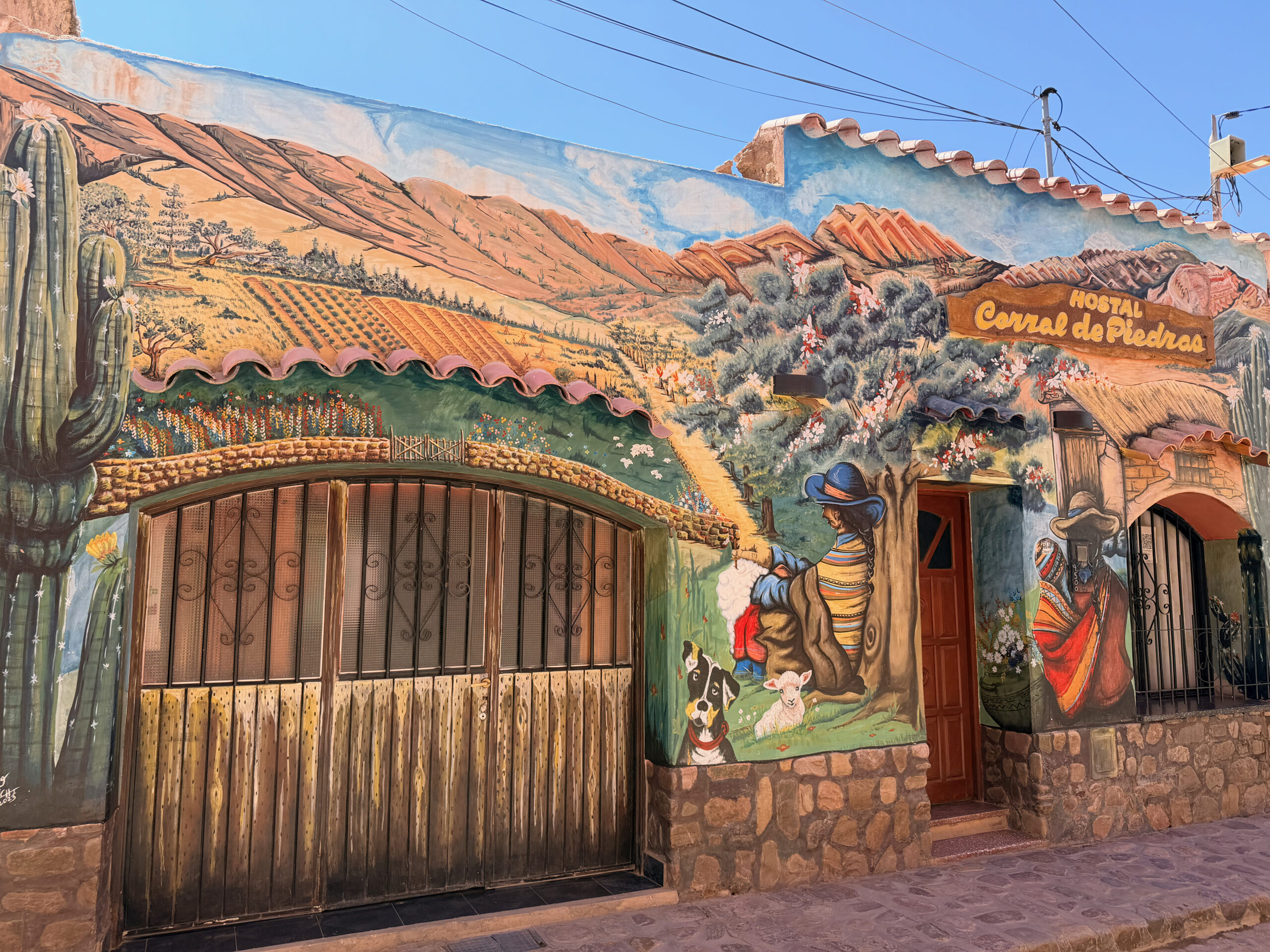
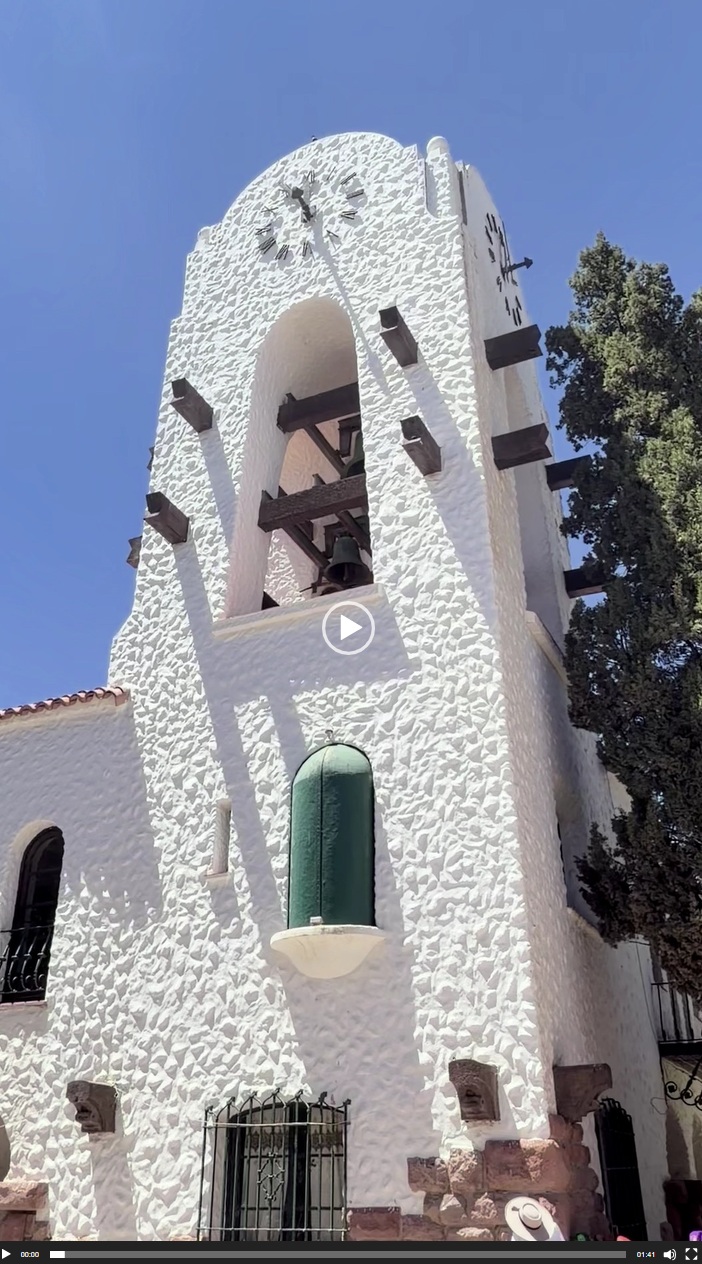
Of all the villages we visited in NW Argentina, Humahuaca was our favorite. It is the north end of the UNESCO World Heritage-listed Quebrada de Humahuaca valley. We unexpectedly had a few hours here to explore while Fede made a minor repair to his vehicle. We roamed the streets, noting a wonderful array of graphic art on many of the adobe buildings. There is a lot of talent in this town and the residents appreciate and care for it. It was founded in 1591 and was an important settlement on the Inca trade route. The culture is a blend of indigenous and Spanish influences, visible in its architecture, folklore and cuisine. We had lunch here with better success than the previous day…Joe actually ate everything on his plate!
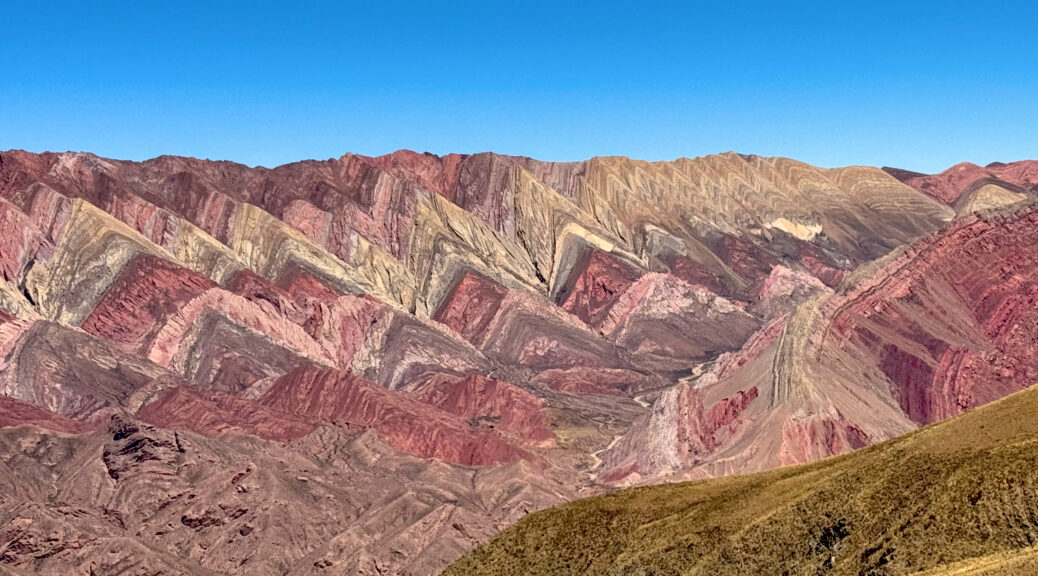
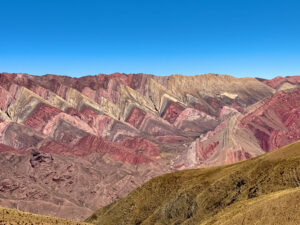
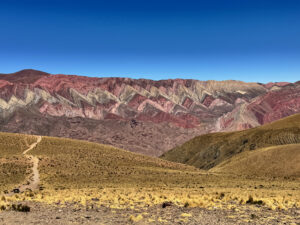
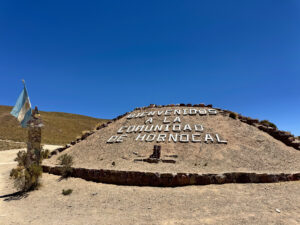
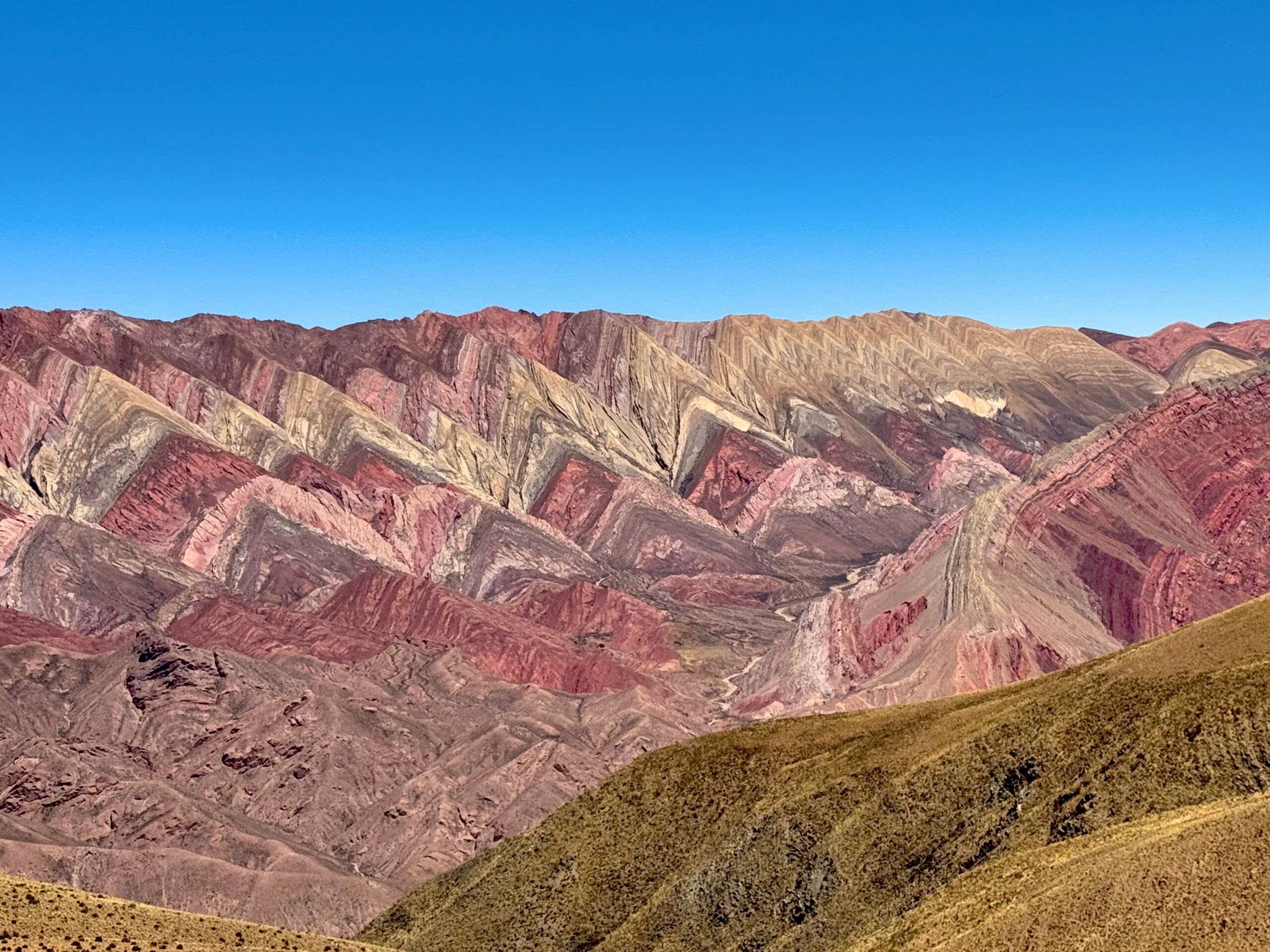
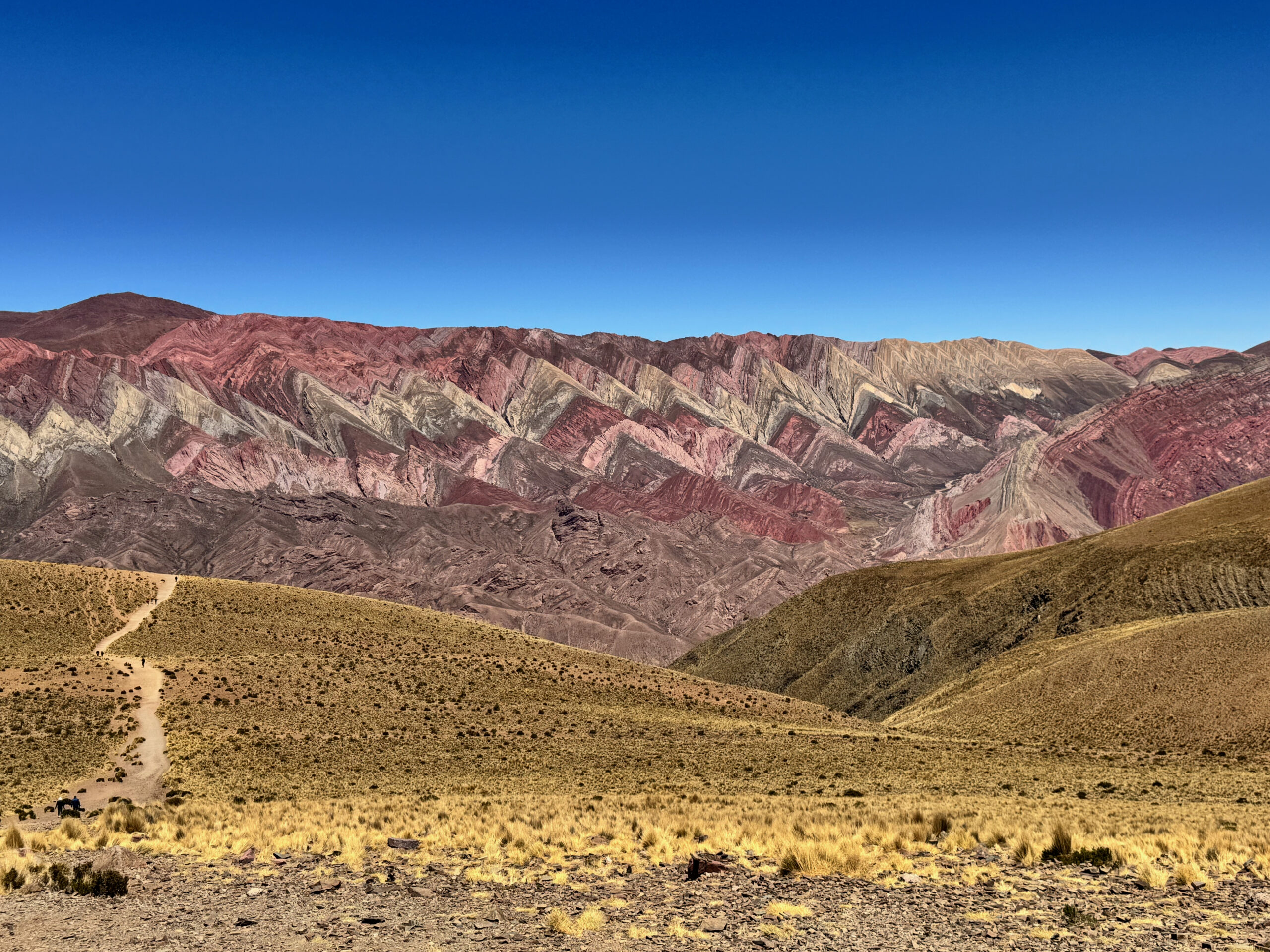
Huahumaca is the gateway to Hornocal, Mountain of 14 Colors. At 14,270 feet it is imperative to move slowly and dress warmly at these altitudes. The air is so much thinner and exertion can easily bring on altitude sickness. We’ve hiked to 13,000 on the Inca Trail but we were 30 years younger and trained for it. Here, the sight before us is jaw-dropping and globally unrecognized. It is arguably one of the most dramatic visions because the colors are more complex, with multiple bands, not just stripes. They reflect different sedimentary layers, including iron oxides, copper minerals, and other compounds. Rather than a novelty, it’s akin to a cathedral of geology. For sure, the most dramatic of the sites we viewed in the Northwest.
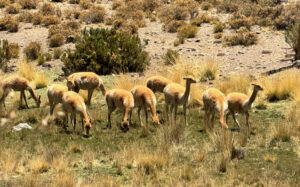
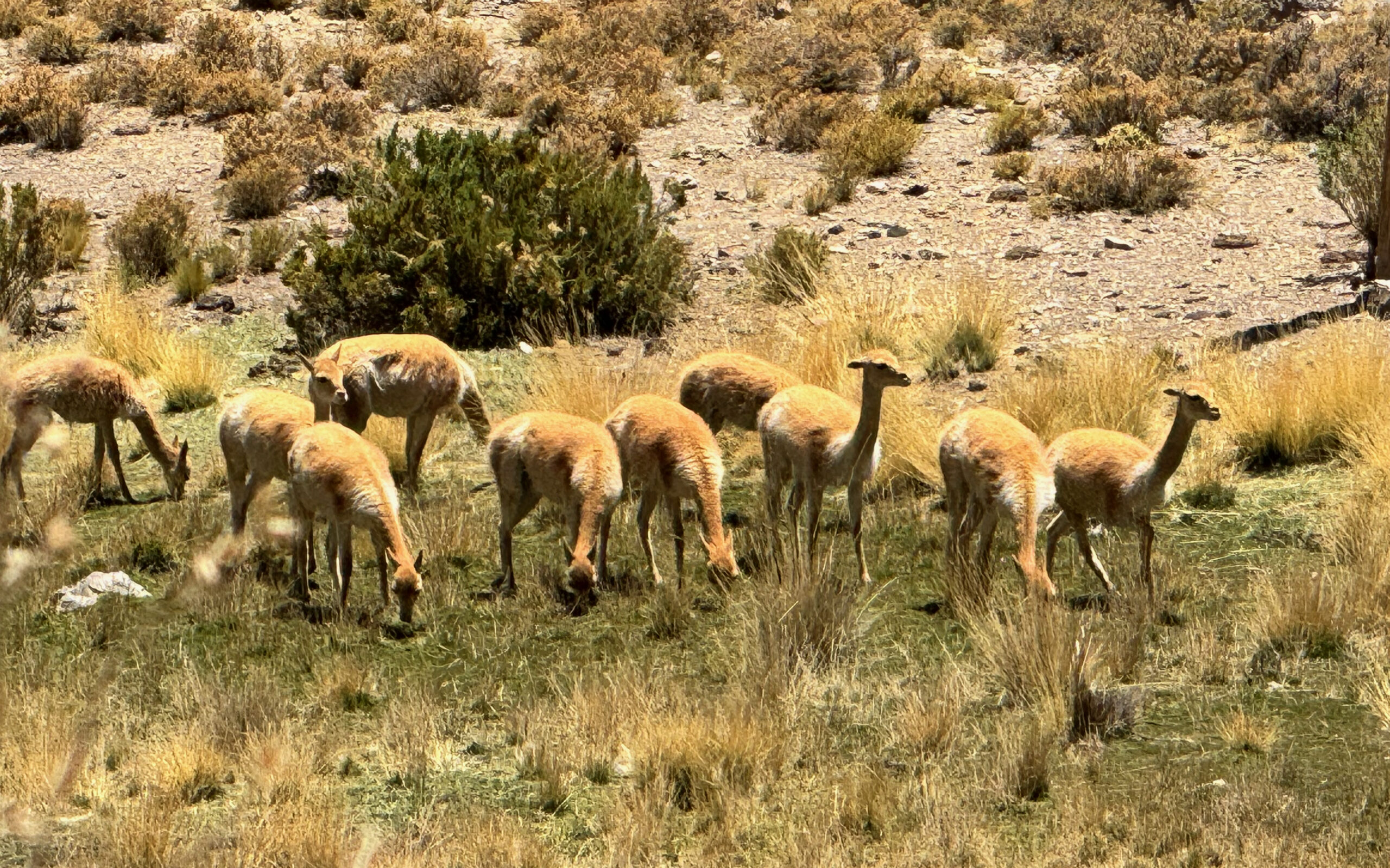
Vicunas are fascinating So American camelids, wild relatives of llamas, alpacas and guanacos. They live at high altitudes up to 18,000 feet with low oxygen levels. With long, slender necks and delicate build they appear graceful. They produce one of the world’s most expensive natural fibers in the world and garments are priced accordingly.
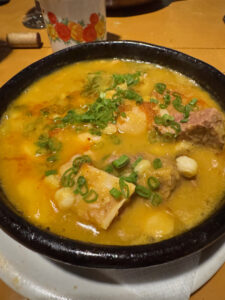
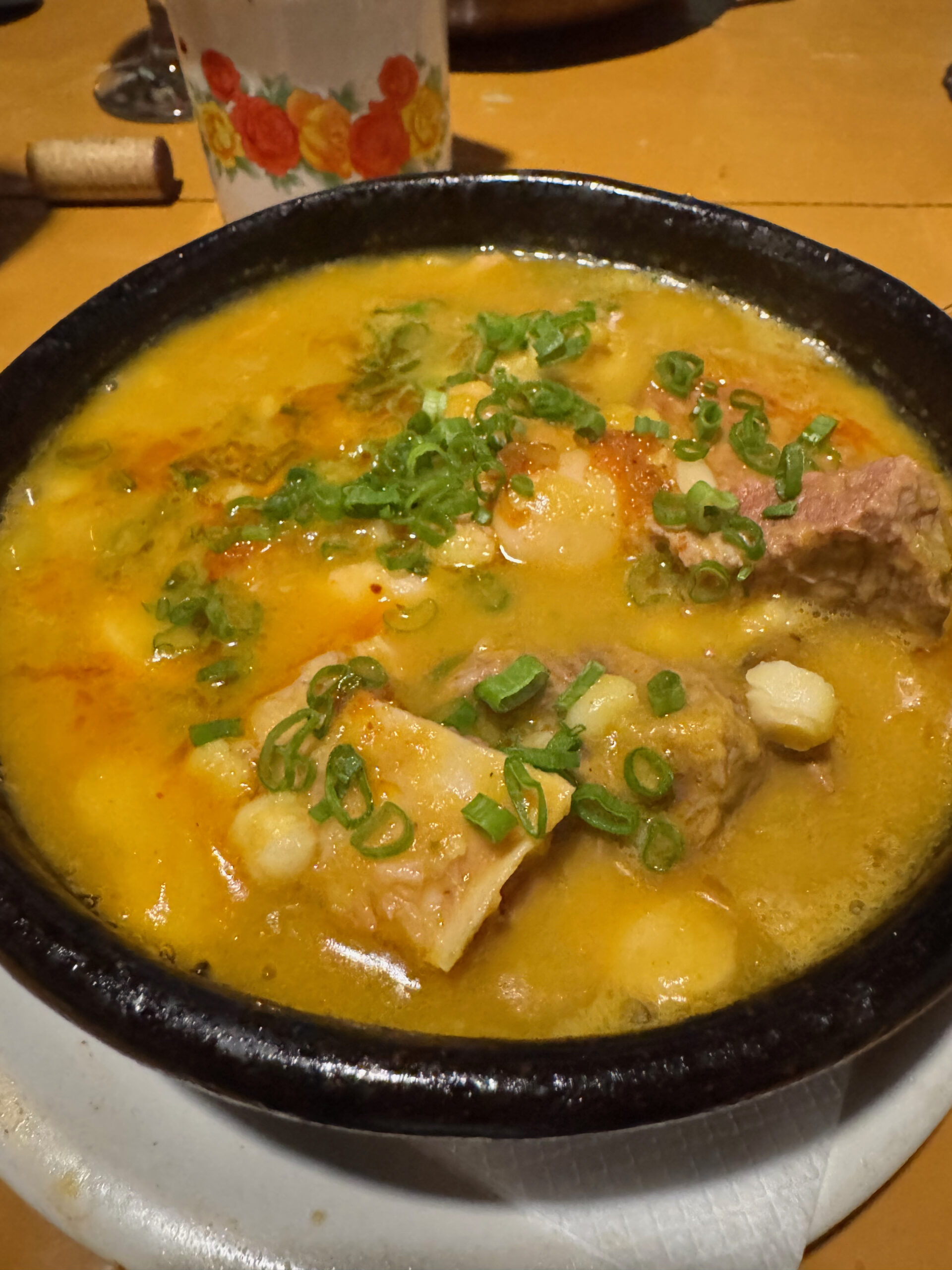
Back in Tilcara that afternoon we stop to check out the Botanic Gardens but the warm temperatures make it hard to enjoy walking for long. Besides, it is predominately desert flora which is common to us. We skip the Pucara de Tilcara, the historic archeological site on the hilltop. Now that Joe was back to feeling better we decided to have a nice dinner in Tilcara. Picadita was recommended for its Locro, the stew we loved in El Calafate. I tried it and Joe had a Milanese. Both were the local version of others we had elsewhere.
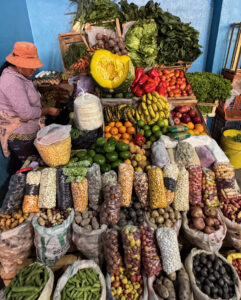
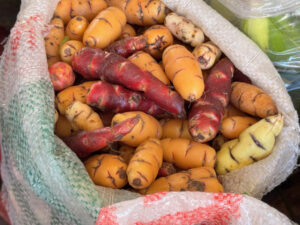
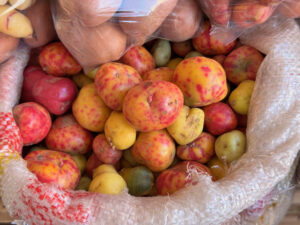
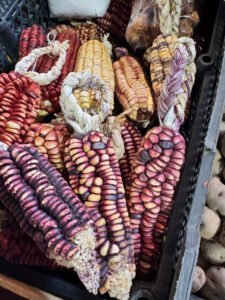
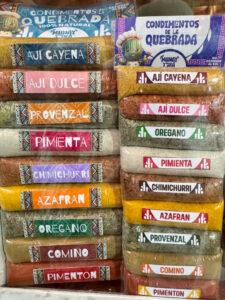
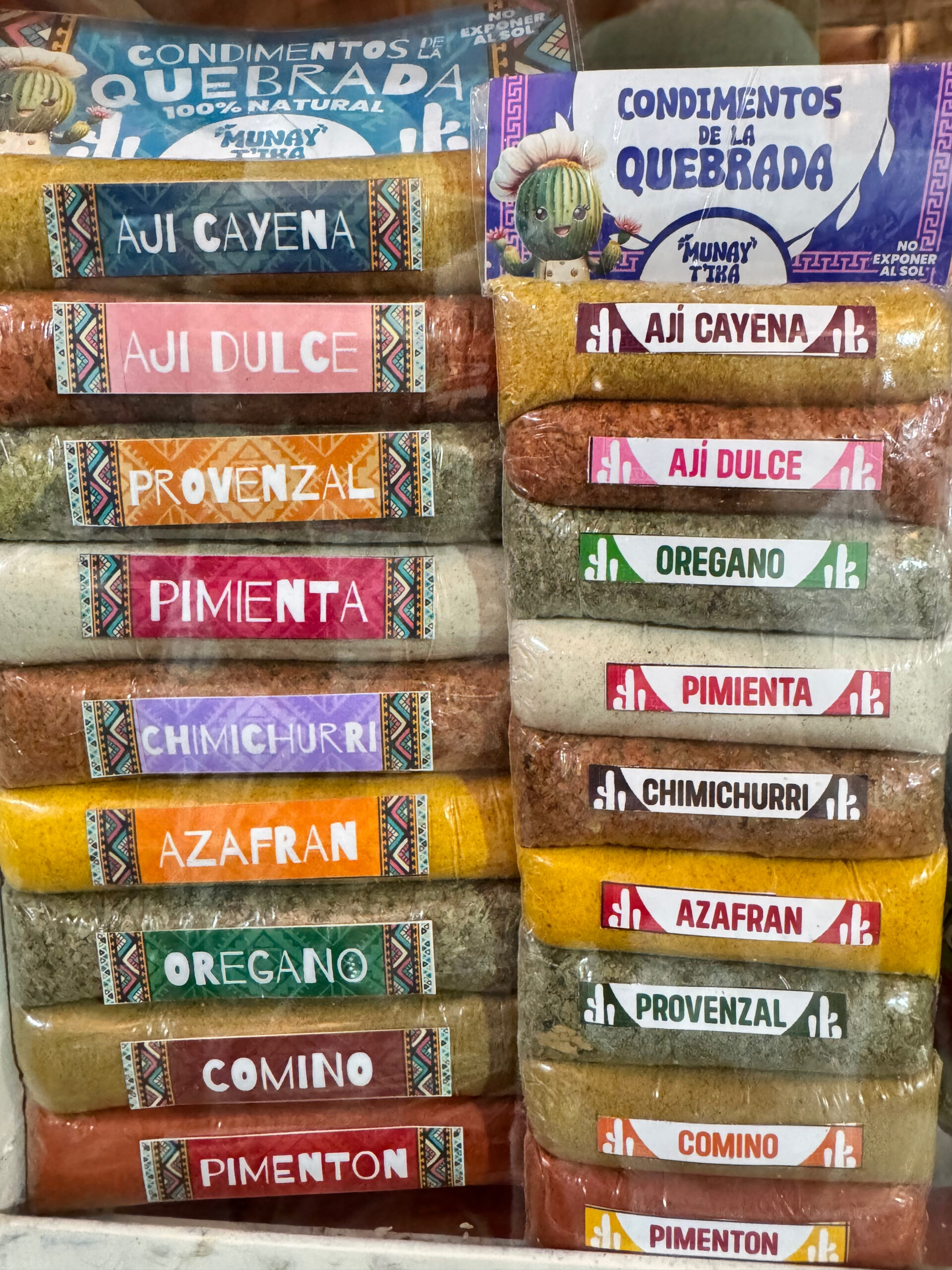
On our last day in the area we had planned a very highly anticipated hike in the Garganta del Diablo, the Devil’s Throat. It was hugely disappointing when the road to the canyon was closed due to a landslide. There was equipment working on making it passable but we were informed it could take months to repair. Surprisingly our guide, Fede, was at a loss as to what to do with us. I enquired about the local market which was indeed open this day. We found that it was located in a large quonset hut. We were hoping to find unusual products not available elsewhere but were rather disappointed by the offerings; however, woolen products and garments are no doubt useful to the local clientele in this climate. Food items were typical of many markets with the region supporting a citrus industry as well as tomatoes, peppers and beans which are commonly grown in the temperate valley areas. Quinoa and a huge variety of potatoes can be found readily. We saw the first avocado of our trip and had to buy it to add to our lunch. It wasn’t any different in taste from our familar variety. When we saw a mixed selection of spices typically used in foods of this region, we bought a package to take home.
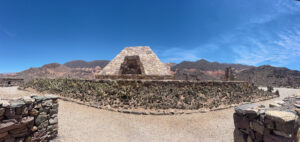
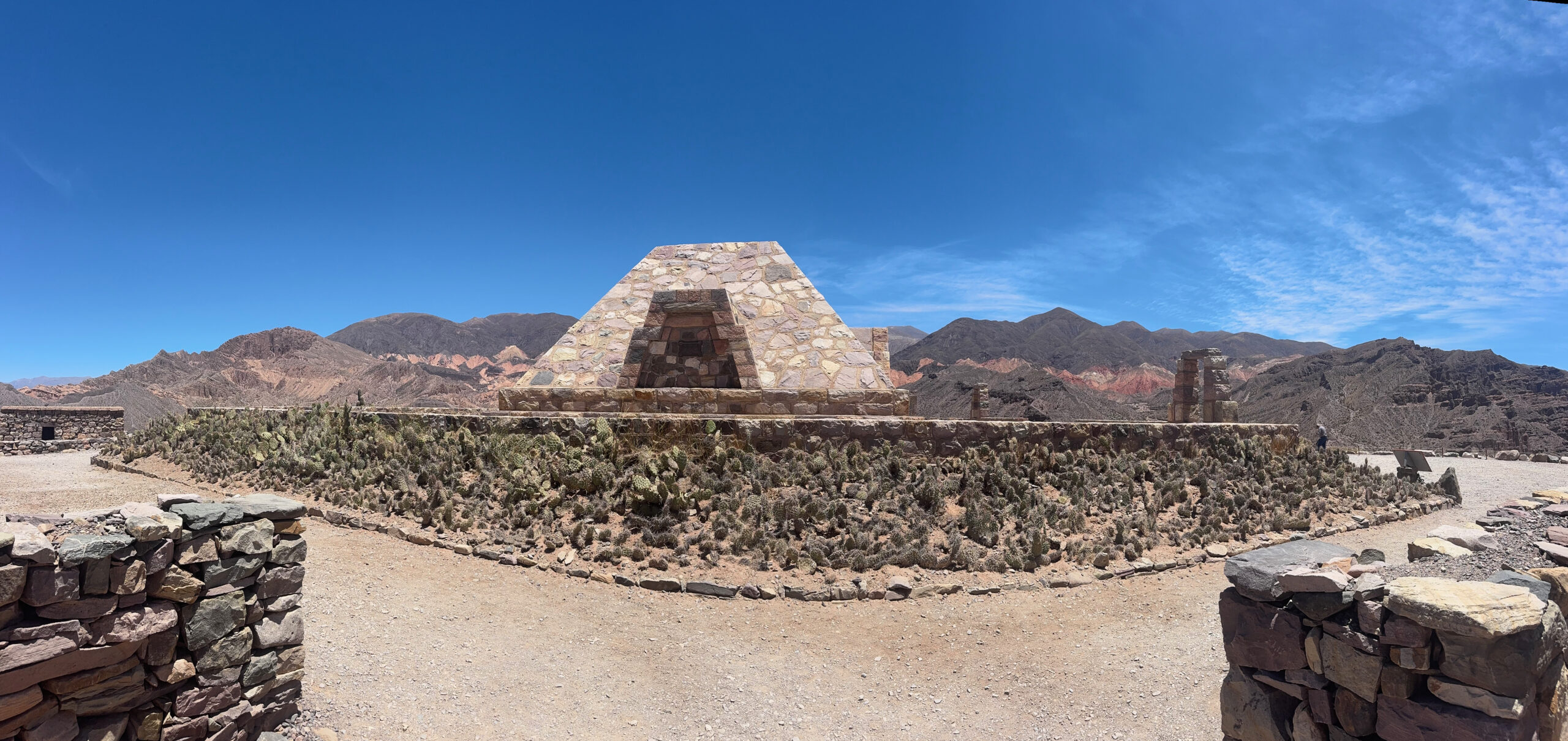
After the market we decided to walk to the Pucara de Tilcara which we skipped yesterday. The pre-Hispanic remains of this archeological site have been rebuilt and distinctly resemble a hilltip town. It was an impressive glimpse into the llives of indigenous peoples.
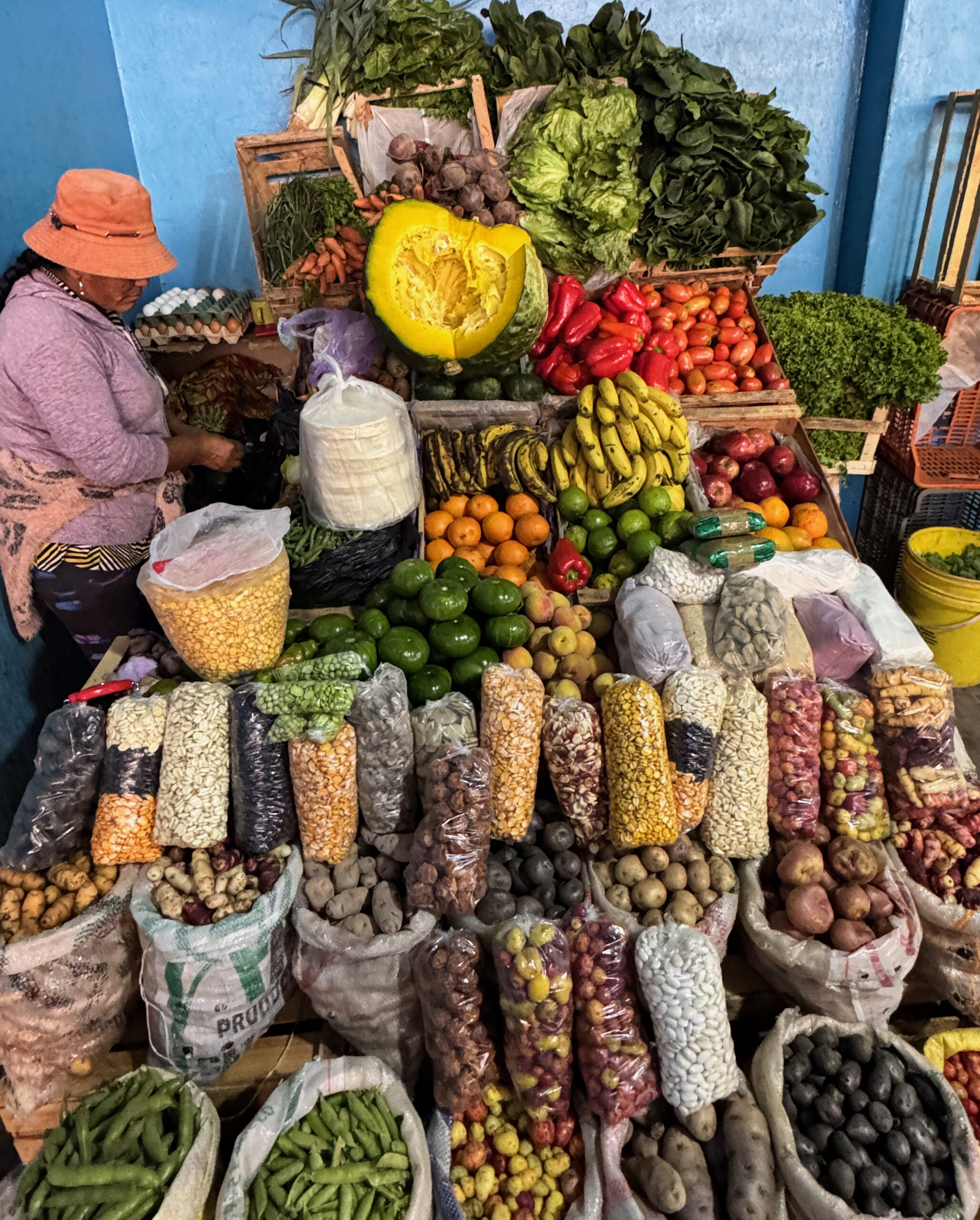
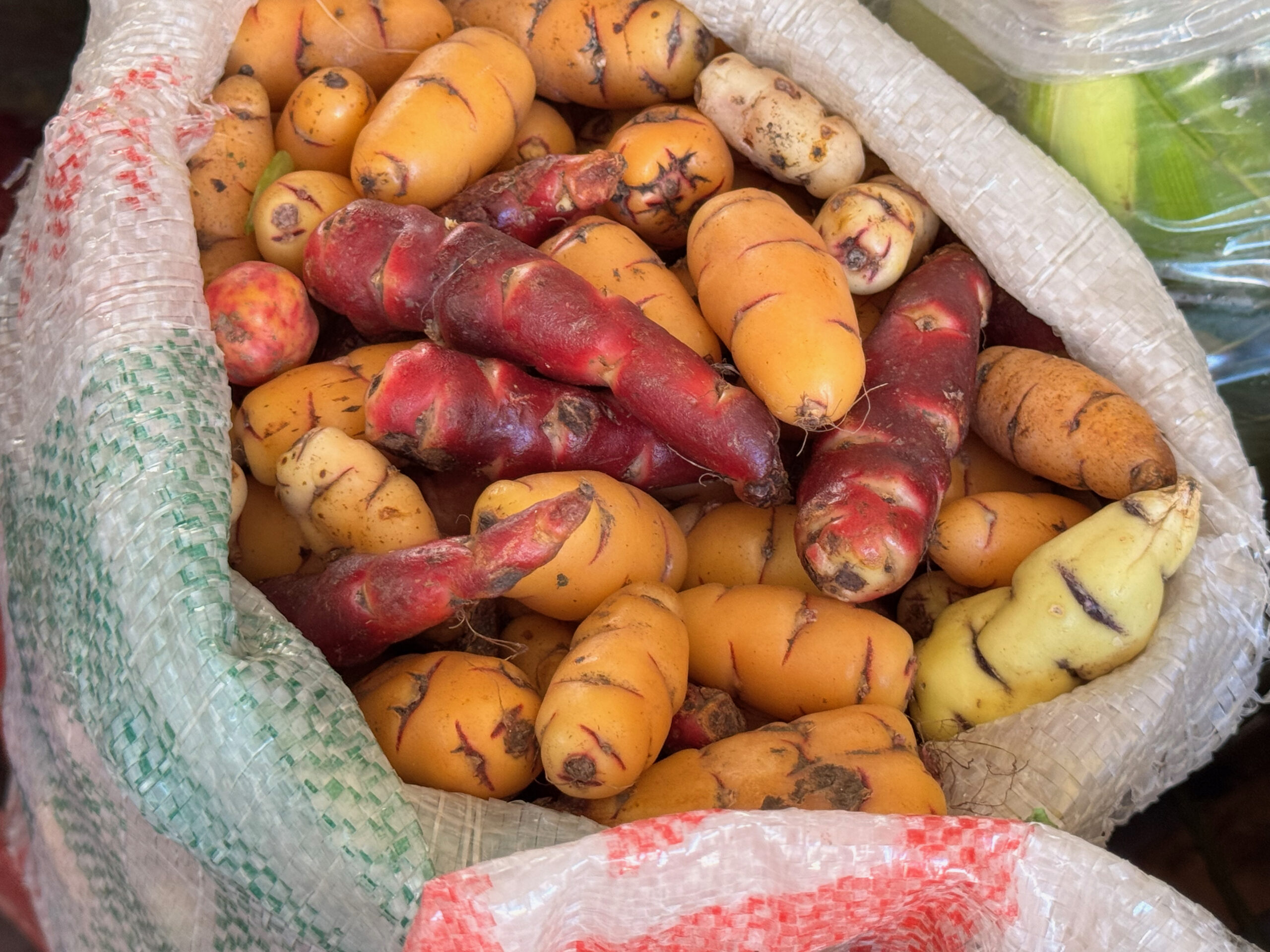
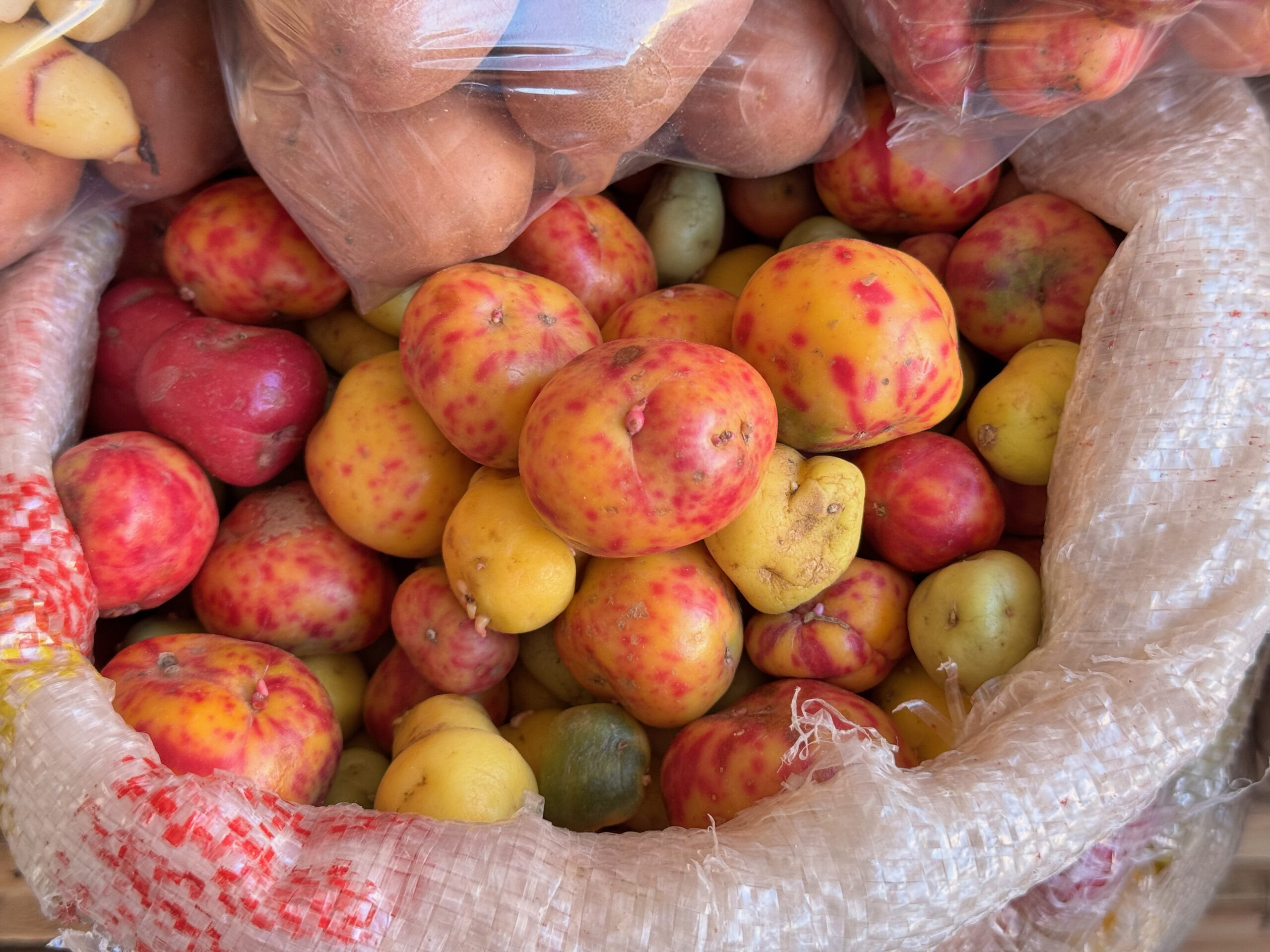
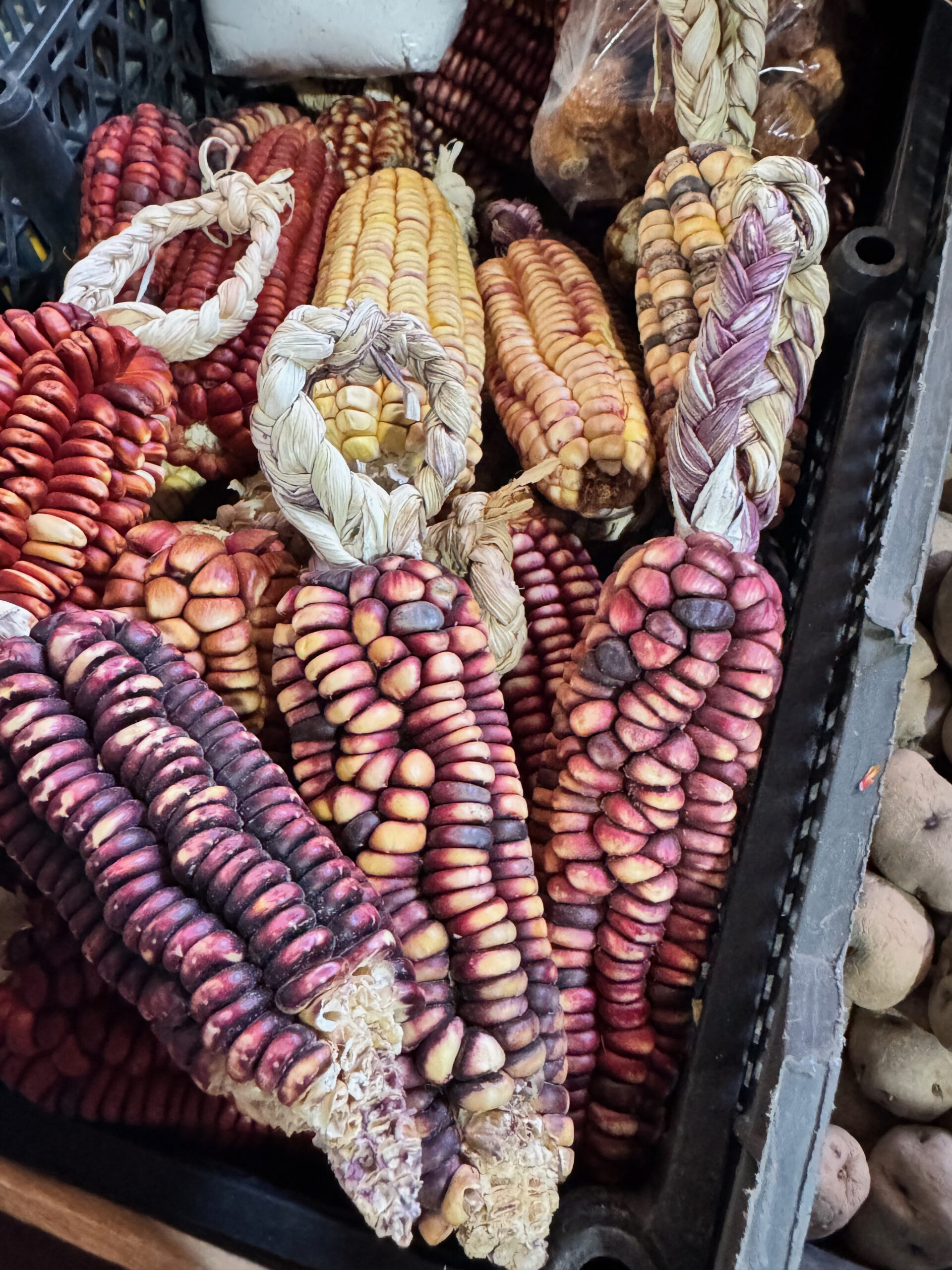
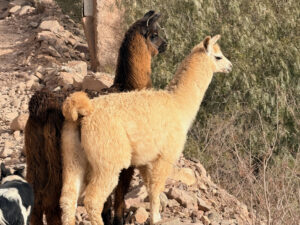
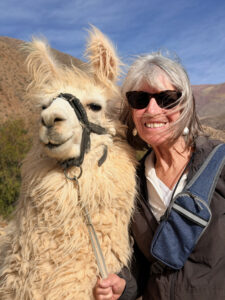
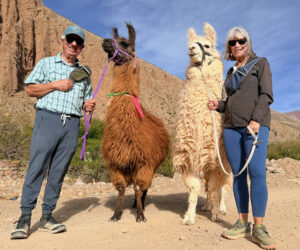
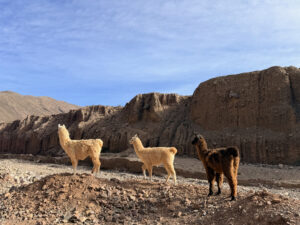
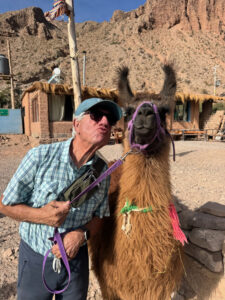
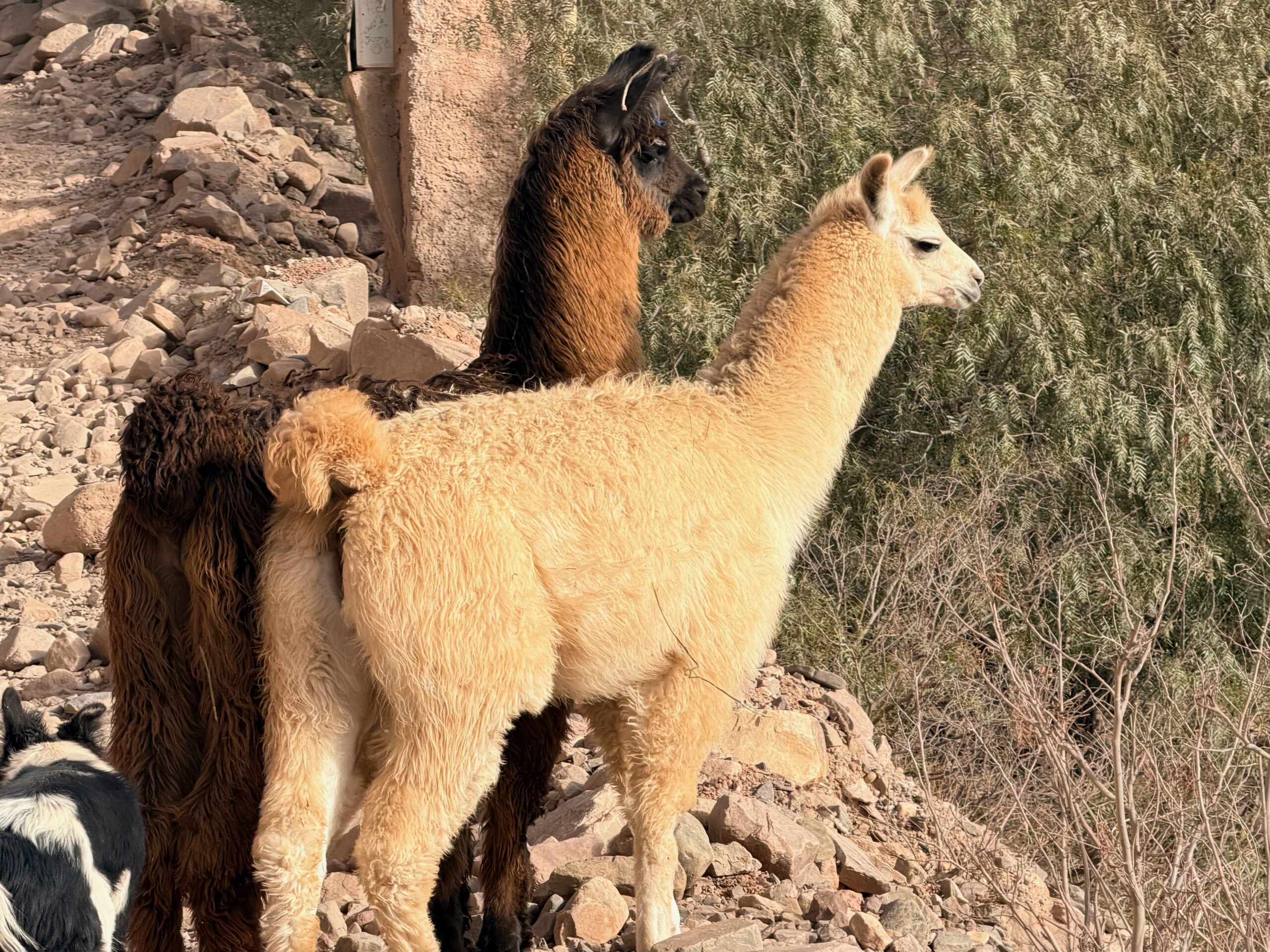
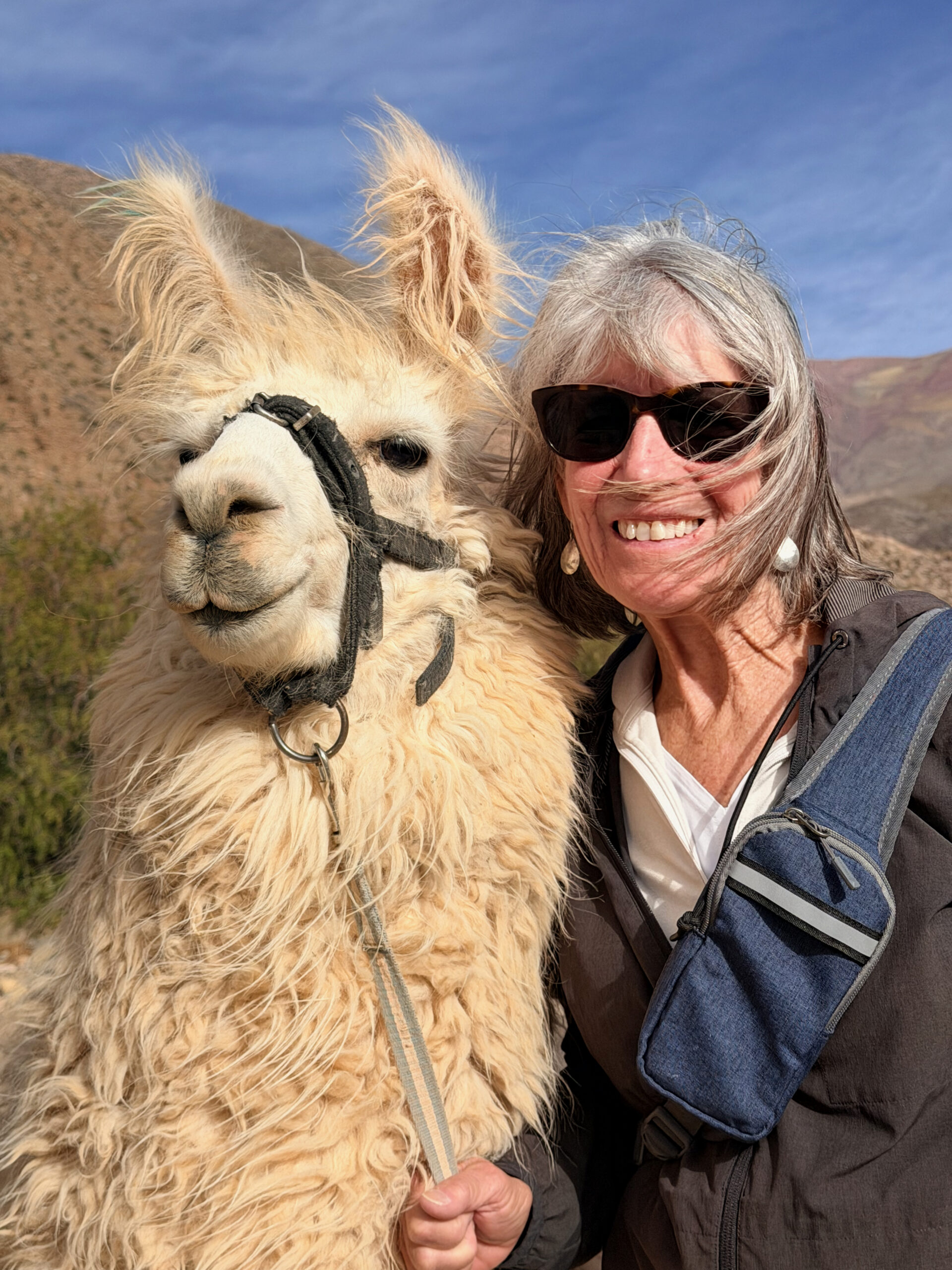
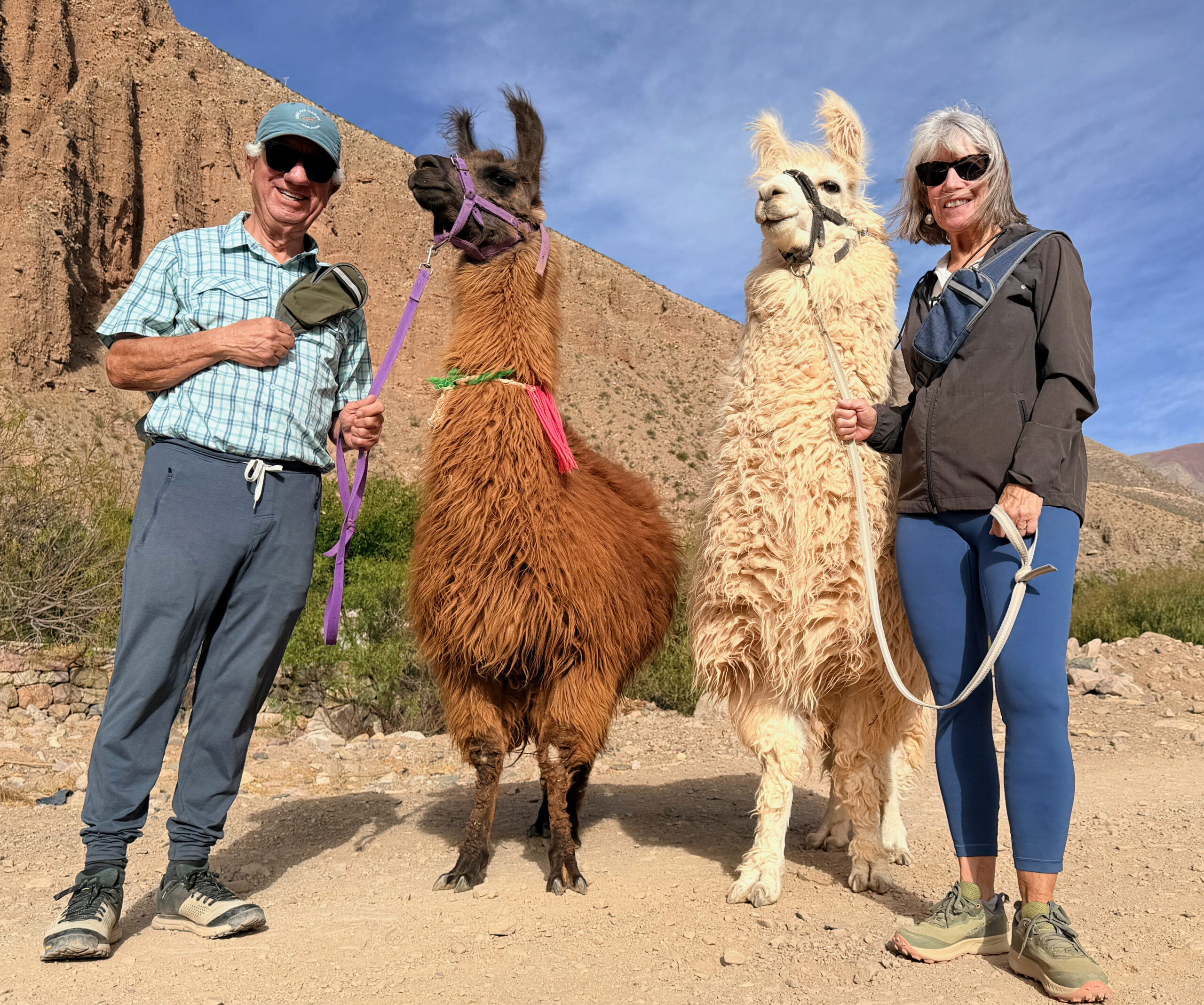
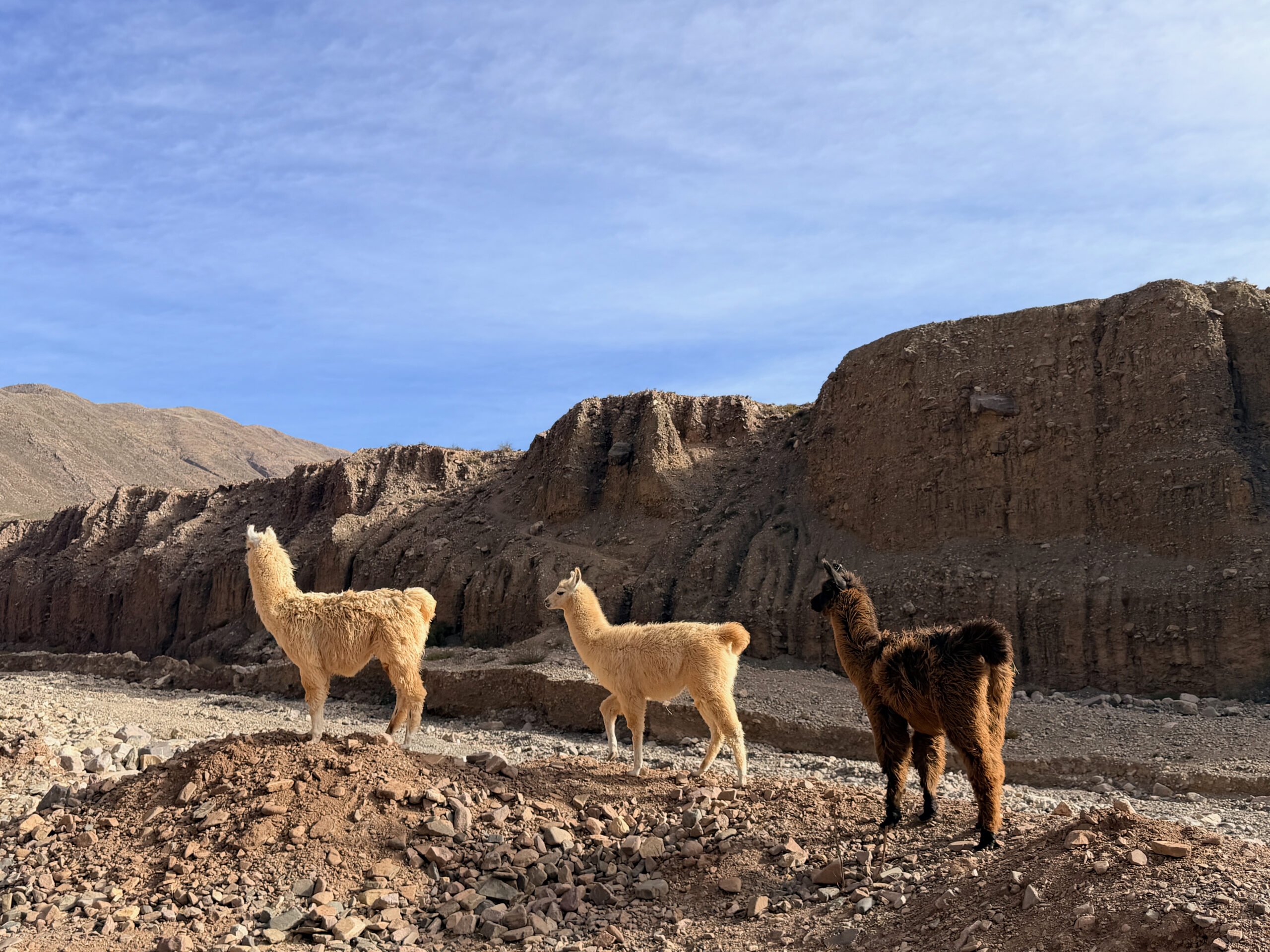
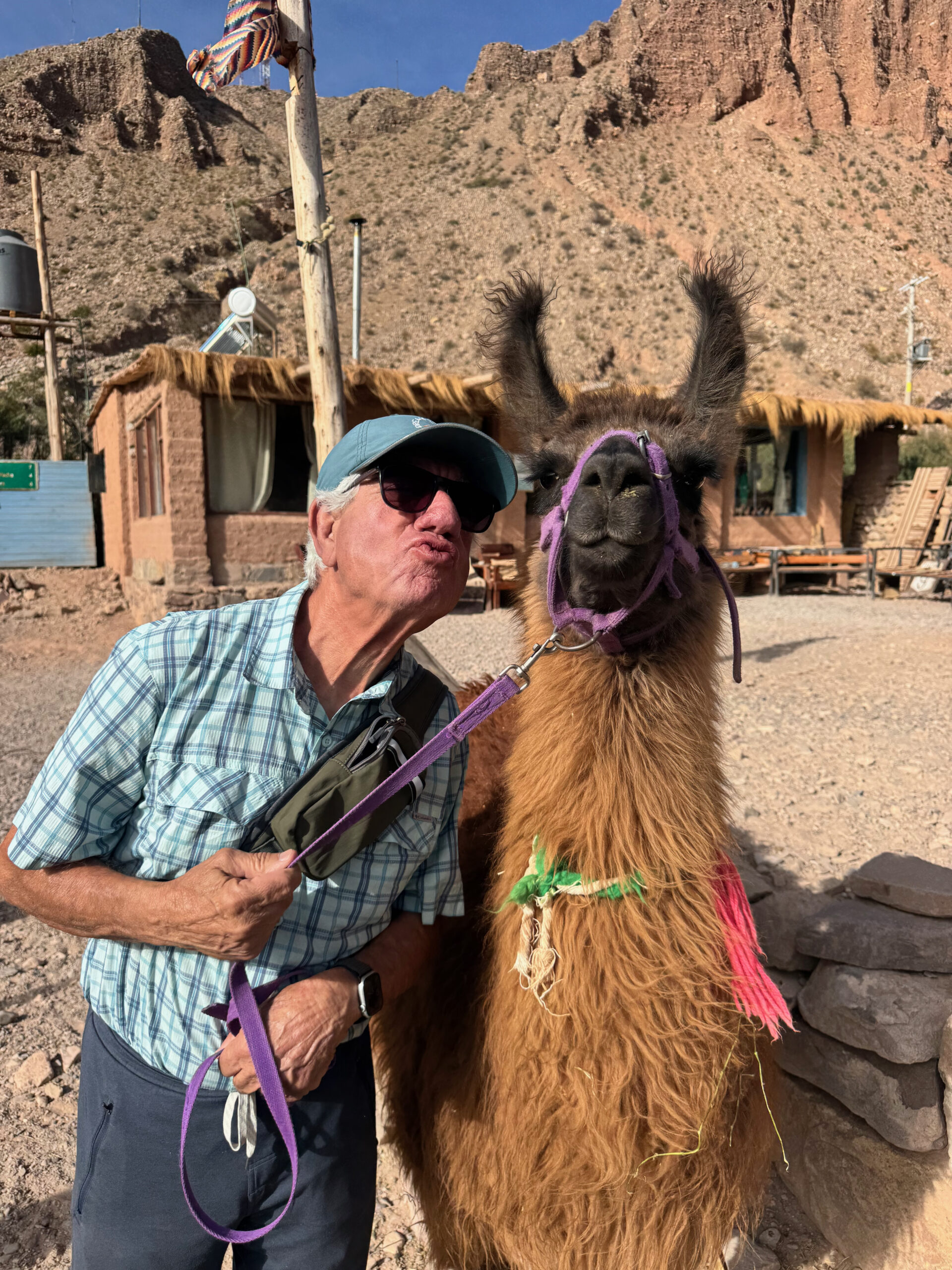
It was a long climb uphill to return to our hotel and by mid-day it was so hot and so dry I began to feel it. I was beginning to think it was a good thing that our hike to Devil’s Throat was canceled. Late in the afternoon we were scheduled for a llama trek. I wasn’t really feeling up to getting back in the heat but rallied. Joe got a kick out of it. These animals are adapted to high altitudes with special blood for thin air and thick wool for cold. Indigenous peoples used them as pack animals and for their wool and meat. In the treeless altitudes their dried dung burns well and used for cooking fires, heating homes and firing pottery. Our trek was a half-mile walk through the parched countryside with a group of other tourists. By the time we returned to the hotel I was struggling to swallow. The humidity was under 30%! Now it was my turn to feel unwell. I skipped dinner and went to bed after packing. We were being collected at 4:00 am the next morning. I was awakened with several bouts of nausea. I suspect it was altitude- or heat-related sickness, not a food illness.
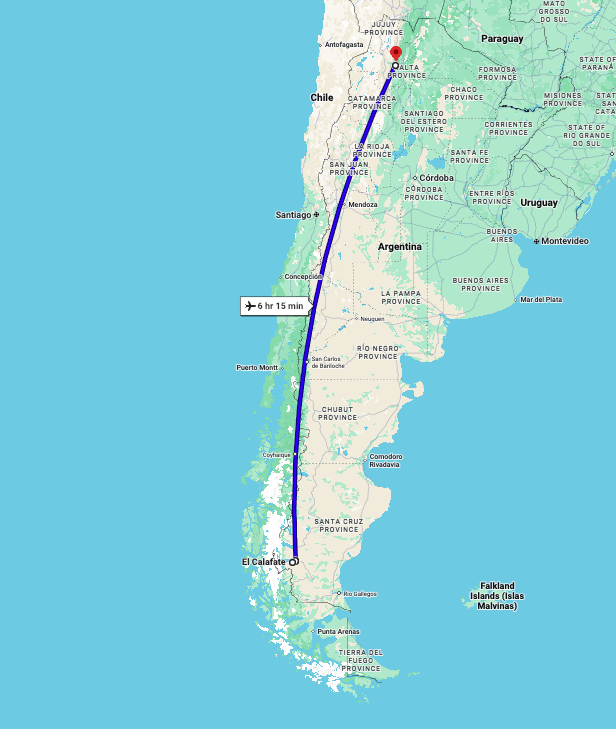
Flew from El Calafate to Salta
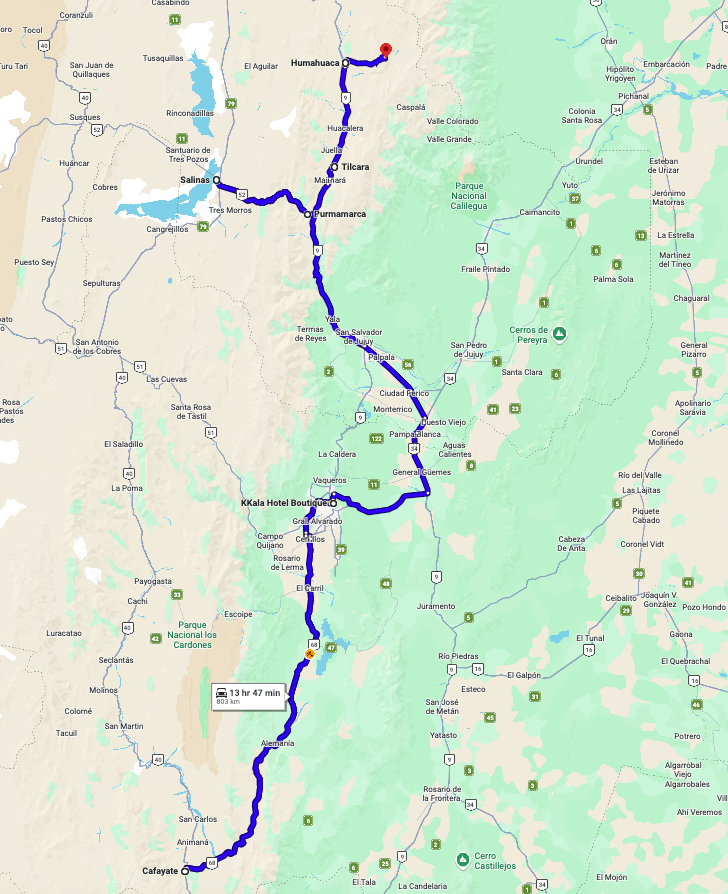
Our route around the Northwest
One thought on “The Great Northwest”
This is a wonderful travel log of Argentina. We have been here twice and it was fun to see many sights that we have seen. but had forgotten about. Excellent job.
Best, Hi