Southern Patagonia, Glacier Country
Our original intent was to skip the glaciers of Patagonia and save them for a separate trip. However, we may never make the time to return, so we are glad we’ve done it.
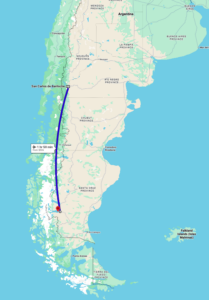
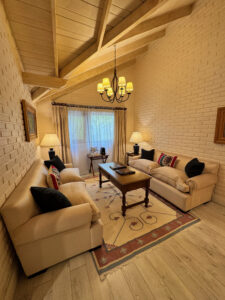
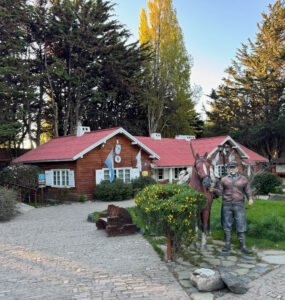
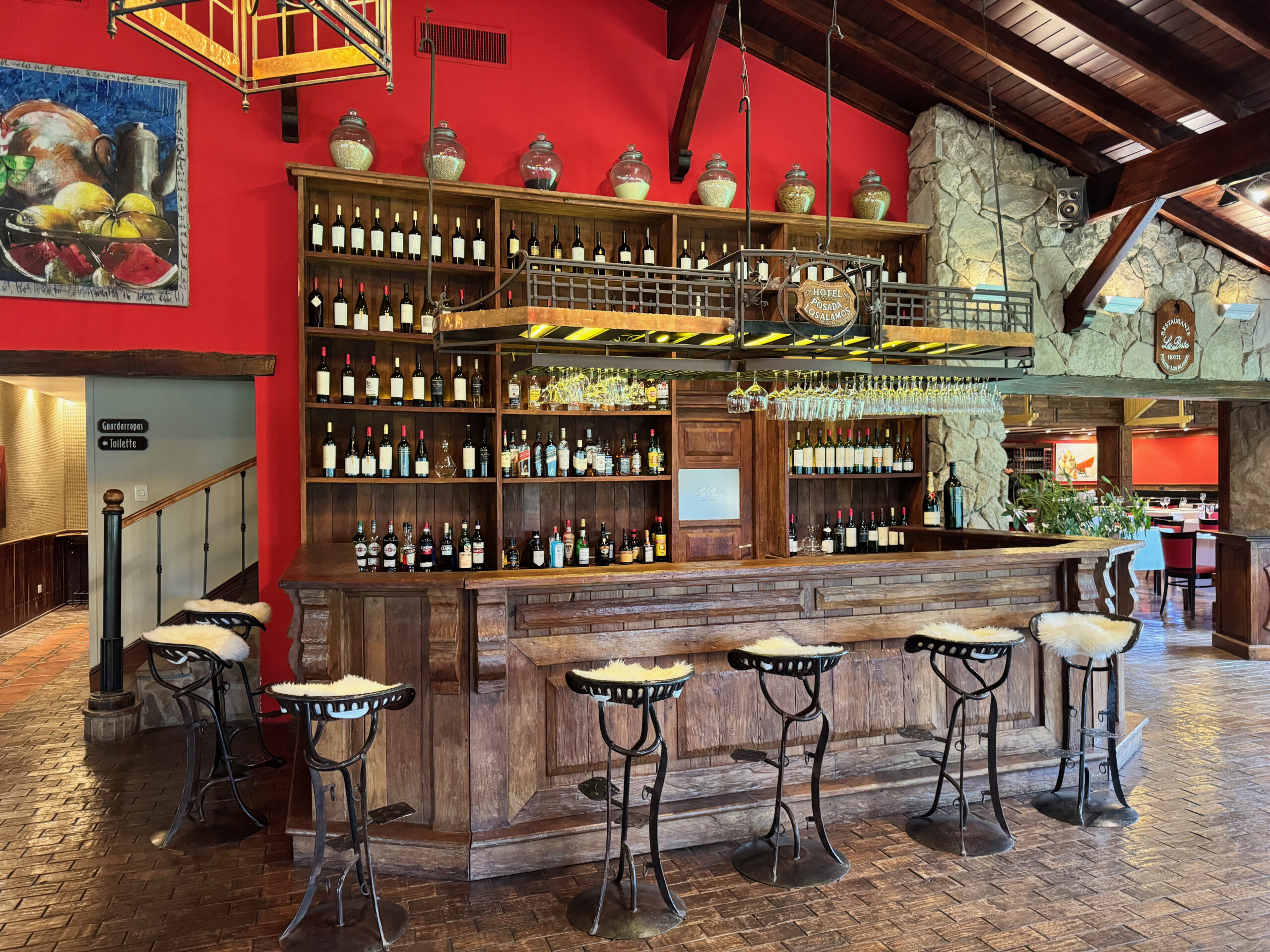
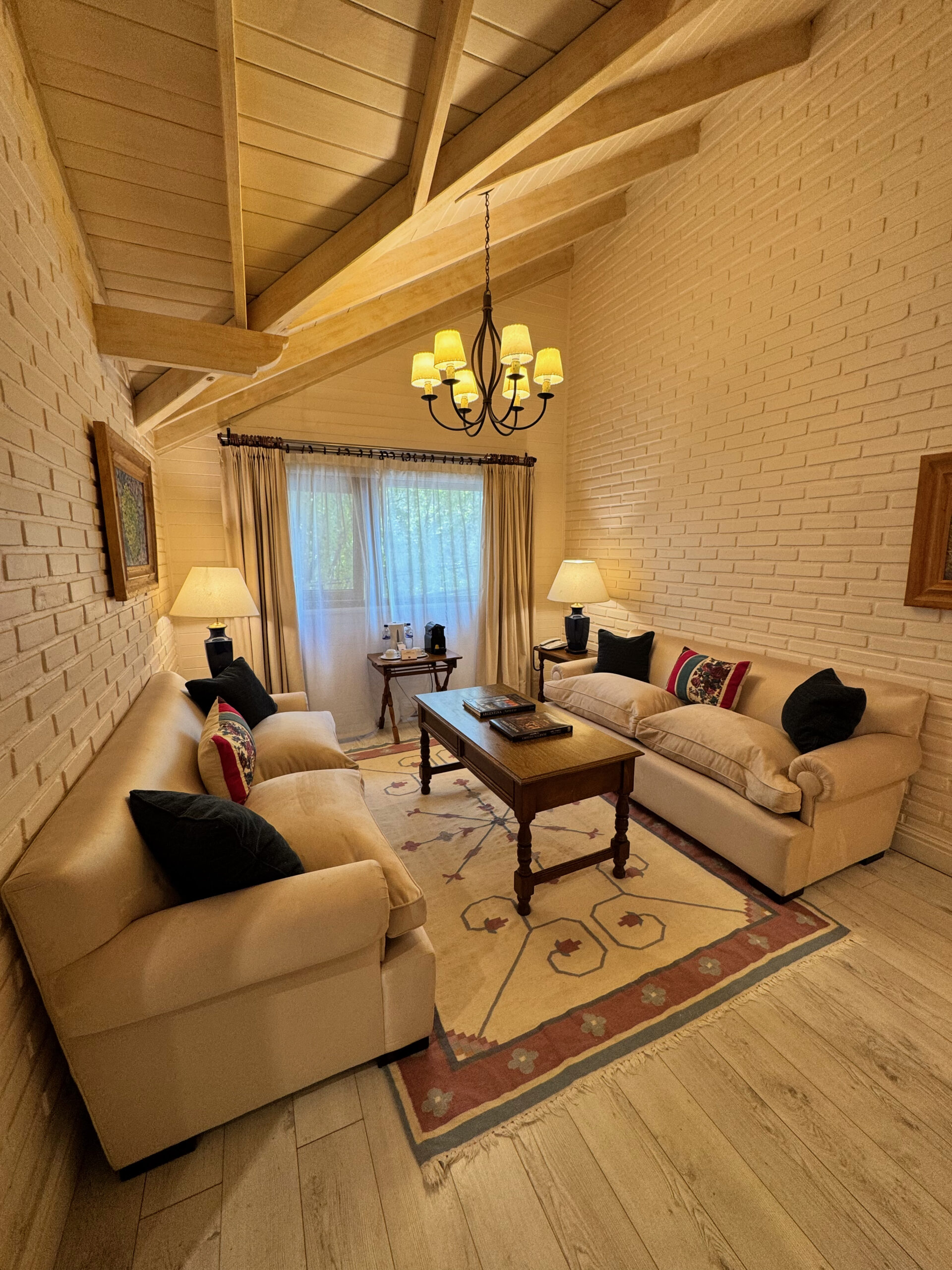
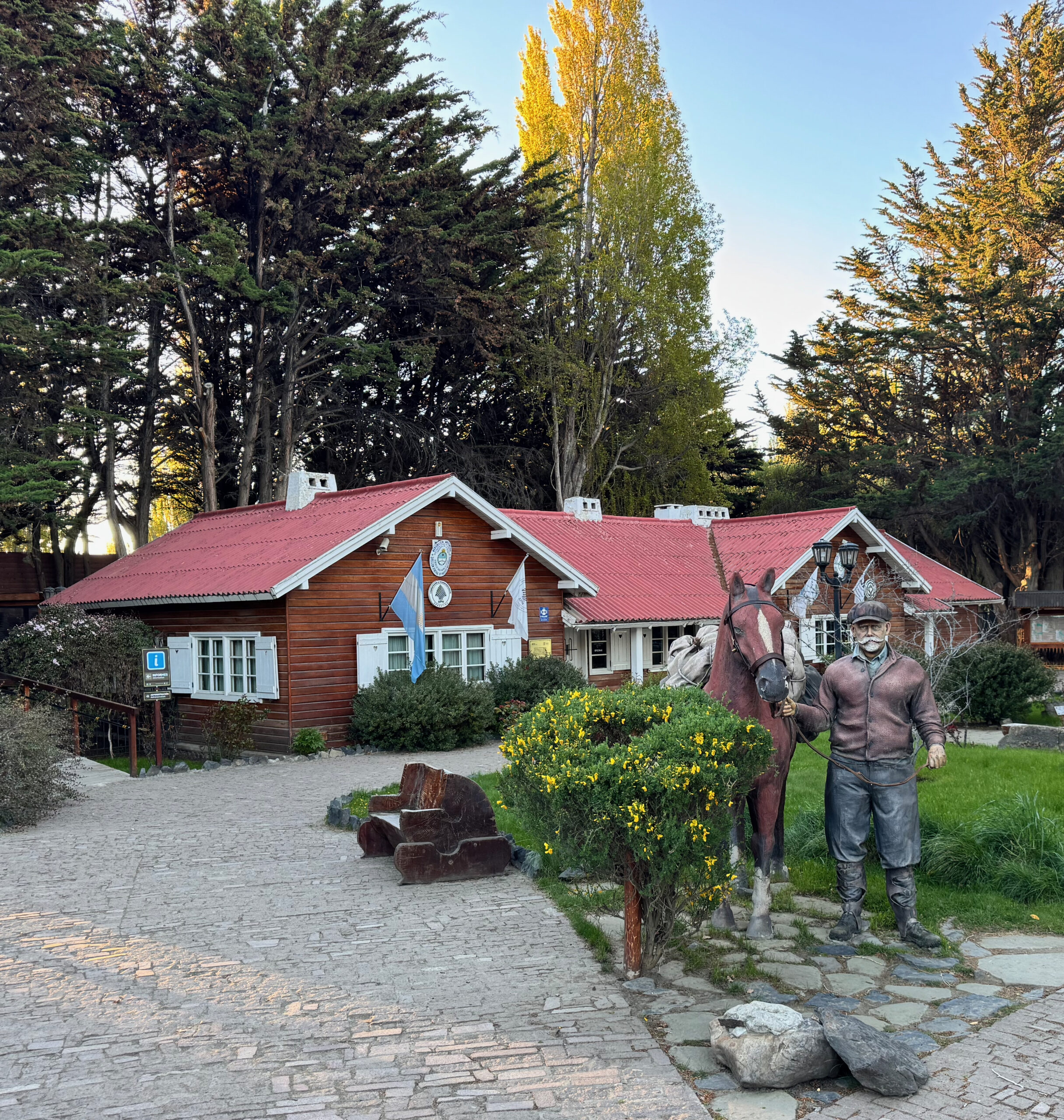
We had a mid-morning flight from Bariloche to El Calafate, one of the two best points in South Patagonia for glacier viewing. We arrived in time to wander main street, have an eagerly anticipated but disappointing guanaco (related to the llama) burger for lunch, and buy a warm (but too itchy) neck scarf for me. Then we settled into our suite at the lovely hotel, Posada Los Alamos, located a short walk from the main part of town. It is a charming establishment with a separate building housing a couple restaurants, bar, gym, pool and spa baths. They also have a golf course, but the cold temps meant it wasn’t an attractive option for us. Late afternoon clouds moved in and by the time we were ready for dinner, it was snowing lightly. We discovered a gem of a pizza place a couple blocks away and after this we called it a night.
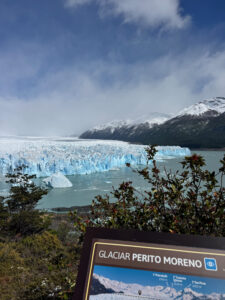
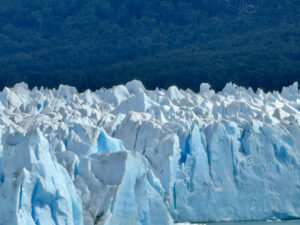
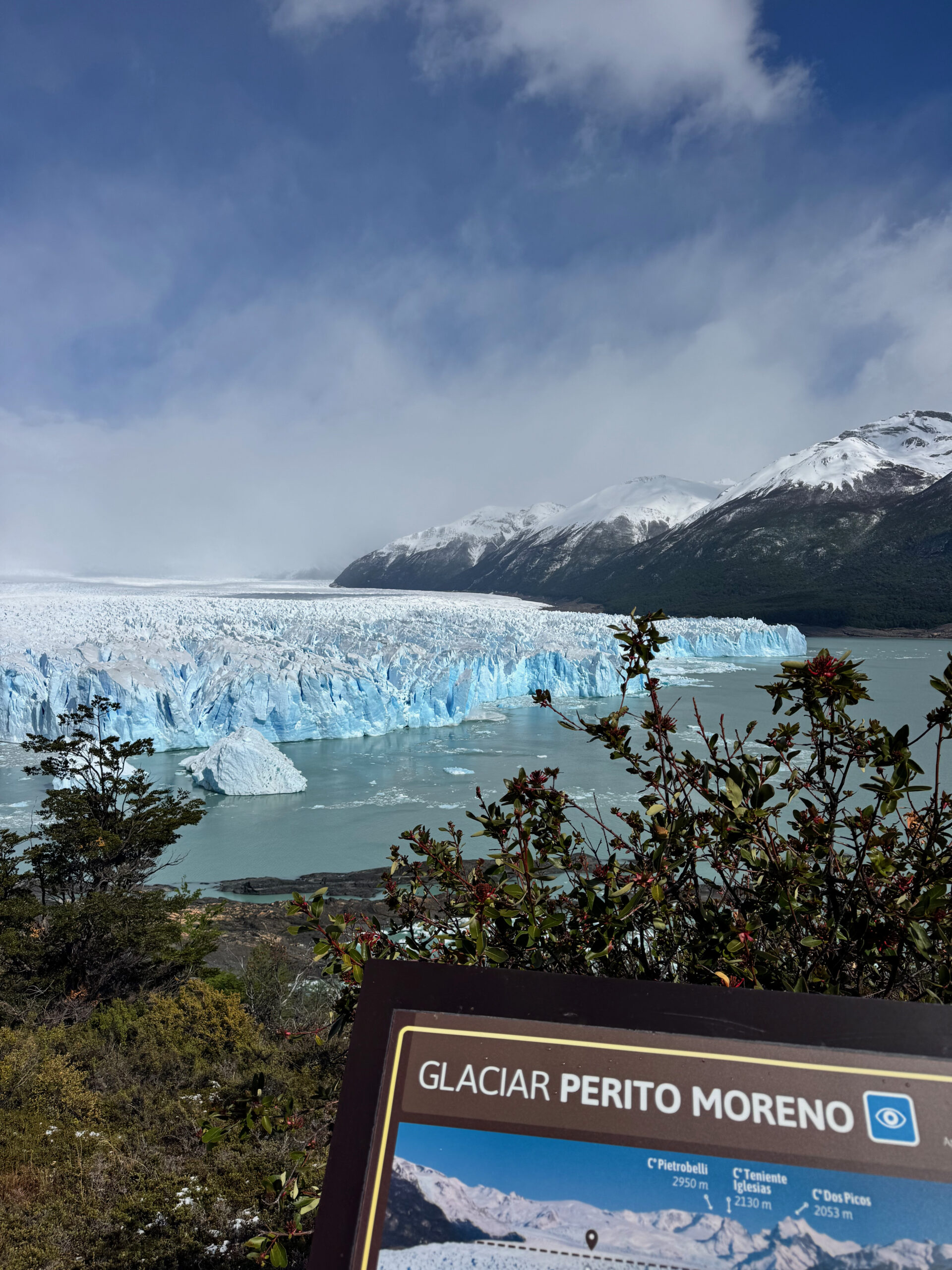
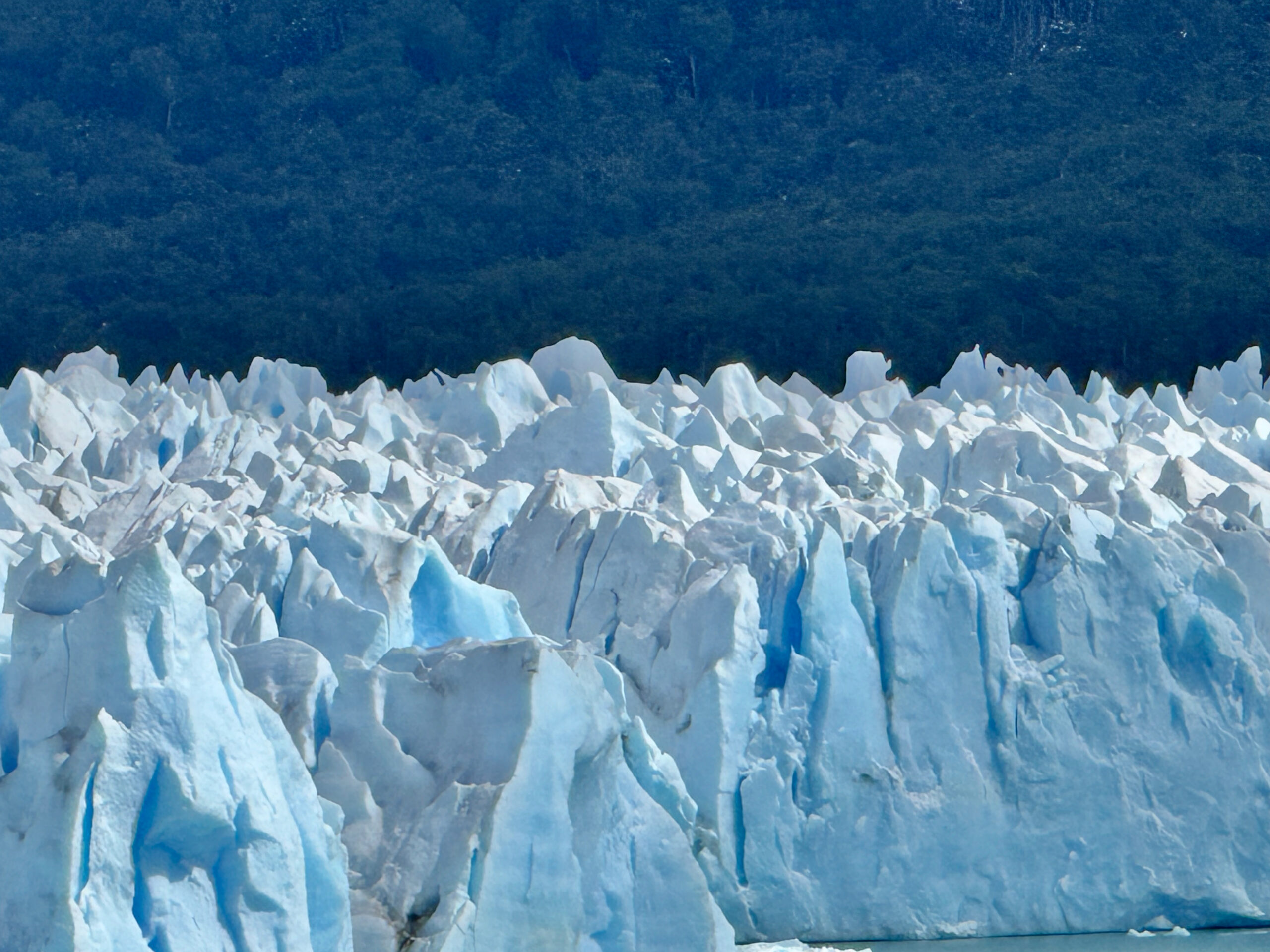
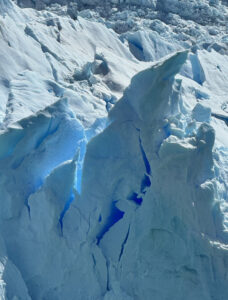
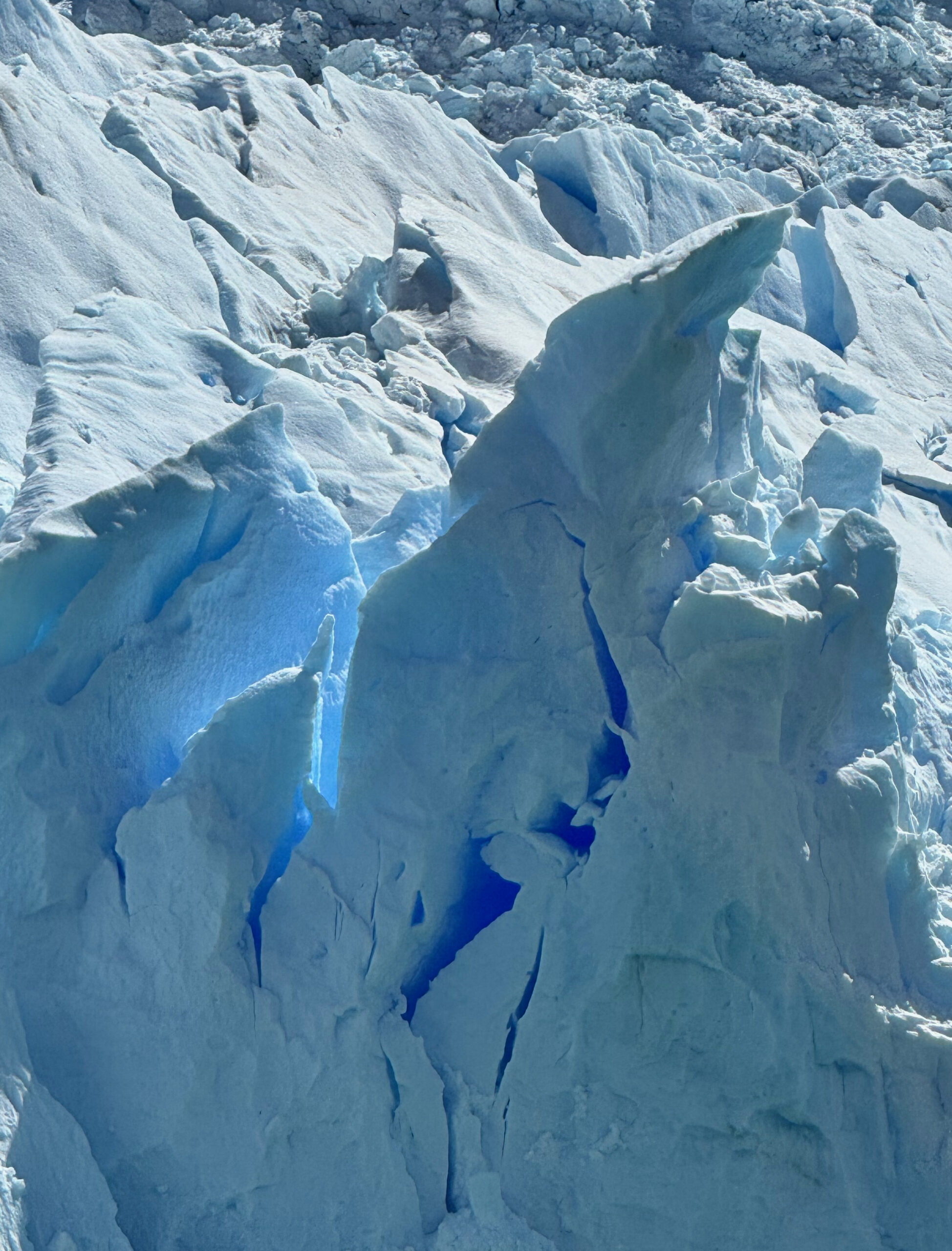
Our travel agent had arranged two days of glacial tours in Los Glaciares National Park. The park was created to preserve an extensive area of continental and glacial ice, the Patagonian forest, and samples of the steppe. After breakfast the first morning we were met by Anna and Lucas, our guide and driver. A beautiful dusting of fresh snow covered the surrounding mountains. It promised to be a clear but cold, windy day as we drove an hour to visit our first glacier, Perito Moreno, named for the explorer who surveyed much of the area in the 1800s. This is one of the most famous and dramatic glaciers in the world. It is a vast river of ice about 19 miles deep and 3 miles wide with towering ice walls that rise up 200-230 feet above the stunning turquoise waters of Lake Argentina. What makes it especially remarkable is that it is one of the few glaciers in the world that is not currently retreating significantly. In fact, it sometimes increases in size forming an ice dam that blocks the lake’s waters. When pressure builds, the ice ruptures in a spectacular natural event. The glacier’s massive scale, intense beauty and constant movement make it feel alive with groaning, cracking and shifting. An unforgettable sight.
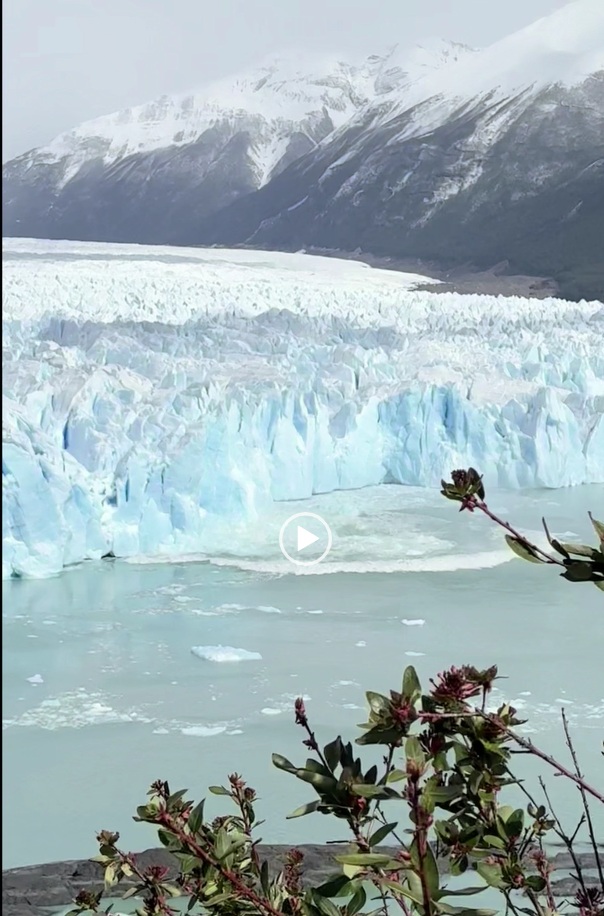
Anna spoke perfect English and despite her youth, was an expert on the area. She explained much of what we were seeing about the history and formation of these glaciers with enthusiasm and a sense of humor. Once we arrived at our destination, we saw the park had established a network of metal boardwalks and viewing platforms, protecting the surroundings and keeping visitors from wandering off-piste or falling off bluffs. One of the routes through a grove of trees was closed due to high winds. It felt super cold and we had to fight the wind to stay upright. The glacier was astounding; we saw multiple episodes of calving which were thunderous and produced significant wave action.
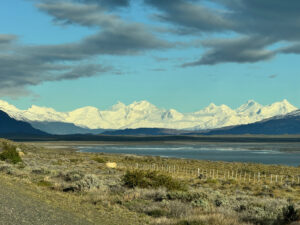
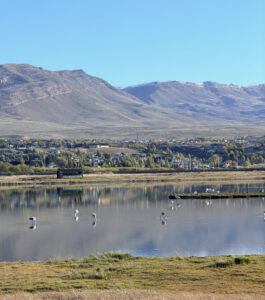
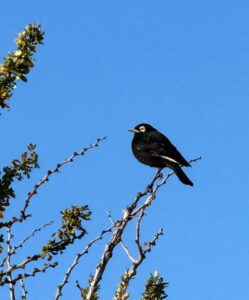
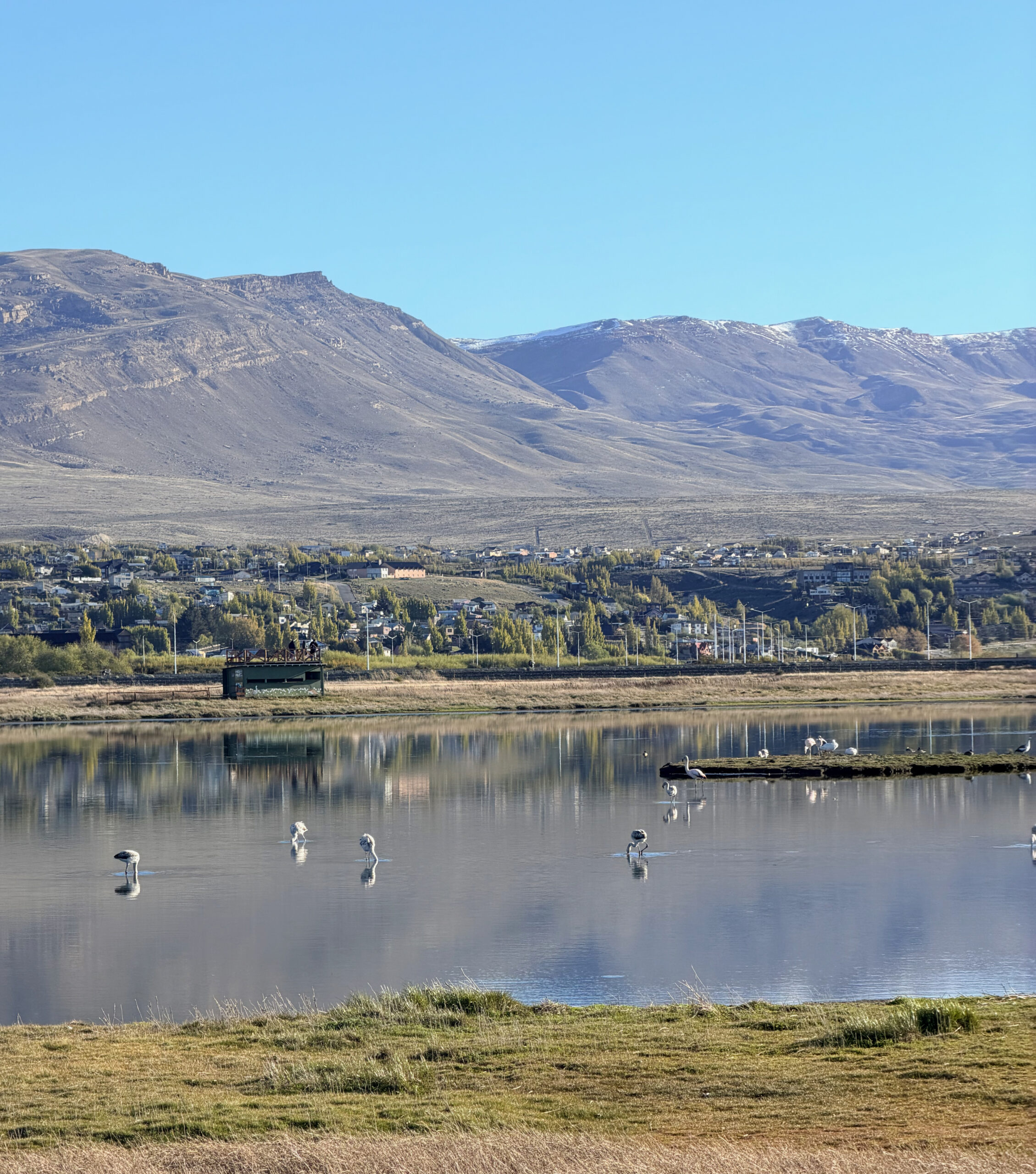
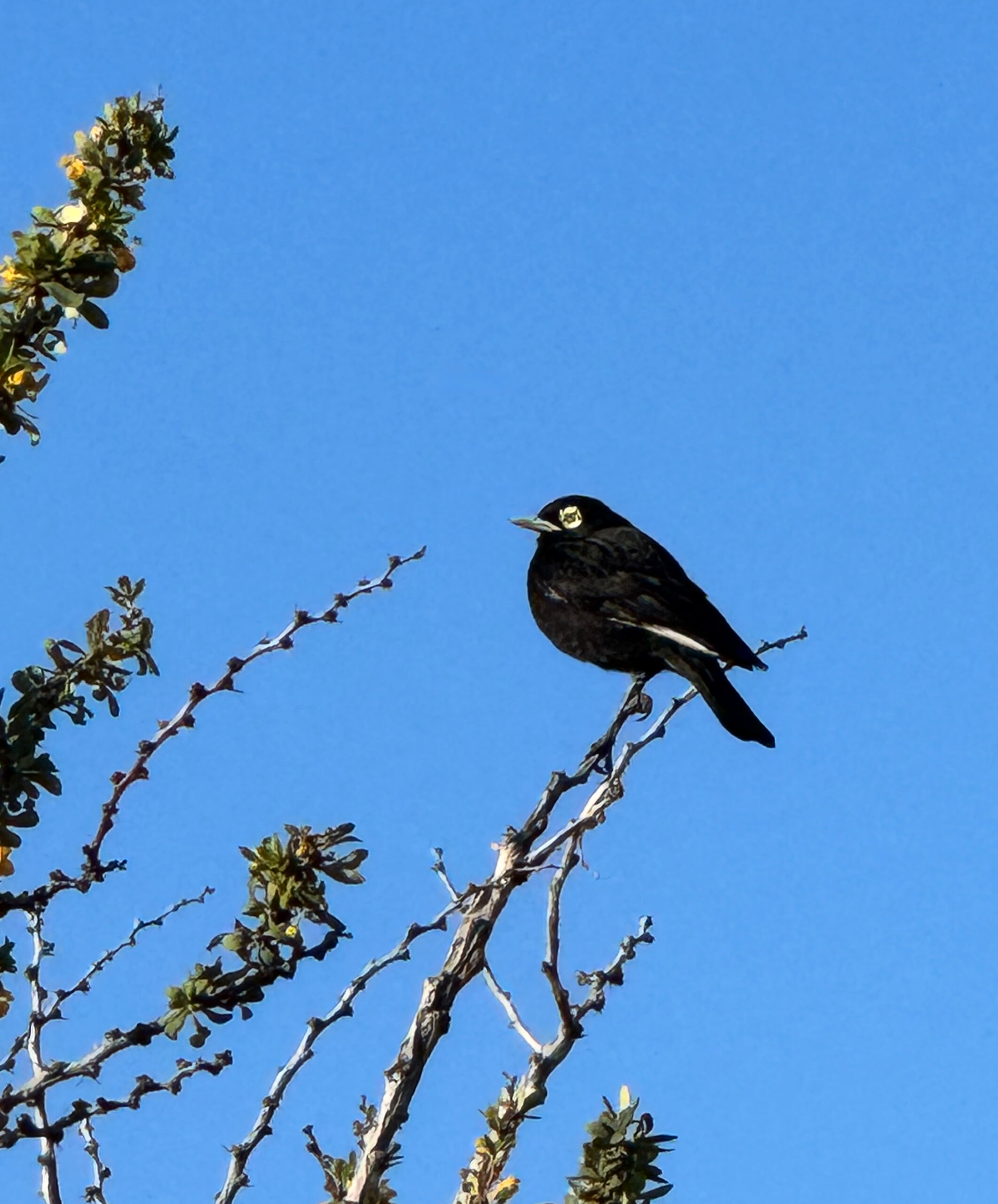
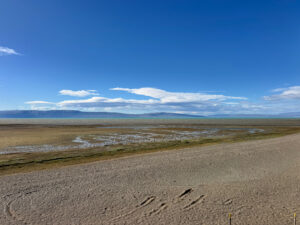
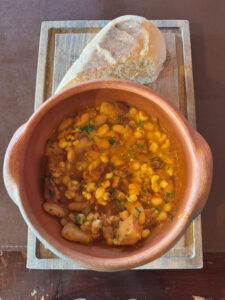
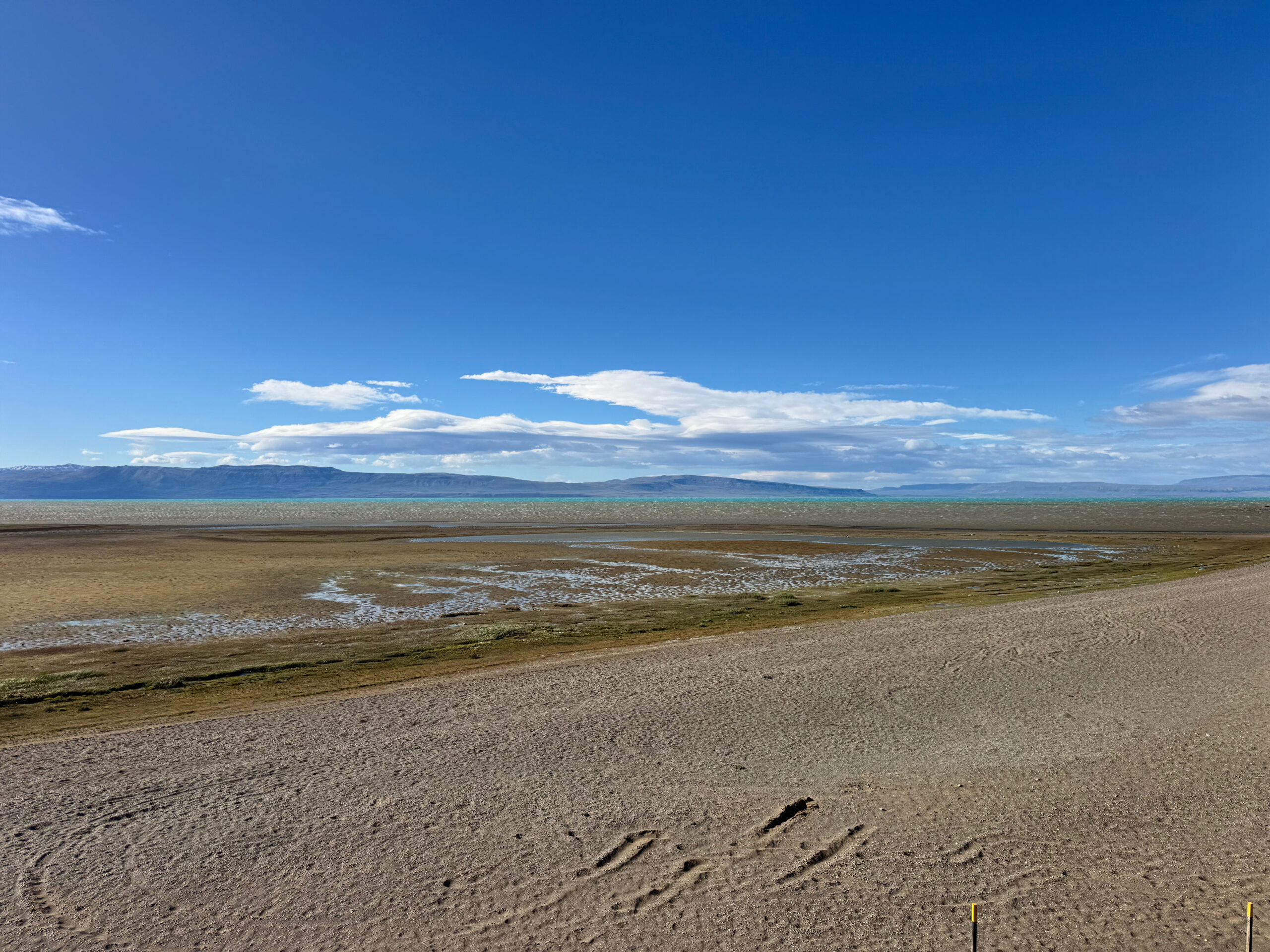
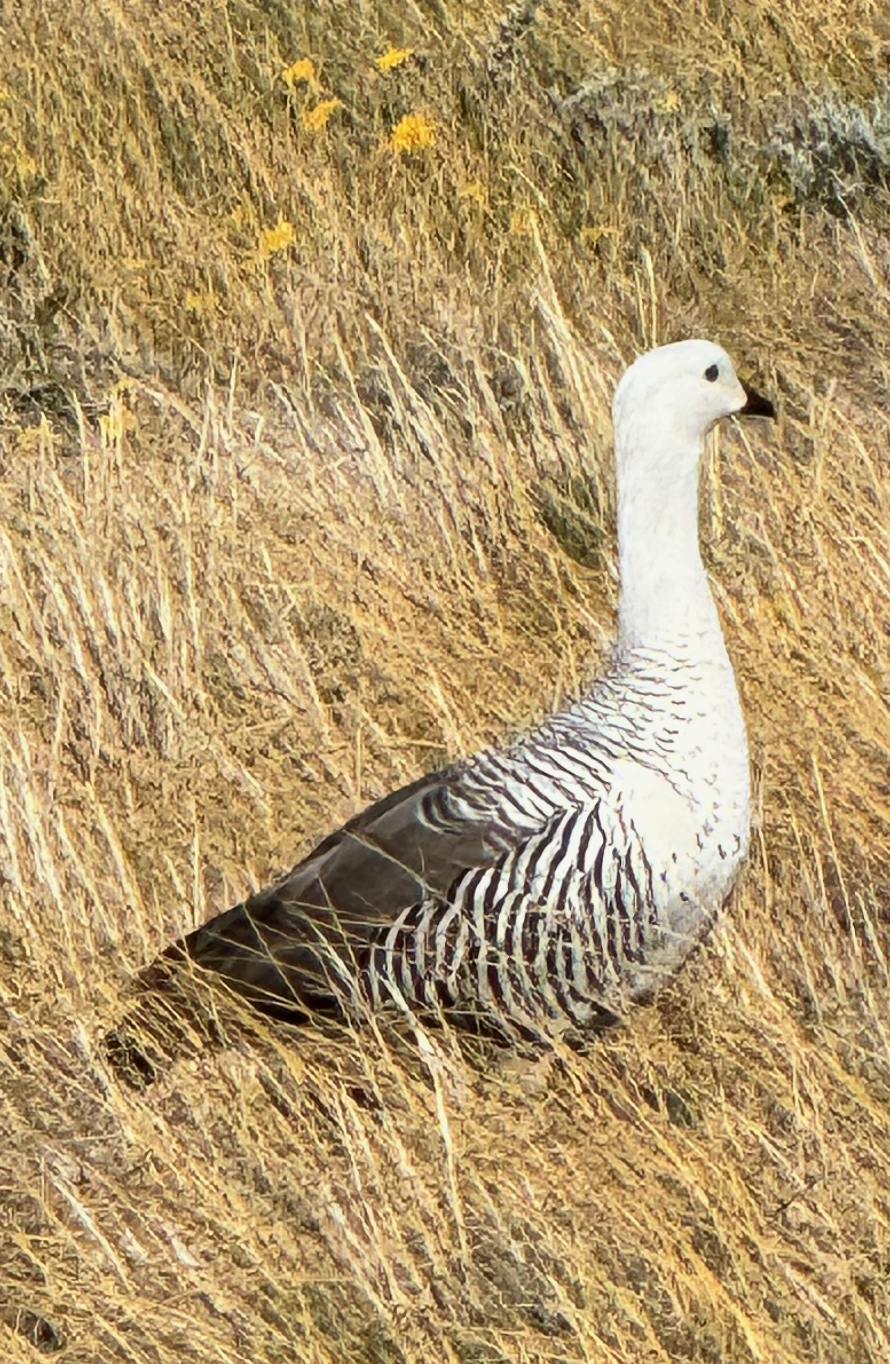
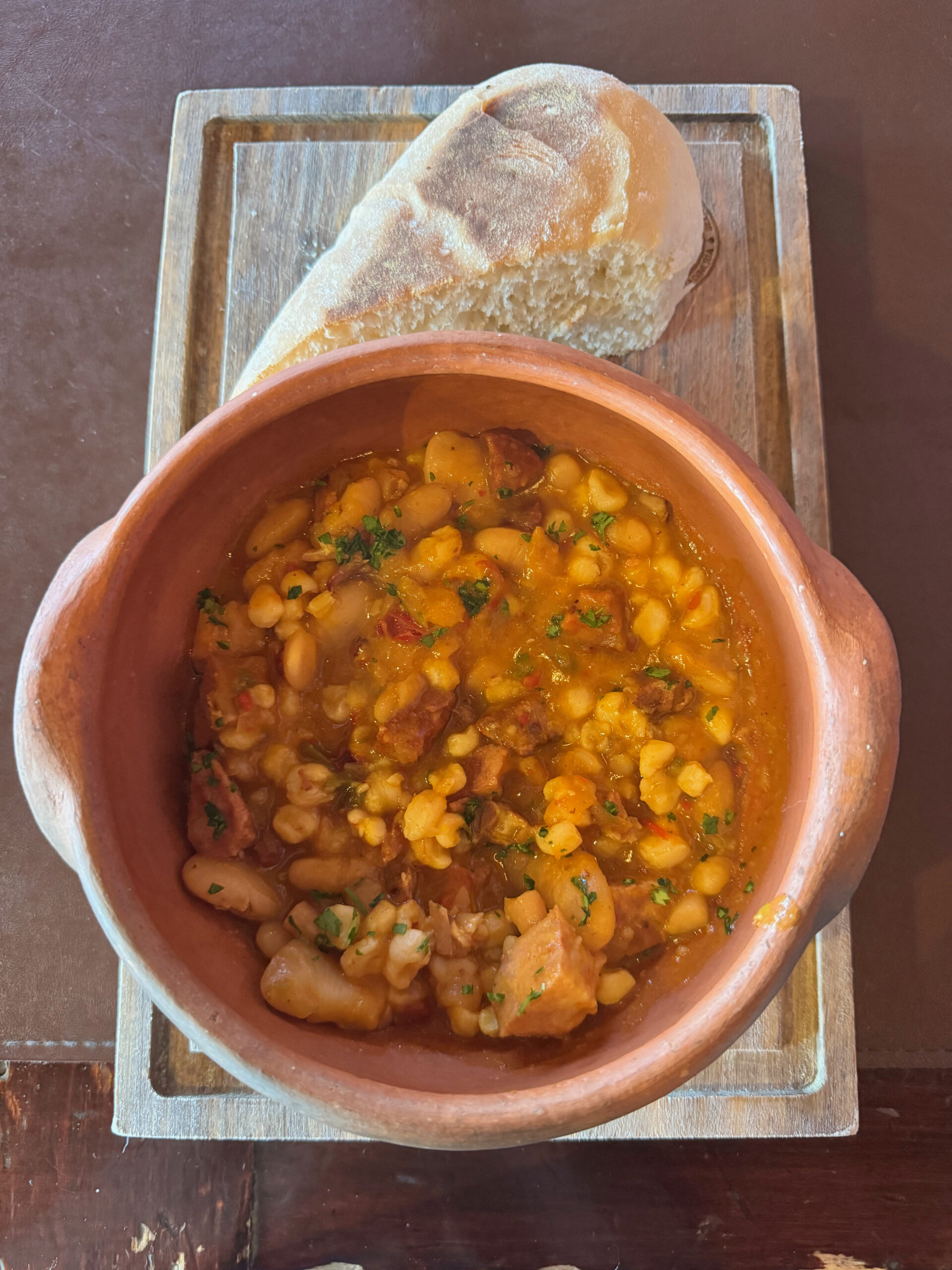
Our day with Anna was the best. She answered a lot of questions about living in this area and other things to do in El Calafate. She recommended Laguna Nimez Nature Reserve, a protected wetland area on the edge of Lake Argentina, a mile from our hotel. The shallow lagoon is surrounded by reeds, grasses and low Patagonian steppe vegetation and is famous for incredible birdlife and quiet scenery. Because it was still so windy this late in the day, we realized on our walk around it, that most birdlife and small animals were keeping sheltered. As relatively new users of the bird app Merlin, we only identified 4 birds. After our loop walk, we popped into the Cantina across the street, a restaurant frequented by locals, according to Anna. We tried the house favorite, a beverage of Fernat & Coke; a browse of the menu enticed us to stay and try the Locro, a hearty, traditional slow-cooked stew from the Andes and considered a national dish in Argentina. Common ingredients include hominy, pumpkin, potatoes and various meats like chorizo and pancetta. We loved it!
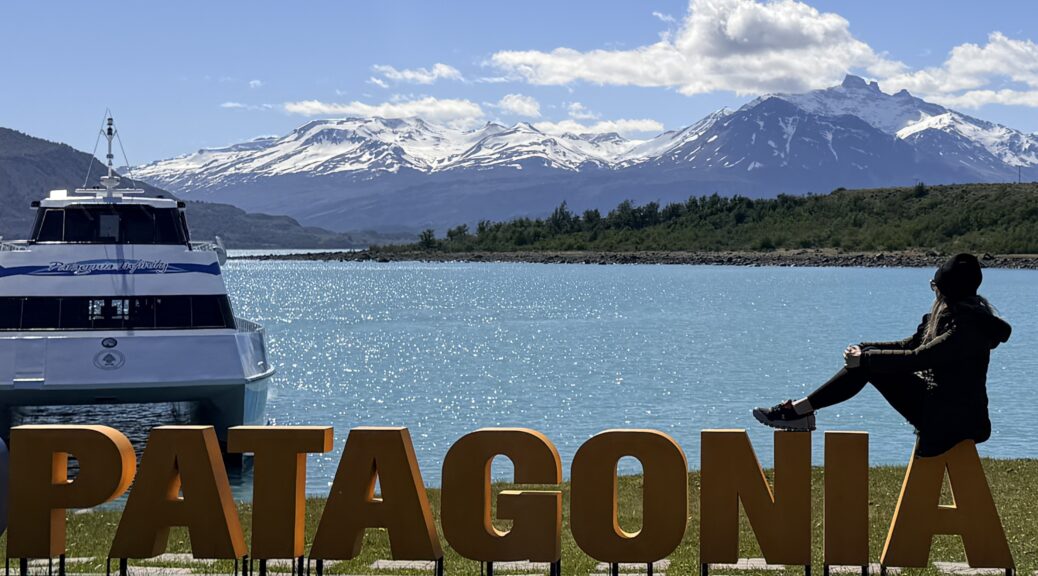
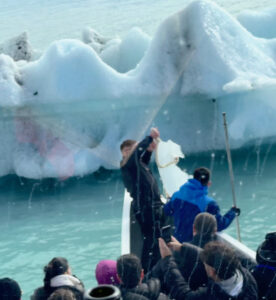
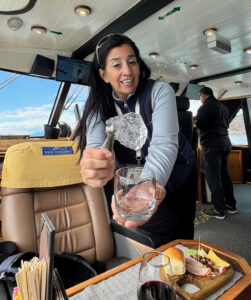
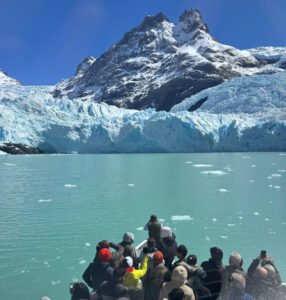
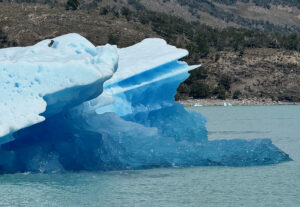
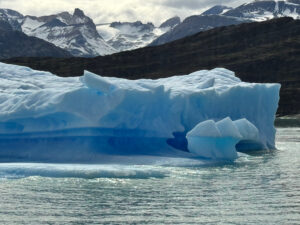
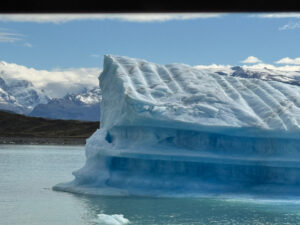
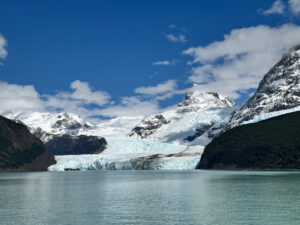
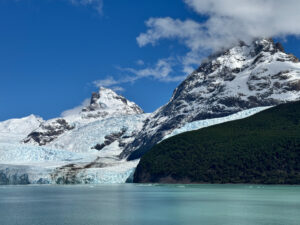
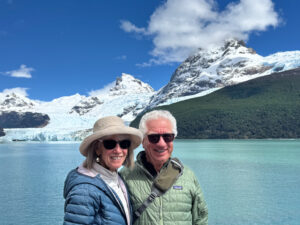
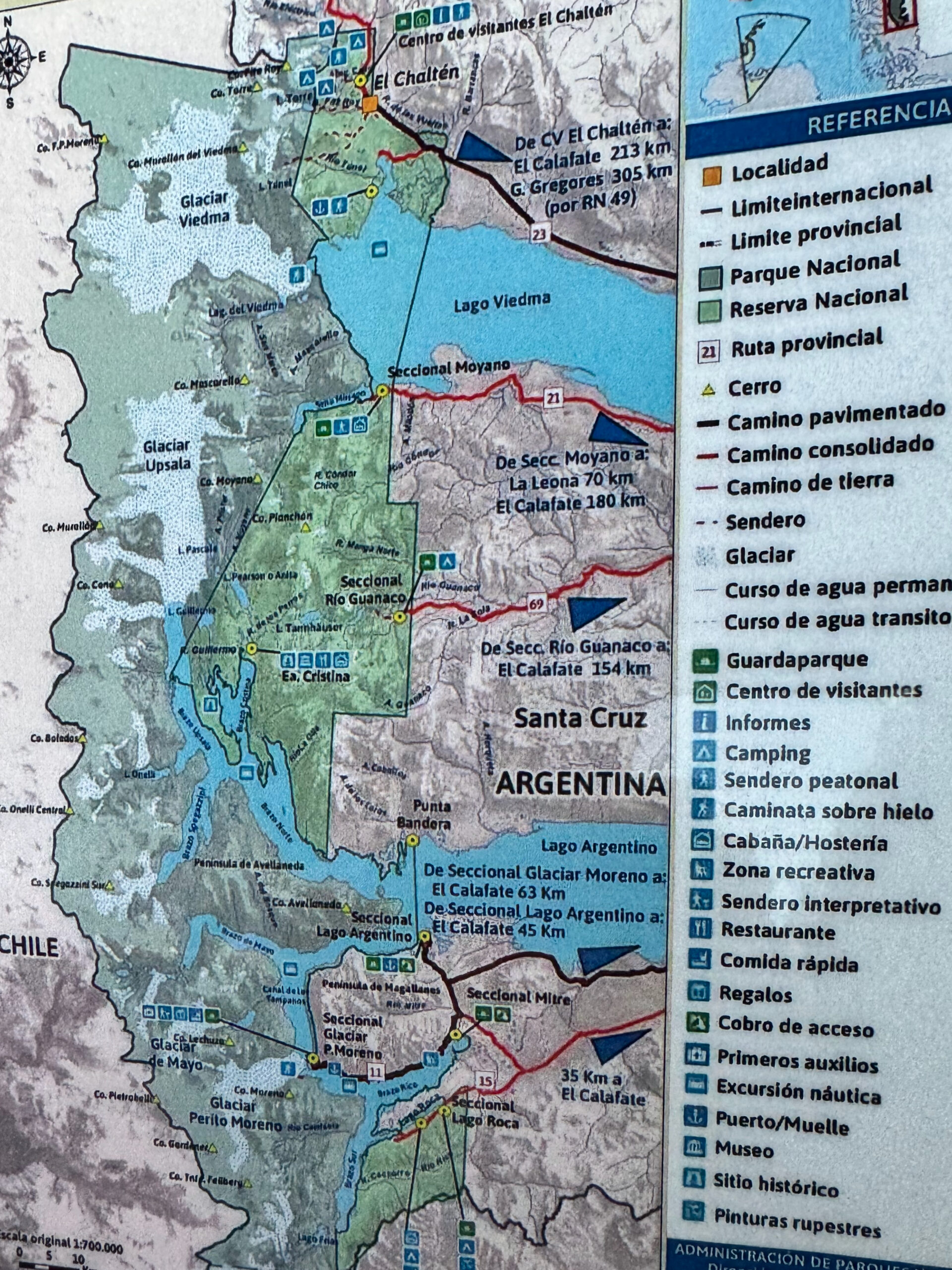
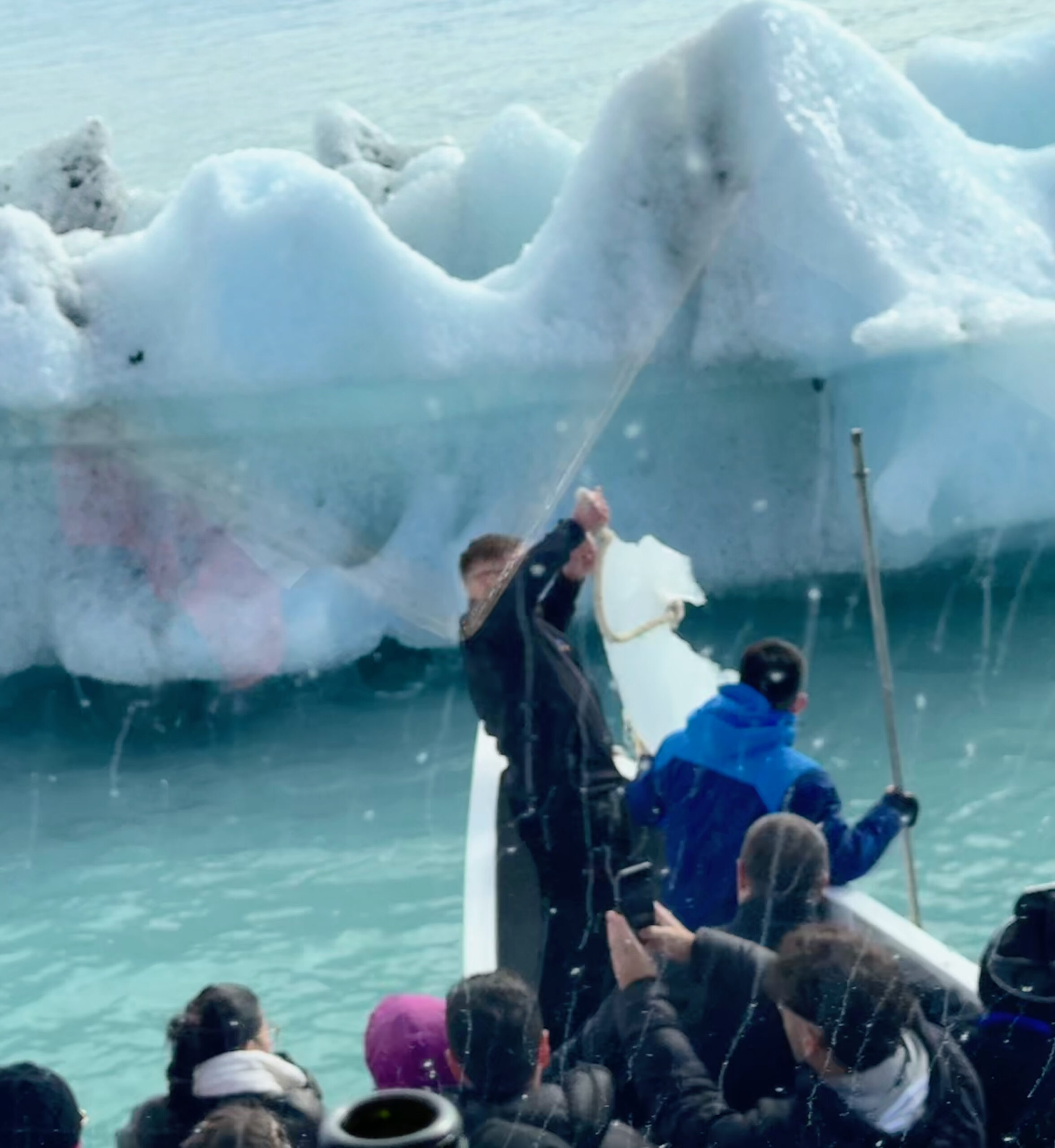
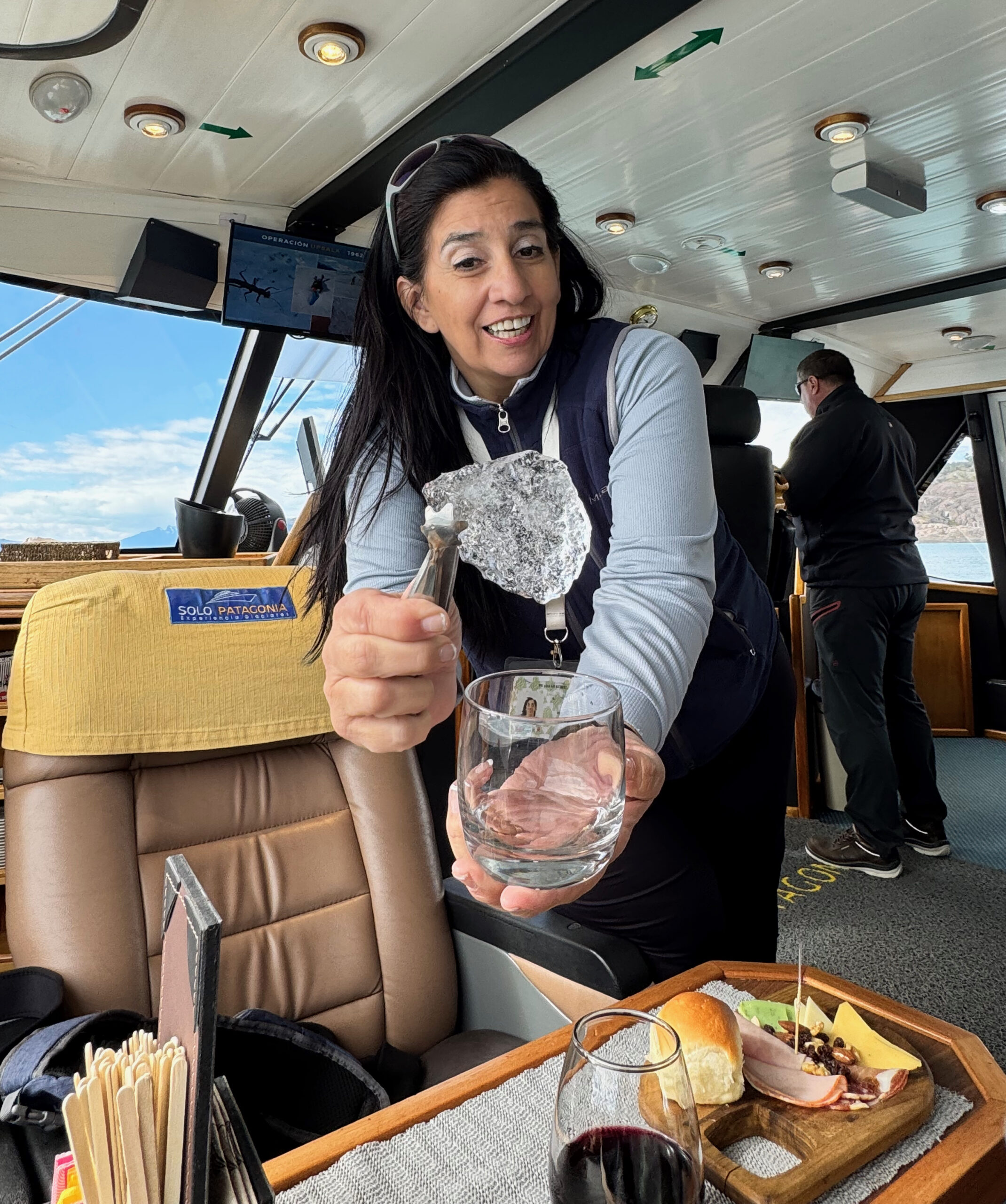
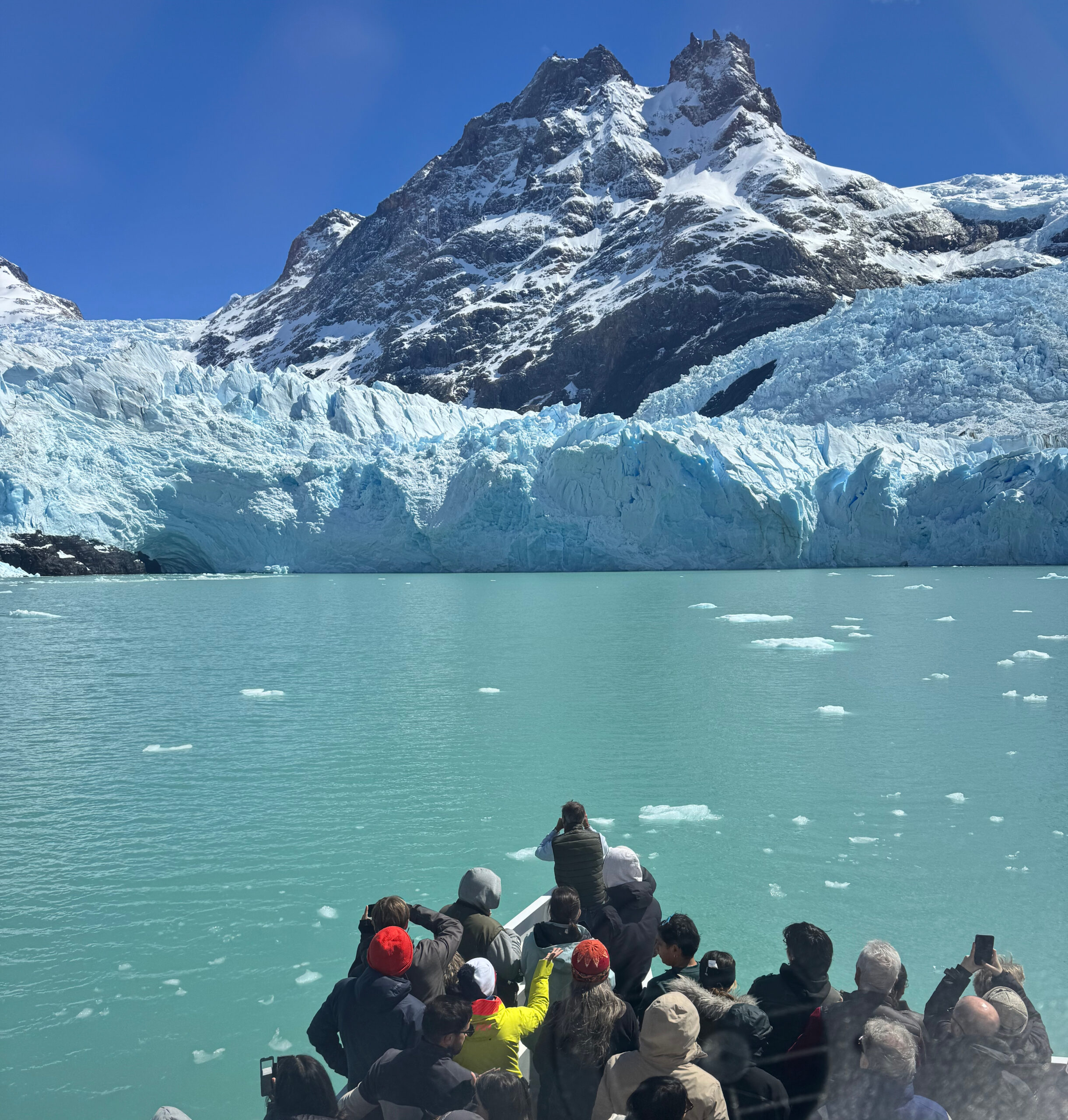
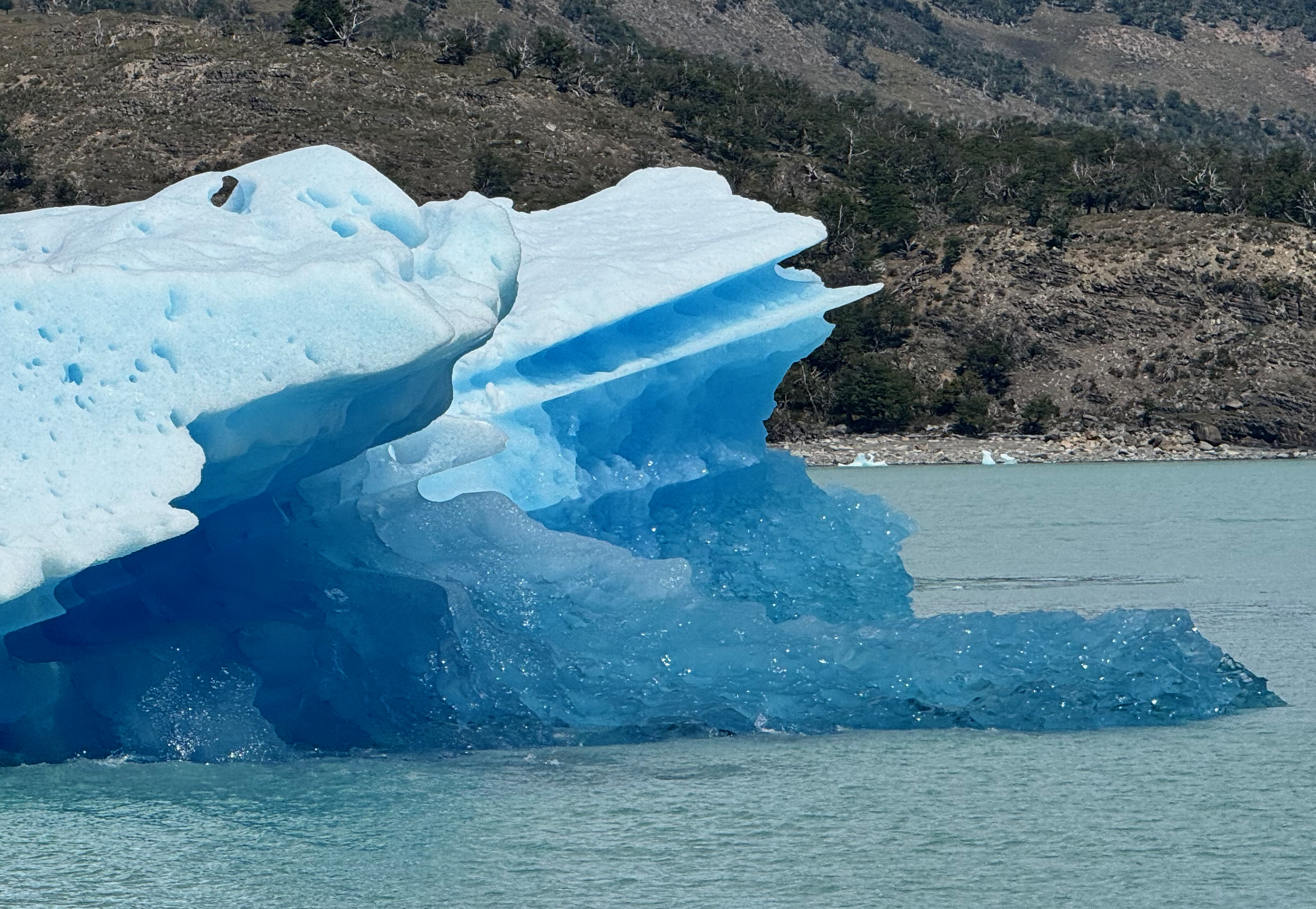
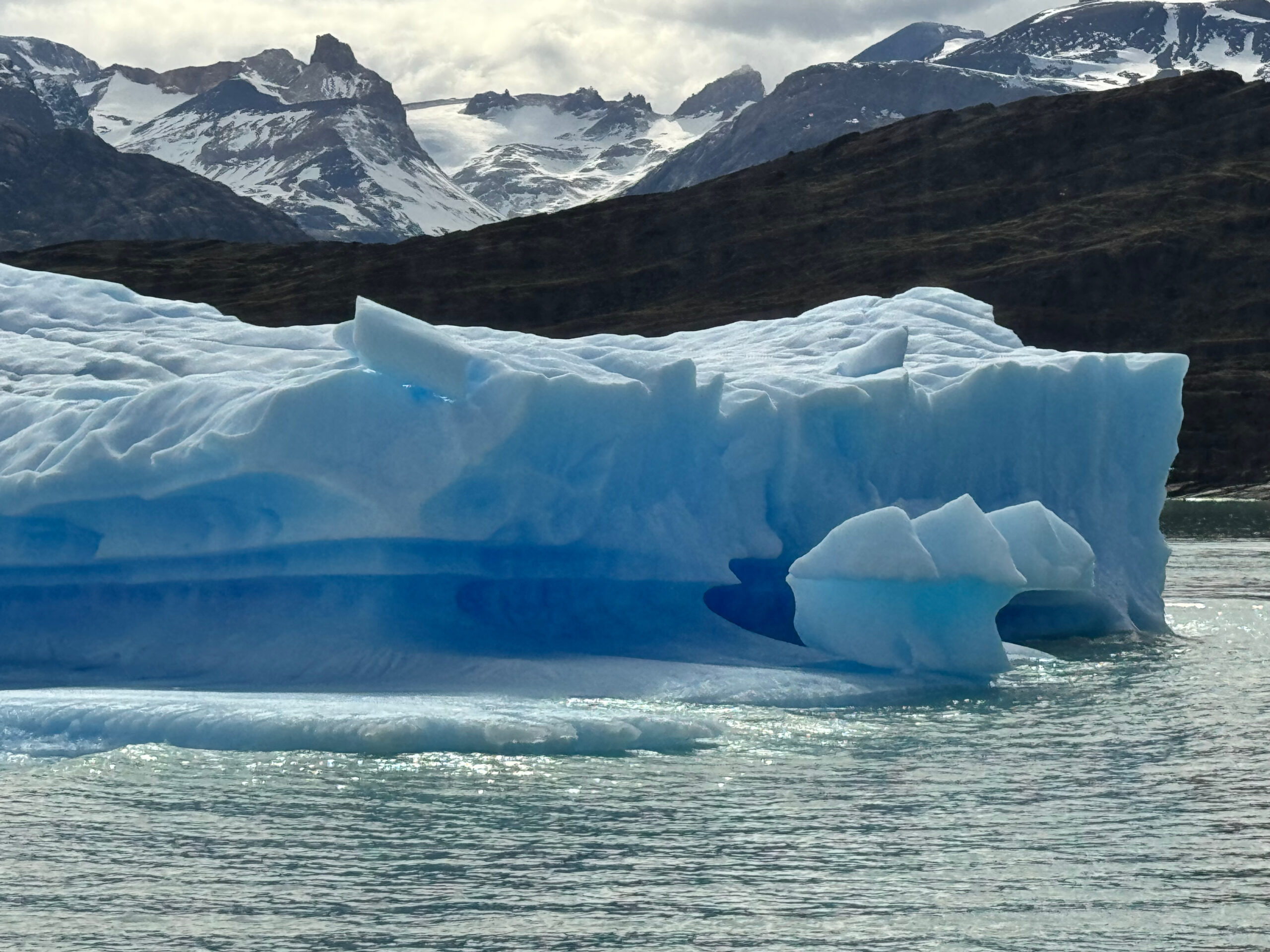
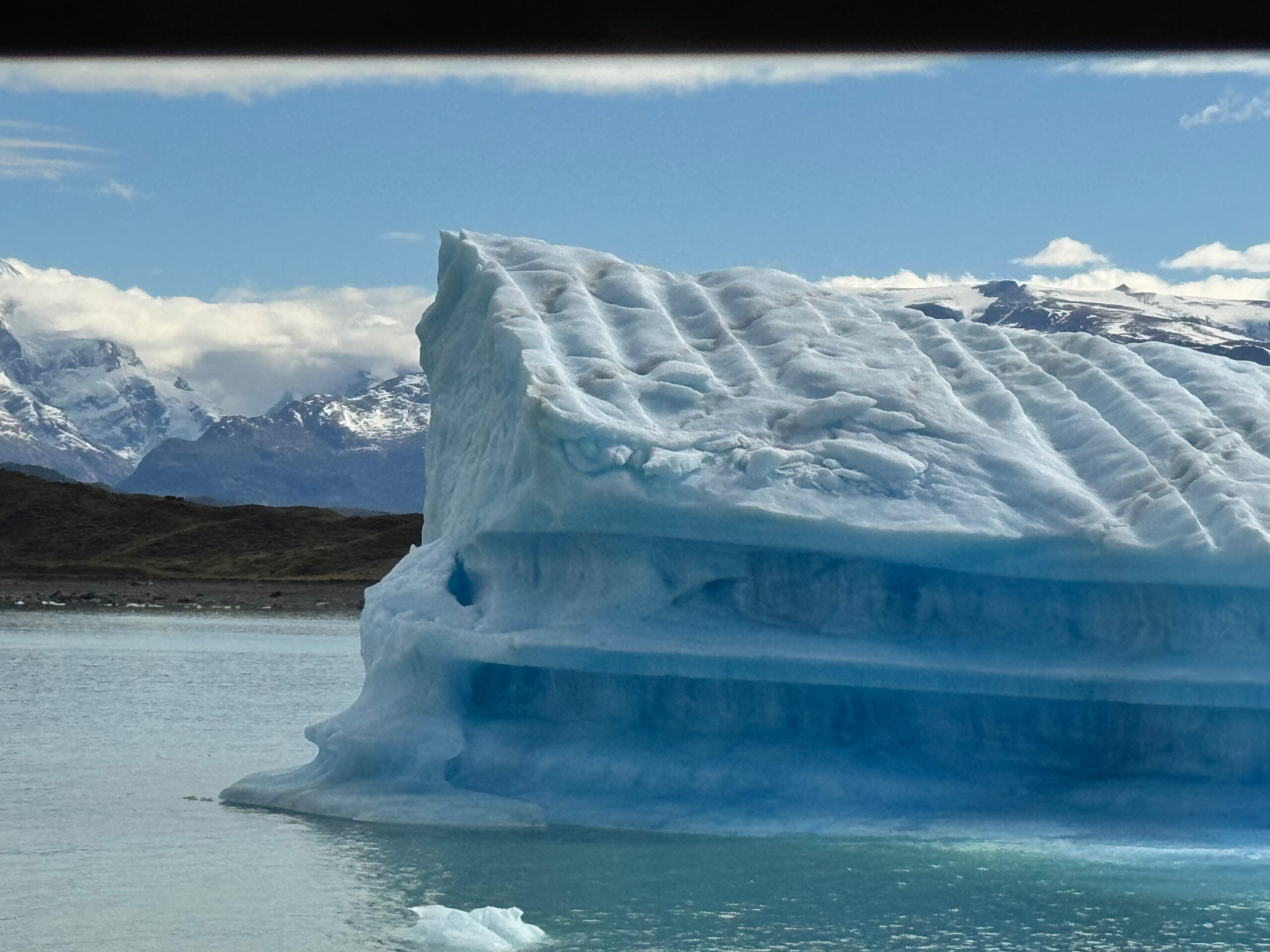
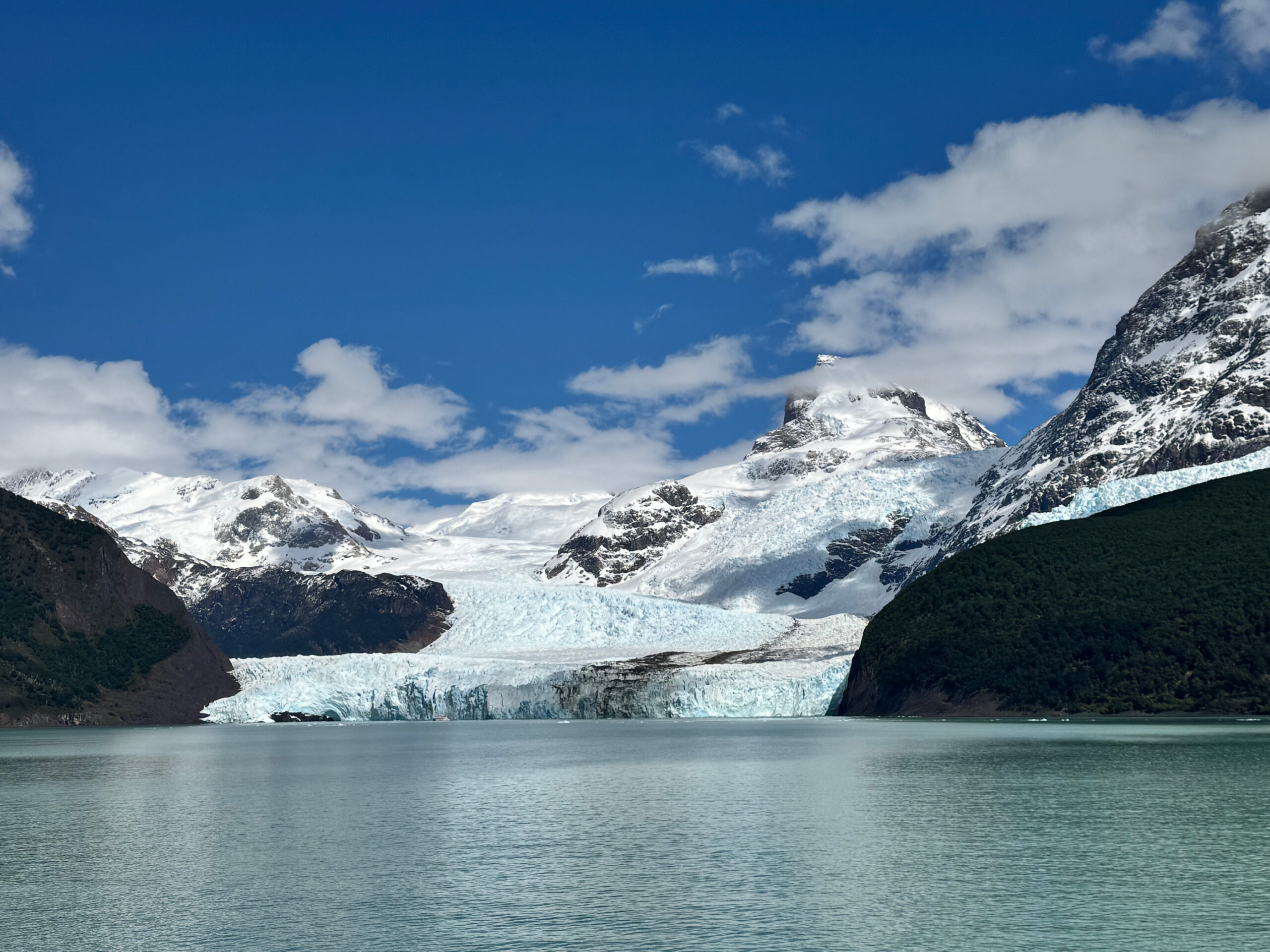
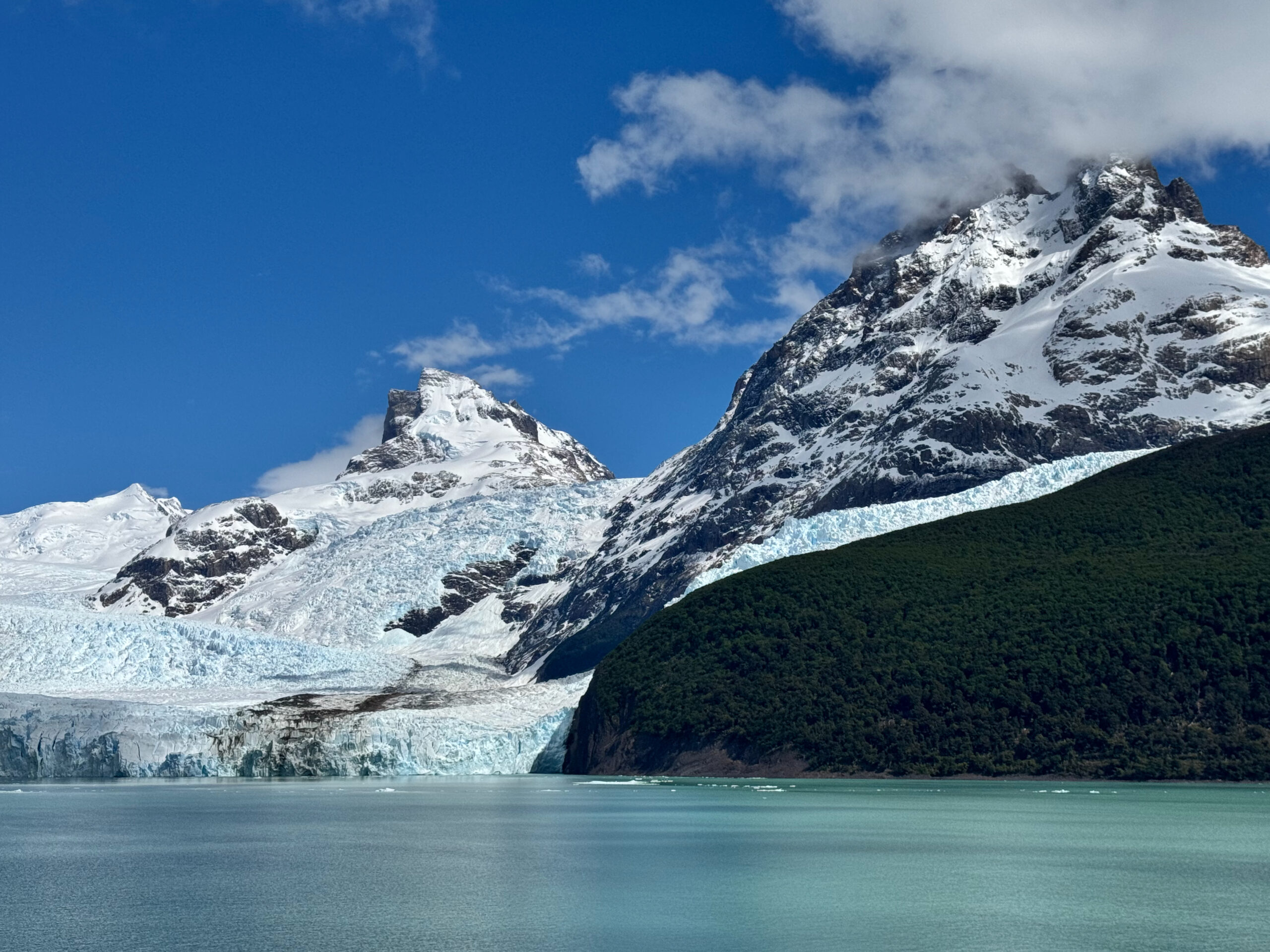
The next day Lucas picked us up to take us to the port on Lake Argentina where a sightseeing boat awaited us. We were booked in the “Captain’s Club” which entitled us to comfortable top deck seating in the Captain’s wheelhouse, which we shared with eight other people. It was quite lavish compared to the other classes of service. The wind from the previous day had died and the water was calm making for an easy sail. We passed lots of large floating icebergs before docking at the only restaurant in this remote region. While our cruise included wine and a pre-lunch starter, it was only 10:30 and having had breakfast, we weren’t really prepared for this much food, plus the lunch that followed. This was a 3-course meal taken with views from a private dining area shared with a British couple we got to know. Afterward, we motored up close and personal to Spegazzini Glacier. Despite the promise of a “first-class” experience, this trip was not great value.
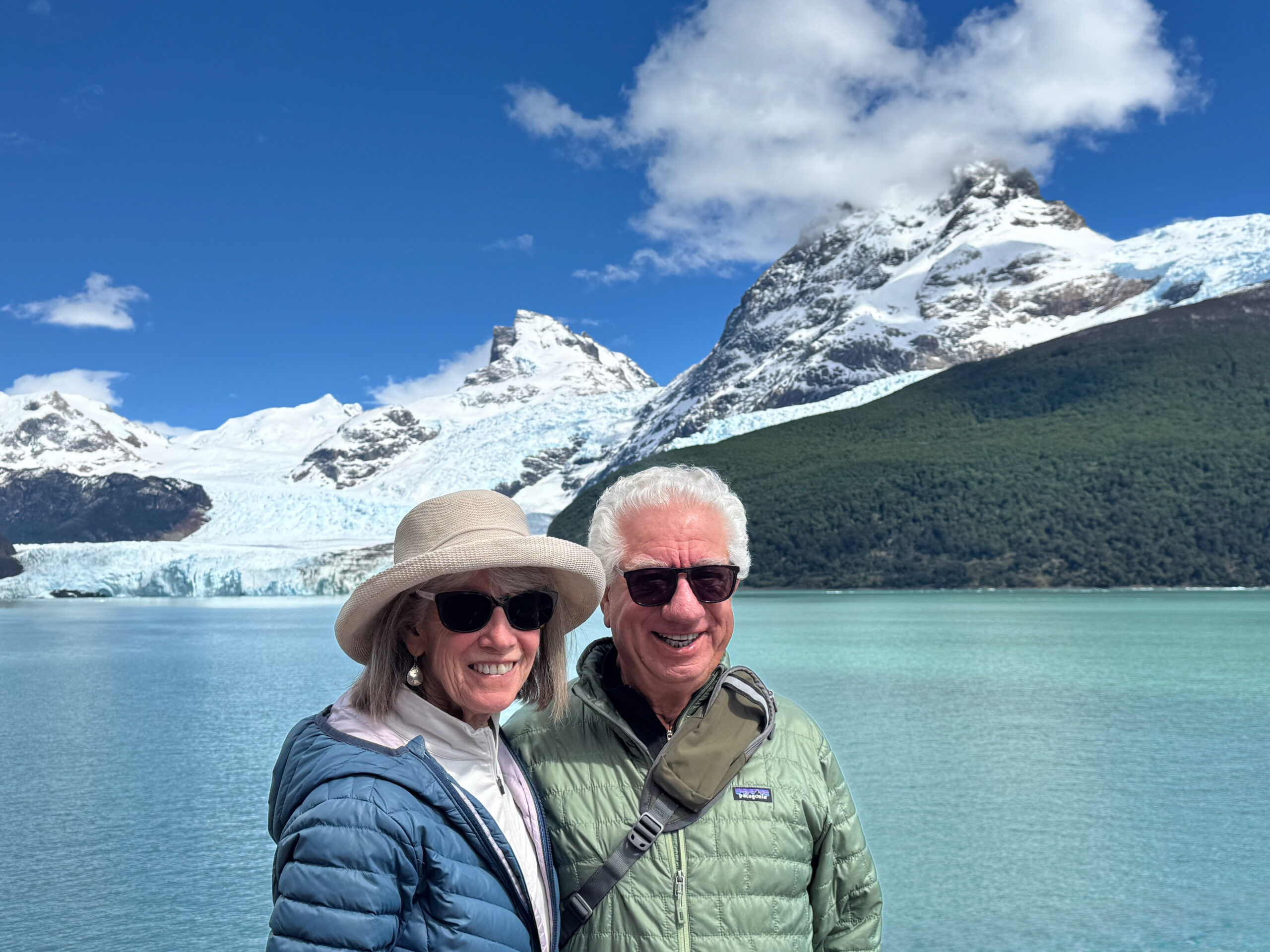
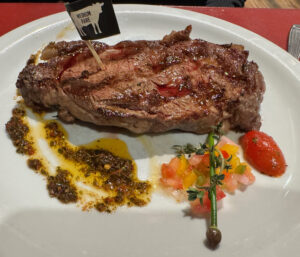
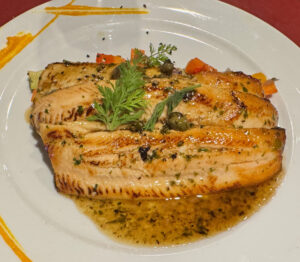
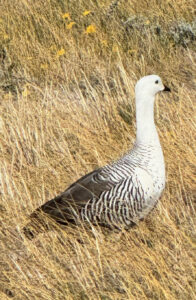
The sail ended at 4pm and with plenty of daylight remaining we returned to Laguna Nimez for a more hopeful birding experience. On this second visit we were rewarded with Andean flamingos, the highlight of 10 additional avian sightings on this calm day. Tonight we walked to main street El Calafate for our last meal at the excellent Casimiro Bigua.
To be sure, we were impressed with this small town in Southern Patagonia. It was early in high season but would be very busy in the peak, December through March. Our next destination, Salta in NW Argentina, was 3,000 km north.